



How Does Autonomous Procurement Decision-Making Benefit Enterprises?
- Agentic spend management turns spend insight into real-time action.
- Automation speeds decisions while strengthening cost and vendor control.
- Continuous intelligence helps procurement scale efficiency, not effort.
March 19, 2026 | Procurement Strategy 5 minutes read
Every few years, procurement gets handed to a new “next big thing.” Some of them quietly fade. Others stick because they solve problems teams actually face every day. Autonomous procurement decision-making falls firmly into the second camp.
This is not a theory. It shows up when sourcing cycles drag on because nobody can align calendars. It shows up when savings leak because negotiated contracts are not followed in the real world. It shows up when teams are buried in data but still asked why decisions take so long.
What enterprises are really looking for is momentum. Less waiting. Fewer handoffs. Better decisions made faster and repeated consistently. That is where autonomous procurement decision-making starts to earn its keep.
Procurement That Decides at Enterprise Speed
See how GEP enables autonomous procurement to cut friction, control costs, and move faster
Contact Us
What is Autonomous Procurement Decision-Making?
At a practical level, autonomous procurement decision-making means letting systems handle decisions that follow logic, data, and policy instead of routing everything through people by default.
Not big judgment calls. Not supplier relationship moments. The repeatable stuff. The predictable stuff. The work that slows teams down but does not make them more strategic.
Intelligent procurement systems look at spend patterns, category rules, supplier data, risk signals, and historical outcomes. Then they recommend or execute actions such as launching sourcing events, guiding buyers to the right suppliers, or flagging when something does not look right.
Autonomous sourcing is often where teams feel the impact first. Instead of waiting for someone to notice an opportunity, the system identifies it. Instead of manually comparing bids, scenarios are evaluated instantly. Procurement professionals stay in control, but they are no longer starting from a blank page.
Why Does Autonomous Procurement Decision-Making Matter to Enterprises?
Because scale breaks manual processes. Every time.
What works for a mid-sized organization collapses under the weight of thousands of suppliers, categories, regions, and compliance requirements. The result is not bad intent. It is slow decisions, inconsistent outcomes, and burned-out teams.
Autonomous procurement decision-making matters because it restores balance. Decisions that should be fast become fast again. Policies are applied consistently without constant policing. Data stops being something teams analyze once a quarter and starts influencing decisions every day.
There is also a credibility factor. When procurement decisions are backed by data-driven logic rather than instinct or urgency, conversations with finance and business stakeholders change. The function moves from explaining delays to explaining value.
How Autonomous Procurement Decision-Making Helps Reduce Costs
Cost reduction is not about finding one big sourcing win anymore. It is about capturing value everywhere without increasing workload.
This is where procurement cost management quietly improves. Autonomous procurement systems spot sourcing opportunities early. They identify price variance. They catch off-contract buying before it becomes normal behavior.
Autonomous sourcing drives better outcomes because it does not get tired or distracted. It evaluates every bid against the same criteria. It factors in total cost, not just price. It remembers past performance even when teams rotate.
Over time, savings stop depending on heroic effort. They become structural. That is when leadership starts trusting forecasts instead of questioning them.
Key Benefits of Autonomous Procurement Decision-Making in Improving Speed and Agility
Speed used to mean cutting corners. Today it means removing friction.
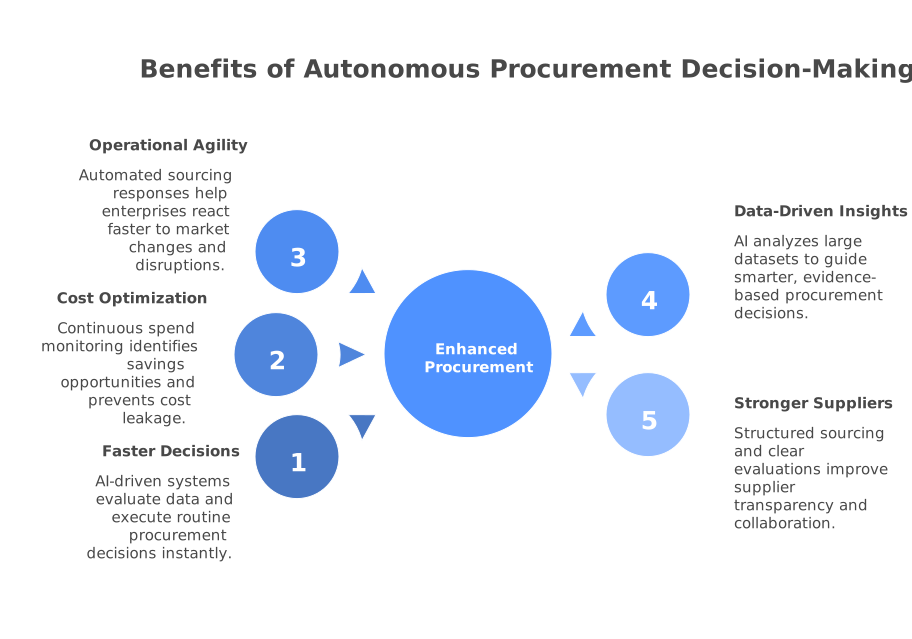
Autonomous procurement decision-making strips out waiting. Waiting for approvals. Waiting for analysis. Waiting for someone to notice a problem. Decisions that once took days happen in minutes because the groundwork is already done.
Agility shows up when markets shift. When a supplier fails. When demand spikes unexpectedly. Intelligent procurement systems can surface alternatives, recommend strategies, and keep the business moving without panic.
This matters in large enterprises where procurement supports multiple business units with very different needs. Speed without chaos becomes a competitive advantage, not just an operational improvement.
For more Unlock better spend visibility with intelligent sourcing software solutions.
How Autonomous Procurement Decision-Making Leads to Smarter, Data Driven Decisions
Most procurement teams are not short on data. They are short on time to interpret it.
Autonomous procurement decision-making flips that dynamic. Artificial intelligence processes volumes of information no human team could reasonably keep up with. Patterns emerge. Risks surface earlier. Recommendations improve as systems learn from outcomes.
The result is fewer gut calls made under pressure and more decisions grounded in evidence. That does not remove judgment. It sharpens it.
For procurement professionals, this changes the conversation internally. Decisions are easier to defend. Tradeoffs are clearer. Confidence increases because recommendations are transparent and repeatable.
How Autonomous Procurement Decision-Making Strengthens Supplier Relationships and Enhances Collaboration
Automation does not weaken relationships. Poor processes do.
When suppliers deal with inconsistent communication, unclear criteria, and slow decisions, trust erodes. Autonomous procurement decision-making addresses that by bringing structure and predictability to engagement.
Autonomous sourcing creates fairer evaluations. Clear timelines. Faster feedback. Suppliers know where they stand and why. That alone improves collaboration.
On the enterprise side, better data improves supplier relationships. Performance conversations are based on facts, not anecdotes. Risk discussions happen earlier. Innovation discussions become more meaningful because the basics are handled well.
Supplier relationships improve when procurement stops being reactive and starts being reliable.
Stay ahead of shifting spend dynamics across key categories
Explore the GEP Spend Category Outlook to inform data driven decisions
Download Now
What This Shift Means Going Forward
Autonomous procurement decision-making is not about flipping a switch. It is about deciding where autonomy makes sense and letting it grow from there.
Teams exploring how to integrate AI into their procurement strategy should start with pain points, not features. Look for decisions that repeat. Look for places where speed matters more than debate. Look for areas where data already exists but is underused.
Understanding how to streamline procurement processes with automation comes down to one question. Where does human effort add the most value? Everything else is a candidate for autonomy.
For enterprises using platforms like GEP SMART, this evolution feels less like disruption and more like momentum. Sourcing, procurement, and supply chain start working as a system instead of a set of tools. That is when procurement stops chasing the business and starts moving at its pace.




FAQs
It reduces cost leakage by continuously monitoring spend, pricing, and compliance while flagging sourcing opportunities early. Autonomous sourcing applies consistent evaluation logic across suppliers and categories. The result is savings that are captured, repeated, and sustained over time.
Yes, and customization is essential for real impact across industries. Decision rules, risk thresholds, and sourcing logic can be configured by category, regulation, and operating model. This ensures autonomy reflects real business conditions rather than generic automation.
Security is enforced through role-based access, encryption, and full audit trails across all decisions. Transparency into decision logic supports governance and compliance requirements. Autonomy scales only when data trust and control are built in.