Middle East Tensions and the Global Resin Market: Risks and Strategic Next Steps
- Middle East tensions are driving resin market volatility, with raw materials linked feedstock disruptions and logistics constraints pushing up key polymer prices.
- Supply risks would rise as fast as pricing risks. As force majeure events, refinery disruptions and trade route constraints tighten global availability, buyers should avoid panic inventory hoarding and instead secure volumes through structured, short-term volume security approach.
- Procurement strategies need to adapt and evolve with the level of disruption. Start with timing purchases in recovering markets, build safety stock and alternate sourcing channel if disruption continues, and in extreme scenarios prioritize securing material and supply protection over cost optimization.
April 16, 2026 | Procurement Strategy 10 minutes read
Two questions are sitting on the packaging procurement desks right now — Should we consider advancing resin/plastic packaging purchases to hedge against future volatility? And with packaging formats critical to food, beverage, FMCG, and distribution operations where PE, PP, and PET dominate and substitution is limited, is this the right time to secure supply contracts?
As geopolitical tensions in the Middle East begin to ripple through the petrochemical markets, higher crude prices, uncertainty around feedstock availability, and a growing number of supplier force‑majeure declarations are adding pressure. As a result, procurement teams are being forced to make timing and volume decisions in an environment where visibility is limited, and downside risks are asymmetric.
In this note, we outline what we see across resin and packaging markets, how risks differ by region, and how procurement teams should think about balancing price risk, supply security, and flexibility in the weeks ahead.
Not Sure How the Middle East Conflict Can Impact Your Business?
Talk to a procurement expert.
Contact Us
The Middle East – Petrochemical Link
We recognize that the Gulf countries have been dominant in global energy markets, such as crude oil production, reserves, and natural gas resources. The GCC nations collectively account for 23.2% of the world’s total crude oil output and ranked second globally in natural gas exports. In procurement terms, this is not just a market fact but a clear indication of strategic dependency.
Saudi Arabia has access to ethane at prices as low as $1.75–$2.50/MMBtu among the most competitive globally. The cost advantage significantly reduces the production cost of ethylene, propylene, and downstream derivatives. Hence, we observe that the Gulf countries act as a strategic global supplier for petrochemical feedstock while sitting at the crossroads of major global trade routes. In context of the current geopolitical developments, we believe it is essential to remain cautious and respond strategically, adapting our actions in line with evolving global energy and geopolitical dynamics.
Current State
The Strait of Hormuz, which connects the Middle East region to the rest of the world, is one of the world’s most important maritime chokepoints, with 20 million barrels of oil passing through it each day. This accounts for 1/5th of global oil consumption and up to 1/5th of the world’s supply of LNG. Around 3,000 shipping vessels pass through the passage every month, including oil tankers, LNG containers, and cargo vessels. This means that Iran’s decision to use the Strait of Hormuz as a leverage to retaliate will have huge consequences on energy dependent supply chains.
Also Read: Strait of Hormuz Crisis Reshaping Supply Chain Strategy
Alternative routes
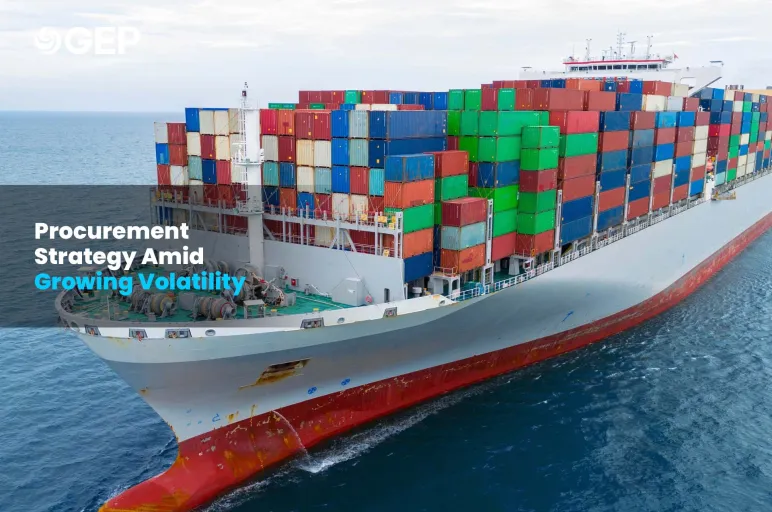
Another recommended and viable pathway, The Red Sea - connecting to the Mediterranean via the Suez Canal, is ordinarily a major path for container shipping. Typically, about 30% of the global container trade passes through this route. However, in the past, Houthi rebels based in Yemen have targeted commercial vessels on this route. Due to the escalated security threats, 75% of the shipments altogether avoid the Suez Canal, opting to navigate around Africa's Cape of Good Hope instead. This detour adds an extra 10 to 14 days to the traditional 30 to 40-day voyage from Asia to Europe using the Strait of Hormuz. This will also increase the freight cost by around 8-12%, affecting the total landing cost.
Resin Market Impact
Since the conflict began on Feb. 28, the international benchmark oil, Brent and WTI crude have both risen above $100 per barrel (~50-55% increase). From a procurement perspective, this indicates near-term upward pressure on prices of several key resins that together account for more than ~50% of global plastic demand: PP (polypropylene), PE (polyethylene – HDPE/LDPE/LLDPE), and PET.
This is primarily because the feedstocks (naphtha, ethylene, propane, PX, etc.) are largely linked to crude oil, with some components also tied to natural gas. As a result, these resins are highly sensitive to feedstock price fluctuations. Other resins seeing a secondary but notable impact include PS, PVC, and Nylon (6,66), while specialty resins such as EVOH remain comparatively less affected.
We are already seeing increased supplier price pass-through. Across clients, we have received 5+ force majeure notices from resin and plastic packaging suppliers in affected regions.
In parallel, supply-side disruptions are beginning to emerge across the Middle East, including the precautionary shutdown of a major Saudi refinery (550k bpd) and strikes on two Gulf refineries in March (~400k bpd combined). Our guidance to buyers in impacted regions is to avoid reactive spot buying driven by shortage concerns. Instead, we recommend assessing whether shortterm volume security can be achieved through structured commitments, while limiting inventory hoarding that risks locking in peak prices.
Check Out GEP’s – AI Powered Procurement Software
Regional Outlook
Our perspective on India
Domestically, in India, while large petrochemical facilities are operated by Reliance, IOCL, GAIL, and others, the market remains structurally exposed to global energy shocks. Approximately 85% of the crude oil is imported, with a significant share sourced from the Middle East. In addition, more than 40% of natural gas and LPG requirements are met through imports - again largely from the same region.
From a procurement standpoint, this means that domestic capacity does not insulate buyers from cost volatility. India also imports roughly 20–30% of its polymer demand, which means import parity continues to set the price ceiling and strongly influence local resin pricing. As these pressures compound, we have seen a ~4% depreciation of the INR against the USD, further amplifying landed costs for oil and resinlinked categories.
Broader regional implications (Asia and Europe)
Several Asian and European countries are dependent on resin imports, making them highly exposed to global oil, gas, and petrochemical price shocks. This is already visible in feedstock markets. Naphtha prices in Asia have risen by ~74% since the conflict began, and by ~20–30% in NW Europe.
Our global recommendation to secure volume early is more critical in Asia and Europe than in other regions. Waiting for price stabilization in these markets carries a high risk of both availability constraints and step-change price resets once force majeure conditions widen.
Why does North America look different?
By contrast, North America has been less impacted. The region produces most of its oil, natural gas, and petrochemical feedstocks domestically and exports a significant share of this output. Most importantly, polymer production is largely based on inexpensive, gasbased feedstocks (ethane) rather than imported, oillinked naphtha.
From a procurement lens, in North America, global energy disruptions tend to influence prices through market alignment and benchmarking, but they don’t directly translate into physical shortages or abrupt cost shocks. However, because of increased exports to leverage global demand shortage and domestic energy markets responding to the global trends, we are seeing a steep increase in polymer indices in North America as well. As a result, procurement strategies in North America can remain focused on timing, benchmarking, and contract structure.
Impact on Key Polymers
We have estimated the possible impact on several resins taking into consideration the current feedstock prices, freight markups, raw material costs and converter or supplier pass throughs.
Important note: the table highlights a global possible impact, interpret it basis the level of direct/indirect impact on your region.
| Region | # | LDPE | HDPE | PP | LLDPE | PVC | PET | Impact |
|---|---|---|---|---|---|---|---|---|
| Asia | FS Increase | 53% | 53% | 44% | 53% | 35% | 28% | Severe Impact: Manufacturers face sharp margin compression due to rising naphtha/LNG-linked feedstock costs. Primary and secondary packaging costs increase significantly for FMCG (especially F&B) due to upstream inflation. |
| Europe | FS Increase | 39% | 53% | 45% | 38% | 14% | 27% | Severe Impact: Production costs rise sharply as oil, gas, and electricity increase simultaneously across the cost structure. |
| America | FS Increase | 30% | 38% | 38% | 37% | 28% | 19% | Moderate Impact: Manufacturers have a competitive edge due to domestic sourcing of raw materials. Oil-linked resin prices rise but are partially offset by in-house energy capacity. |
Explore GEP’s - AI Supercharged Supply Chain Management Software
Sourcing Recommendations under 3 possible market scenarios
There are 3 likely scenarios that can pan out from this situation:
Scenario 1: US-Iran negotiations succeed after the ceasefire. Partial tanker flow resumes through Hormuz within 2–4 weeks. Brent retraces to $85–95/bbl as the $14–18/bbl geopolitical premium partially unwinds. Naphtha supply begins normalizing over 4–6 weeks as Gulf refineries gradually restart.
Scenario 2: Current state persists through Q2 2026. Iran-US negotiations fail. Hormuz remains commercially unnavigable. Goldman Sachs base case: Q2 average ~$110/bbl. Naphtha remains in acute shortage as Gulf refinery restarts are blocked.
Scenario 3: Conflict widens or deepens beyond Q2 2026. Hormuz remains blocked for 6+ months. Goldman Sachs extreme upside: $135/bbl. At this level, global petrochemical supply chains face structural dislocation - not just a price event. Gulf polymer output (~15% of global polyolefin supply) is effectively offline for an extended period. Asian crackers running below capacity on naphtha shortage.
Oil price volatility does not affect procurement strategies uniformly. The appropriate response depends on how far energy prices escalate and how long disruption persists. Based on current market dynamics, procurement teams should be prepared for three potential scenarios.
| Brent Price Range | Market Signal | Procurement Priority |
|---|---|---|
| S1: USD 85–95/bbl | Partial recovery | Lock short-term contracts and gradually normalize sourcing |
| S2: USD 105–115/bbl | Sustained disruption | Secure supply and diversify sourcing lanes |
| S3: USD 125–135/bbl | Full escalation | Protect material availability and activate substitutions |
Scenario 1 – Partial Recovery
Recommended actions
The immediate priority should be locking in short-dated forwards (around 60–90 days) close to spot levels before the recovery is fully priced into resin contracts. As logistics conditions stabilize, buyers can gradually pivot volumes back toward Gulf producers and reopen discussions with converters on price resets. Emergency Asian sourcing can be paused at this stage, though supplier relationships should remain active.
Key market signals
- Some resin chains may still react with a delay. Nylon 6/66 pricing often lags crude because caprolactam contracts reset on different timelines.
- PET supply from Asia may remain competitive for several weeks as PTA and PX markets adjust more slowly than crude.
- EVOH allocations, typically planned on quarterly cycles, are unlikely to shift until suppliers gain clearer feedstock visibility.
Operational considerations
Freight and logistics costs rarely adjust immediately when oil softens. In most cases, shipping conditions normalize 4-6 weeks later, creating a short window where buyers can rebalance sourcing decisions. Throughout this phase, the Strait of Hormuz still requires close monitoring, as partial reopenings have historically reversed quickly.
Scenario 2 – Sustained Disruption
Recommended actions
If oil stabilizes at these levels, procurement priorities shift toward defensive positioning. Building roughly 45–60 days of safety stock for HDPE and PP or packaging items dependent on these polymers becomes increasingly important, particularly for high-throughput SKUs. Buyers should also begin activating secondary suppliers (controlled parallel supply lanes) in Asia for LLDPE and specialty PE films.
Key market signals
- Exposure varies across resin chains. PVC is particularly sensitive because chlorine production is highly energy intensive.
- PS markets tend to move faster, as styrene monomer tracks benzene and ethylene, often reacting ahead of PP or PE.
- PET availability will increasingly depend on refinery decisions in Asia through PX supply chains.
Operational considerations
Procurement teams should review grade and specification flexibility across HDPE, PP and Nylon compounds to determine where blending or substitution might be feasible. Even modest lightweighting, often in the range of 2-3%, can help offset rising resin costs. In certain applications, selective EVOH downgauging may also be possible without materially affecting barrier performance. Brent reaching USD 120/bbl threshold should be treated as an early signal of a more severe disruption scenario.
Scenario 3 – Full Escalation
Recommended actions
Procurement priorities should shift decisively away from cost optimization and toward supply protection. Companies should begin activating contractual allocation or force-allocation clauses where available. It also becomes necessary to quantify packaging volume-at-risk by resin family particularly across PE, PP, PET, PVC and Nylon to ensure that critical SKUs receive priority coverage.
Key market signals
At this stage, resin markets often shift from cost-driven pricing toward allocation-driven pricing.
Converters also face mounting margin pressure as feedstock and energy costs rise simultaneously, particularly across PVC and PS supply chains.
Operational considerations
Material flexibility becomes essential. Common substitution pathways include PP-to-HDPE conversions for closures, LDPE-to-LLDPE blending in film structures, and selective PS-to-PET or PP switches where tooling permits. Engineering plastics and barrier structures may require a parallel effort, including PCR inclusion, bio-content trials or reduced EVOH usage where technically feasible. Because sustained feedstock inflation can strain converter cash flows, monitoring supplier financial health and credit exposure also becomes increasingly important during this phase.
Closing Perspective
Energy-driven resin volatility rarely unfolds in a straight line. Companies that maintain diversified sourcing, flexible specifications, and strong supplier engagement are generally better positioned to manage supply shocks when disruption persists.
GEP has consistently helped clients navigate and stabilize sourcing strategies through major geopolitical shocks. As volatility continues, it may be worth reassessing supply and pricing risks to stay ahead.
Authors: Vidhi Seksaria, Sakshi Kolwankar
Sources
1. Oil Prices: Futures & Commodities
2. Oil Prices: Oil markets: WTI, Brent, Middle East tensions keep markets on edge
3. India Oil Imports: https://indianexpress.com/article/explained/explained-economics/indias-reliance-on-imported-oil-may-hit-fresh-high-in-fy26-10548802/
4. India Gas Imports: https://mathmarkets.in/2026/03/14/indias-natural-gas/
5. Freight costs due to rerouting: How the Shipping Crisis in the Red Sea is Impacting Trade | Procurement Magazine
7. Why Gulf Countries Are Dominating the Petrochemical Sector
8. What Is the Strait of Hormuz and Why Is It at the Center of the Iran War?
9. Oil Exports by Country 2026
11. Saudi petchem firms face higher ethane costs | Latest Market News
12. Track Weekly Europe PET Prices & Insights | Polymerupdate
13. How the Shipping Crisis in the Red Sea is Impacting Trade | Procurement Magazine