


U.S.-Israel-Iran War Is Stress-Testing Global Supply Chains (And Here’s What You Must Do)
- Energy flows disrupted; shipping corridors have become geopolitical choke points.
- Raw materials and chips face shortages as logistics stall.
- Procurement teams need AI-orchestrated risk sensing and scenario planning.
March 12, 2026 | Supply Chain Risk Management 6 minutes read
The war may be far away for many, but the supply chain shock is apparent everywhere.
Global supply chains rarely collapse in a single moment. They weaken gradually as stress builds across logistics, energy markets, and supplier networks. The current conflict involving the United States, Israel and Iran is creating precisely that kind of stress.
The first shock appeared in energy markets. Shipping traffic through the Strait of Hormuz dropped sharply after the conflict escalated, with tanker movement falling dramatically as vessels waited outside the strait due to security threats.
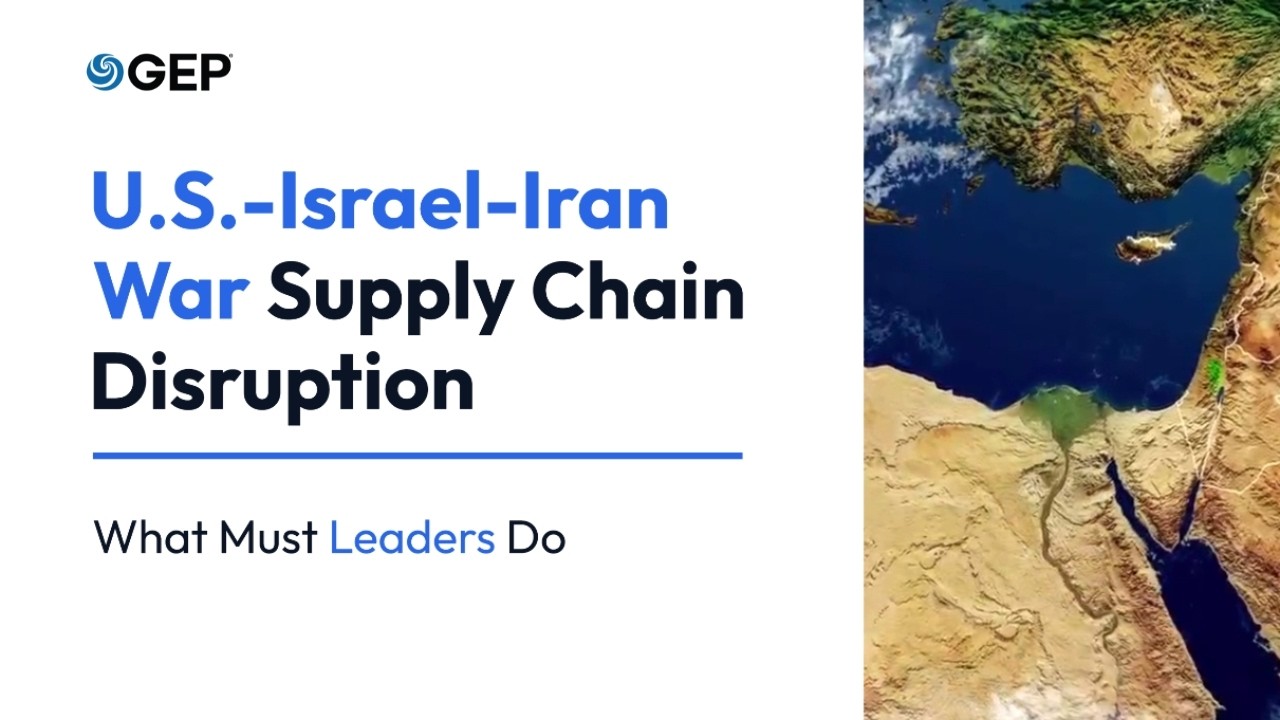
That narrow waterway carries 17-18 million barrels per day or roughly one-fifth of the world’s oil supply and large volumes of liquefied natural gas. Any disruption in that corridor immediately reverberates through global manufacturing and transport systems.
A quick analysis of the ripple effects of the 1973 oil embargo or 1990 Gulf War supply disruptions can provide a glimpse into the extent of what might happen.
Energy markets are only the first layer of impact. Tanker congestion and security risks are delaying cargo shipments. Pharmaceutical ingredients, electronics components, fertilizers, and petrochemical feedstocks all move through the same maritime routes. When shipping halts, the ripple spreads through multiple industries at once.
Procurement leaders now face a familiar pattern. A geopolitical conflict thousands of miles away begins to alter cost structures, delay shipments, and strain supplier relationships across the globe.
Supply chains that looked stable couple of weeks ago now face renewed volatility.
Lead with Agentic AI
Drive smarter procurement and resilient supply chains through enterprise-proven technology
How the Conflict is Disrupting Global Supply Chains
The U.S.-Israel-Iran war is not creating a single disruption. It is triggering several simultaneous shocks that reinforce each other.
1. Energy Supply Volatility
Energy remains the backbone of modern supply chains. Manufacturing plants, shipping fleets, and logistics hubs all depend on stable fuel prices.
With shipping through the Strait of Hormuz crippled, crude supply from major producers including Saudi Arabia, Iraq, and Kuwait faces uncertainty.
Energy instability creates cascading effects. Higher fuel costs raise transportation expenses across trucking, aviation, and ocean freight. Manufacturing sectors that rely heavily on energy, such as metals and chemicals, experience immediate cost pressure.
Recent disruptions have already exposed vulnerabilities in the global aluminum market, where supply constraints pushed prices to multi-year highs.
Even companies that do not directly rely on Middle Eastern suppliers feel the impact through rising input costs.
2. Shipping and Logistics Bottlenecks
War risk changes shipping behavior almost overnight.
Insurance premiums for vessels traveling through the Gulf have surged, while many shipping companies are suspending operations in the region entirely. Some cargo ships have been stranded outside the strait waiting for clearance to proceed.
The disruption affects both ocean freight and air cargo networks. Analysts estimate that nearly one-fifth of global air cargo routes may face delays as airlines avoid conflict zones and reroute flights.
When these logistics disruptions combine with port congestion, companies face longer lead times and unpredictable delivery schedules.
Manufacturers that rely on just-in-time inventory strategies are particularly vulnerable.
3. Raw Materials and Industrial Inputs
Many supply chains depend on materials produced or transported through the Middle East.
Fertilizers, petrochemical feedstocks, and plastics rely on hydrocarbons produced in the region. A slowdown in these exports can affect agricultural production and manufacturing simultaneously.
Pharmaceutical ingredients and electronic components also face delays as logistics networks stall. Analysts warn that prolonged disruption could increase prices for drugs, electronics, and consumer goods globally.
The overall risk extends to industries far beyond energy, including technology, automotive, healthcare, and consumer electronics.
4. Regional Economic Effects
With Iran already demonstrating its capability to deploy asymmetrical warfare across the gulf region, certain economies feel the pressure faster than others.
Asian countries that import large volumes of Middle Eastern oil, including India and China, face immediate exposure to energy disruptions. India has already taken emergency steps to increase domestic LPG production and secure alternative supplies.
Governments are also adjusting trade policies to stabilize supply chains. Temporary waivers allowing countries to purchase oil from alternative suppliers highlight how quickly geopolitical events reshape energy markets.
These policy shifts often add another layer of complexity for procurement teams.
Explore GEP’s – AI Powered Supply Chain Management Software Solution
Where Current AI Tools Might Fall Short
Many organizations now rely on analytics tools and generative AI models to monitor supply chain risks. These systems help summarize news events, flag supplier risks, or forecast demand shifts. Yet they rarely provide the operational intelligence needed to manage a fast-moving geopolitical crisis.
Most AI tools work as assistants. They analyze historical data and produce reports. They do not execute actions across procurement workflows.
That limitation becomes obvious during geopolitical disruptions.
Therefore — if the Strait of Hormuz closes or freight routes shift overnight, procurement teams must take on several tasks simultaneously:
- Identify affected suppliers
- Assess contractual exposure
- Model alternate sourcing options
- Adjust logistics routes
- Coordinate with finance and operations
Traditional analytics tools cannot orchestrate these actions across systems.
Another challenge lies in fragmented data. Supplier information, logistics schedules, and contract terms often reside in separate platforms. Even sophisticated AI models struggle to generate reliable insights when the underlying data remains siloed.
As a result, organizations that continue to work with fragmented data might still have to rely on manual coordination during disruptions.
Why Procurement Needs Agentic AI-Driven Orchestration
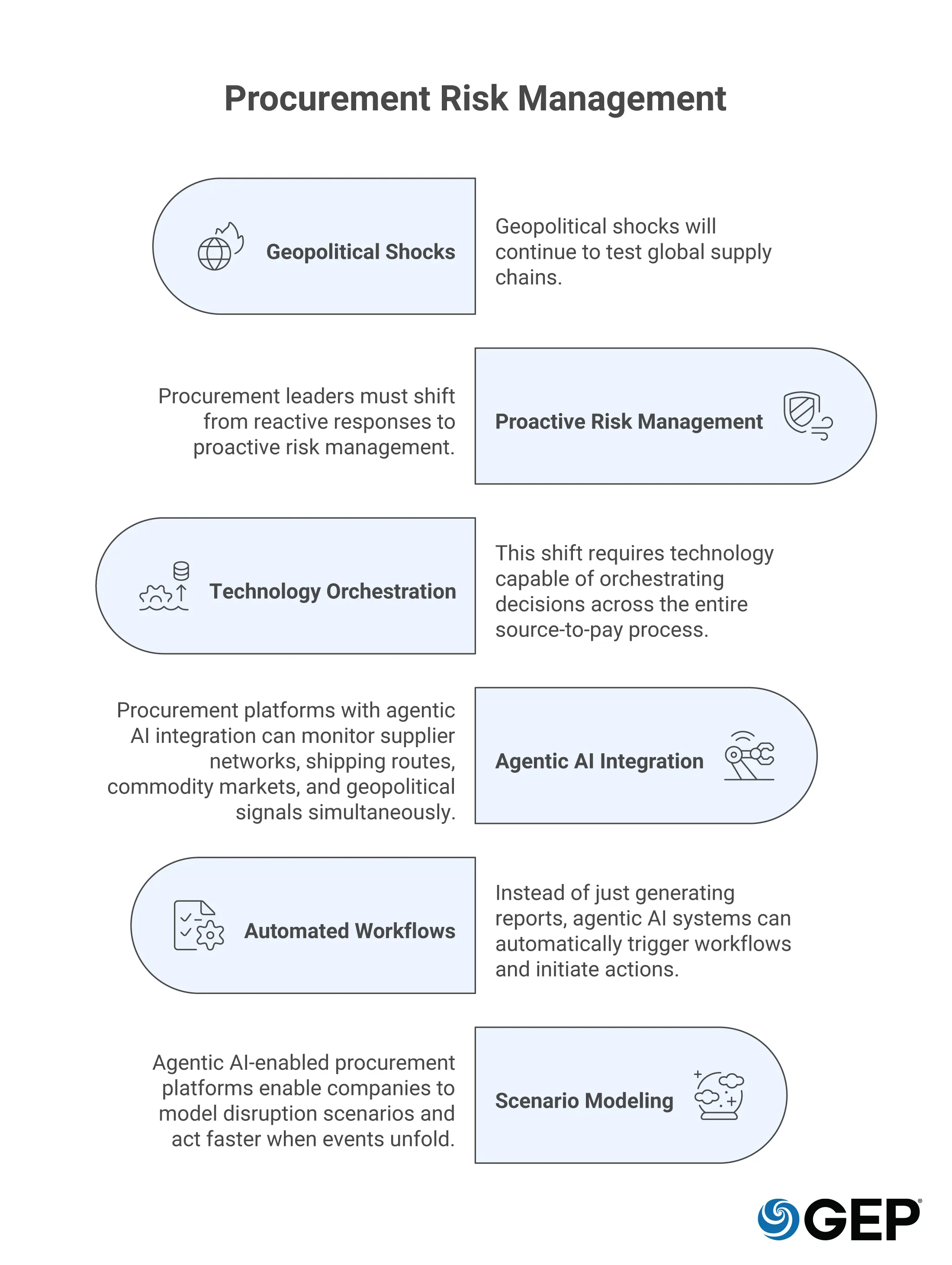
Geopolitical shocks will continue to test global supply chains. The ongoing conflict illustrates how quickly disruptions spread across industries.
Procurement leaders must therefore shift from reactive responses to proactive risk management.
This shift requires technology capable of orchestrating decisions across the entire source-to-pay process.
Procurement platforms with agentic AI integration can monitor supplier networks, shipping routes, commodity markets, and geopolitical signals simultaneously. Instead of generating reports alone, these agents can trigger workflows automatically.
With global supply chains now operating in a state of geopolitical risk for quite some time, agentic AI-enabled procurement platforms create a coordinated view across sourcing, supplier management, logistics, and financial systems. That visibility allows companies to model disruption scenarios and act faster when events unfold.
Driving Supply Chain Resilience With AI Predictive Analytics
See how predictive intelligence helps companies forecast material needs and plan sourcing with precision
The Larger Lesson
Wars do not just reshape geopolitics. They reshape supply chains.
The war highlights how fragile global trade networks remain when critical chokepoints, energy flows, and logistics corridors intersect.
Companies that rely on fragmented systems and manual risk tracking will struggle to respond quickly.
Organizations that adopt AI-orchestrated procurement platforms gain something far more valuable than automation.
They gain the ability to sense disruption early, simulate alternatives, and move their supply chains before the shock spreads through the system. And that capability may determine which supply chains survive the next crisis.



FAQs
Global supply chains depend heavily on a few critical shipping routes, energy corridors, and production hubs. When conflict occurs near these chokepoints, transport delays, insurance risks, and security concerns quickly affect trade flows. Companies also react by stockpiling inventory or shifting sourcing, which further strains supply networks. The result is a ripple effect that spreads across industries, often within days.
Energy-intensive and globally distributed industries feel the impact first. These include automotive, electronics, pharmaceuticals, chemicals, and agriculture. Many of these sectors depend on complex supplier networks and critical raw materials sourced from multiple regions. When logistics routes or energy supplies are disrupted, production schedules and costs can change rapidly.
Preparation starts with better visibility into supplier networks, logistics routes, and geopolitical exposure. Companies should diversify sourcing locations, build contingency supplier relationships, and run scenario planning exercises regularly. Advanced procurement platforms with AI capabilities can help monitor risks in real time and recommend alternative sourcing strategies. Organizations that act early tend to recover faster when disruptions occur.