


How to Choose the Right ESG Reporting Software: 5 Critical Considerations for Enterprises
- Agentic AI doesn't wait for instructions. It acts, and that changes everything about how you track and report.
- ESG compliance should be a byproduct of good data hygiene, not a last-minute fire drill.
- Agentic AI brings autonomy and continuous optimization to data-rich problems.
March 11, 2026 | Procurement Software 8 minutes read
Here's what most enterprise leaders get wrong about ESG. They think it's a reporting exercise that’s more like a box to check or a report to generate once a year, so investors feel good and regulators stay quiet.
But ESG reporting isn't about the past. It's about proving, in real time, that your organization is built for the future. The companies that understand this are not scrambling for reports at the end of the quarter. They're making decisions with ESG data, not about it.
The alternate? Spending millions on consultants to clean up data that should have been clean from day one.
So, are you choosing the right ESG Reporting Software? What does "right" even look like?
What ESG Reporting Actually Is
ESG stands for Environmental, Social, and Governance. And ESG reporting is the process of measuring, managing, and disclosing your organization's performance across those dimensions to investors, regulators, customers, and, increasingly, employees.
It covers everything from your carbon footprint and water usage to how you treat your workforce. Every ESG report reflects the integrity of your leadership and internal controls.
For large, complex, global enterprises, this isn't optional. Regulatory frameworks are tightening, and stakeholders are demanding more transparency than ever before.
But here's what most people miss: ESG reporting is only as good as the ESG data behind it. And ESG data, at enterprise scale, is a nightmare to collect, validate, and standardize, unless you have the right system.
Build Credible ESG At Enterprise Scale
Explore intelligent ESG tracking and reporting aligned to regulatory expectations
Agentic AI in ESG Tracking & Reporting: The AI Shift Nobody Is Fully Talking About
This is where it gets interesting. For years, ESG reporting meant manually pulling data from ERPs, supply chain systems, HR platforms, and energy meters, and stitching it all together in spreadsheets and presentations, hoping nothing breaks, and everything looks good.
That era is ending.
What's replacing it is agentic AI. And if you haven't thought seriously about how AI agents are changing the ESG data landscape, you need to start today.
Here’s what agentic AI does differently from traditional software:
Traditional software waits for instructions. Agentic AI acts. It monitors your data streams continuously and flags anomalies before they become reporting errors.
How Agentic AI Transforms ESG Tracking & Reporting
Agentic AI maps your ESG data against multiple frameworks simultaneously — whether that's GRI, SASB, TCFD, or the emerging regulatory standards in your jurisdiction — without requiring your team to manually reconcile each one.
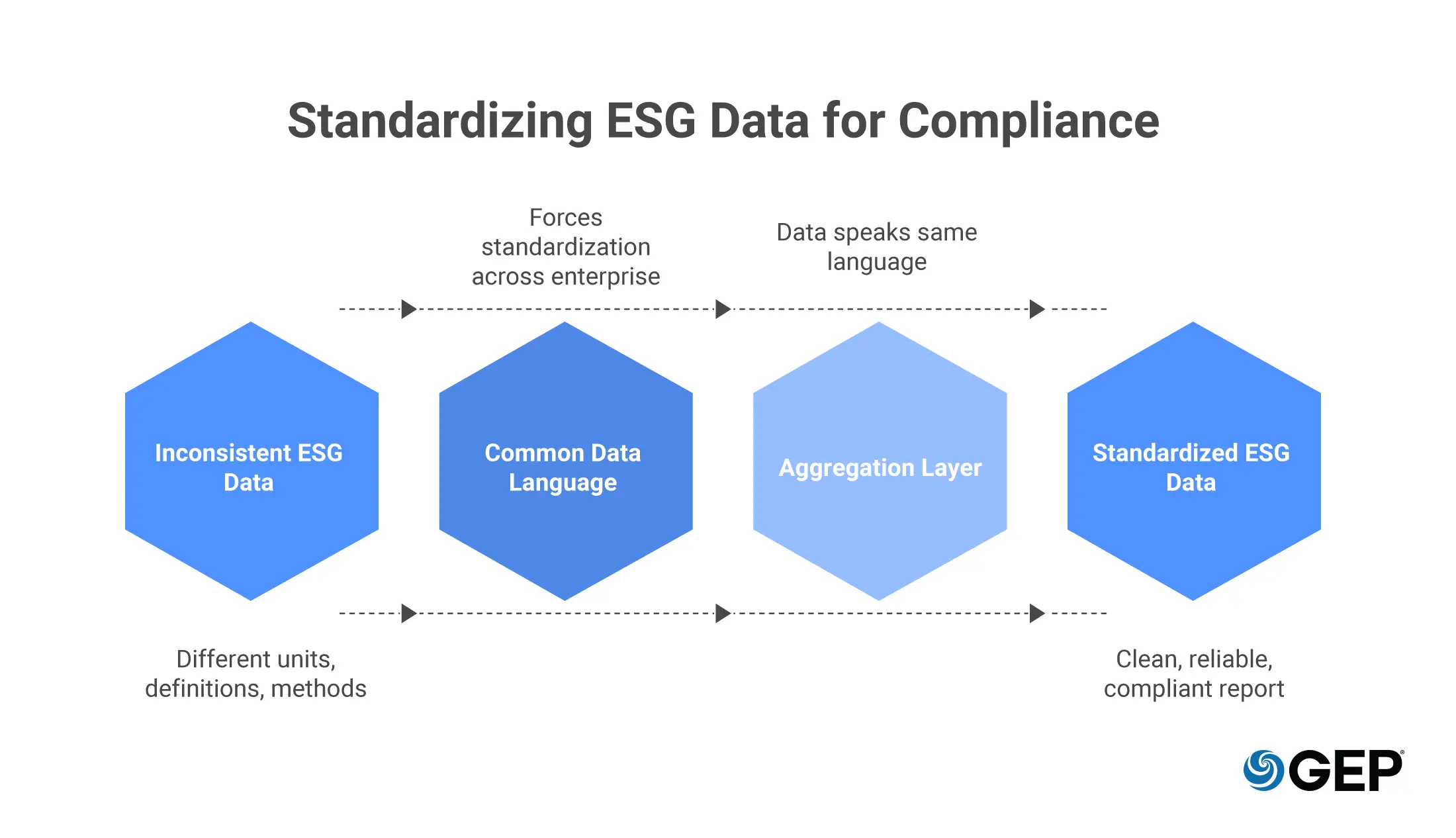
Think about what that means. Instead of a team of analysts spending weeks preparing a sustainability report, you have a system that is always ready to report. The data is always current, with the right frameworks always applied. And gaps are always visible.
That's a transformation you can only get with agentic AI.
The Five Things You Must Get Right When Choosing an ESG Reporting Software
The market is full of ESG software, and most of it will disappoint you when you need to work at scale.
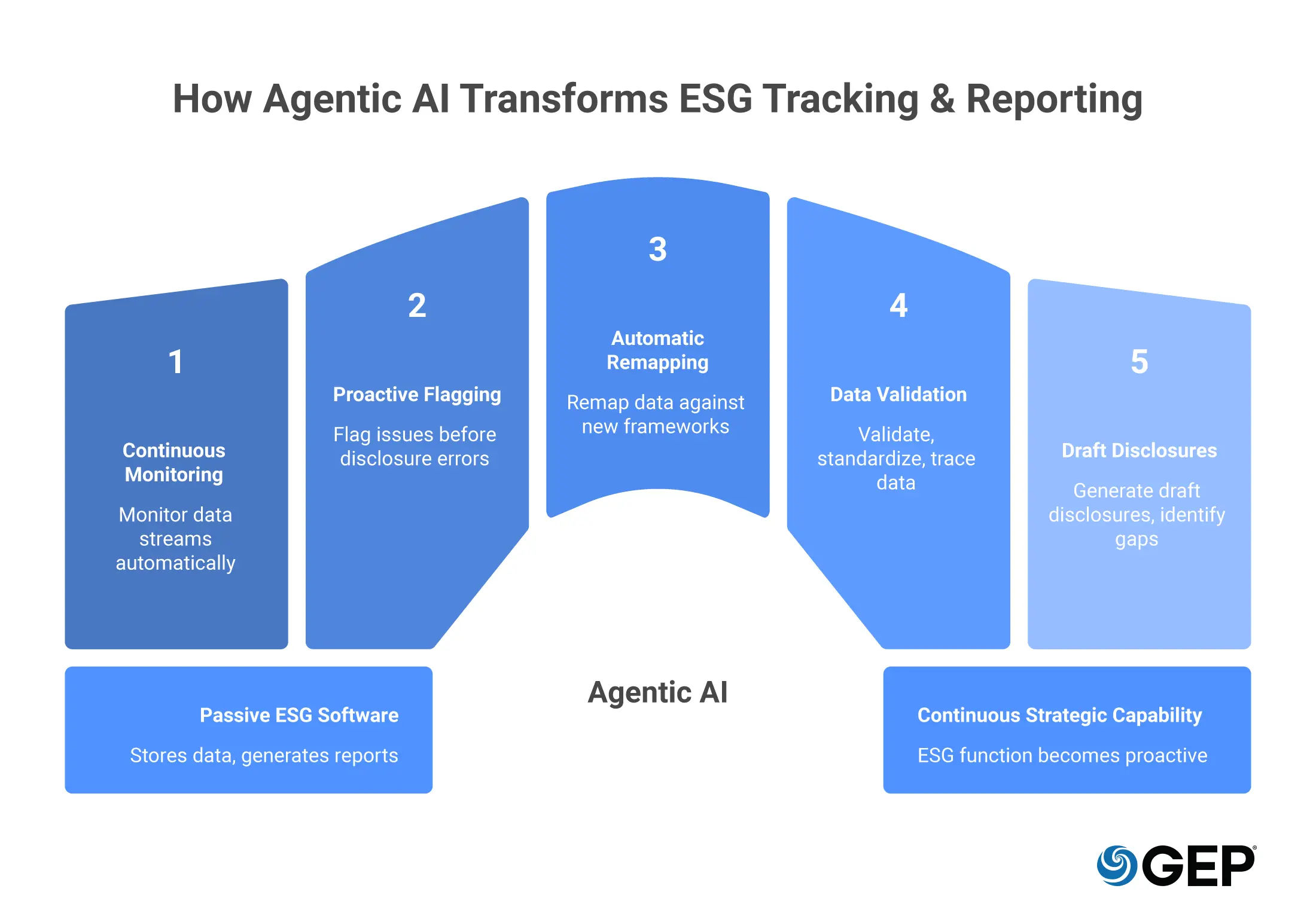
Here are the five things you must evaluate before you commit.
Data Integration Depth
Your ESG data lives in your ERP, supply chain systems, facilities management tools, CMS, and B2B client-facing platforms. The software you choose must integrate with all of them — not just the popular ones.
Ask the hard questions: how deep does the integration go? Does it pull real-time data or batch data? And what happens when a source system changes?
Multi-Framework Intelligence
The real world doesn’t expect you to only report to one standard. You will report to many whose standards and requirements are constantly evolving.
The right ESG software doesn't just support multiple frameworks but maps your underlying data across all of them simultaneously. So, when a new framework introduces itself out of the blue or a regulation changes, you're not rebuilding your reporting from scratch.
Agentic AI and Automation Capabilities
This is the differentiator. The best platforms don't just store and display ESG data; they use AI agents to continuously monitor it, identify gaps, suggest corrections, and generate draft disclosures.
If the software you're evaluating is purely a data warehouse with a dashboard, you're looking at yesterday's solution.
Auditability and Data Lineage
Regulators don't just want numbers and graphs. They want to know where those numbers came from, why, and how they impact the larger picture.
Every data point in your ESG report needs a clear, traceable lineage from source to submission. If your software can't provide that, you're exposed.
Scalability Across Jurisdictions
If you operate globally, your ESG obligations are different in the EU than they are in the U.S., than they are in the Middle East or Asia-Pacific.
The right ESG reporting software is built for this complexity, not bolted on as an afterthought.
Agentic AI Fails to Scale in Procurement
Research reveals what blocks wide-scale adoption and execution in enterprises
The Standardization Imperative
Let's talk about something that doesn't get enough airtime. Standardization.
One of the highest hidden costs in enterprise ESG reporting is the lack of data standards inside the organization.
It’s basically different business units collecting the same metric in different ways or different regions using different units of measurement or definitions for the same term.
When you aggregate that data into a single report, you get noise. That noise in ESG reporting creates liability.
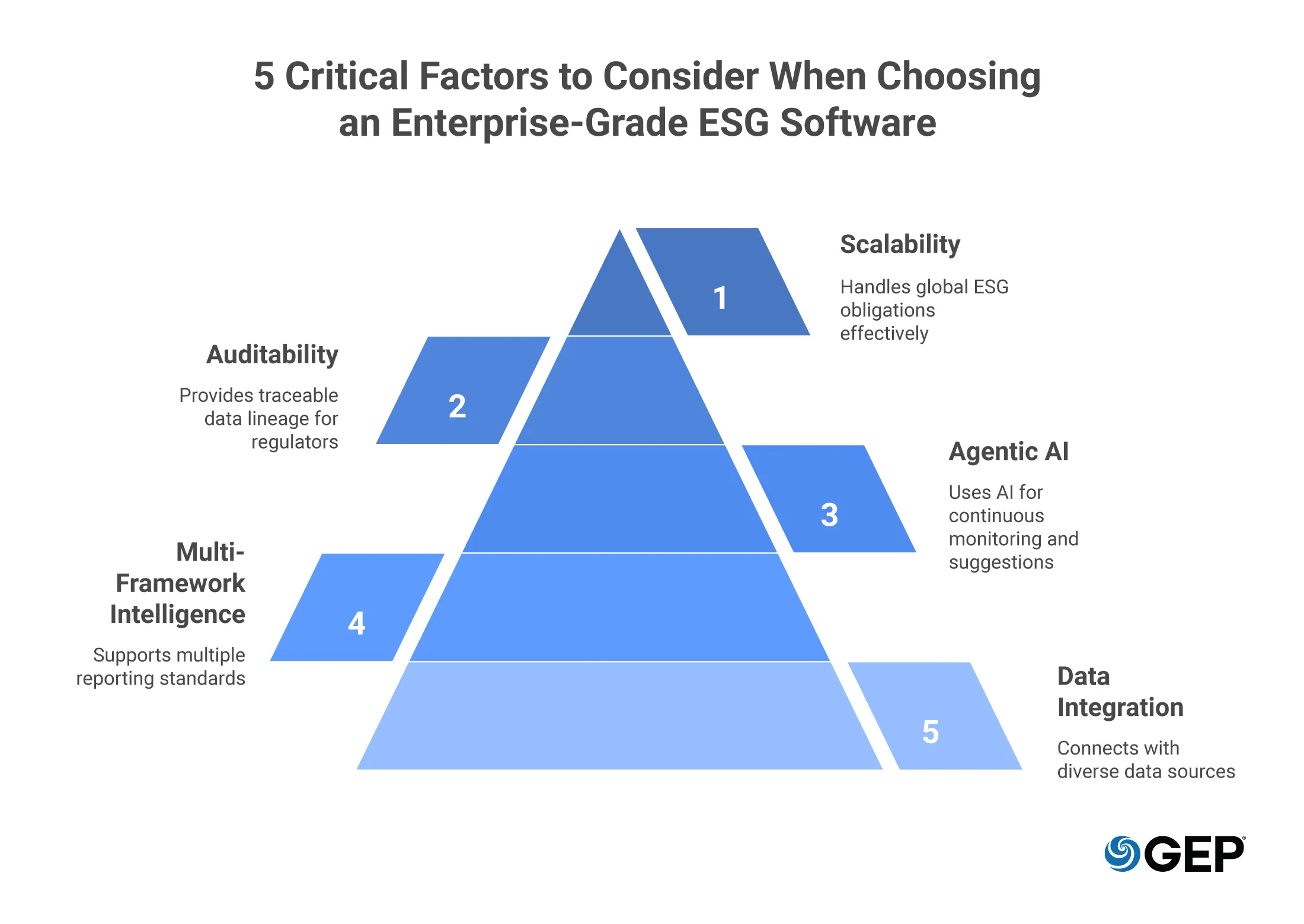
The right ESG software forces standardization. It creates a common data language across your entire enterprise. So, when your Scope 3 emissions data comes in from 47 different suppliers across 12 countries, it's all speaking the same language by the time it hits your reporting layer.
Solving for governance and compliance is what separates enterprises that lead on ESG from those that merely report on it.
What the Future Demands of Enterprise Leaders
The bar for what constitutes a credible, defensible ESG disclosure is rising every single year. Regulatory pressure will increase, and investor scrutiny will deepen.
The enterprises that will win are the ones that stop treating ESG reporting as a compliance function and start treating it as a strategic intelligence function.
Agentic AI powered by real-time data that applies predictive analytics and scenario modeling to ESG reporting. The gap between organizations that have embraced this and those that haven't is widening fast.
Audit your current ESG reporting process. Find the gaps. Map your integration requirements. Define what "reporting-ready" looks like for your organization, and then find software that can get you there.
Choose the right ESG tracking and reporting software that’s built for scale, complexity, and ambition of an enterprise that intends to lead.
If you're ready to explore what intelligent ESG tracking and reporting looks like at enterprise scale, start there. The future of your organization's credibility depends on getting this right.
The spreadsheets had a good run.
But the next chapter of ESG belongs to organizations that treat data as infrastructure, AI as a partner, and reporting not as an obligation but as an opportunity to show the world exactly who you are.




FAQs
How does ESG reporting software help enterprises with regulatory compliance?
The right ESG reporting software continuously maps your data against evolving regulatory frameworks from mandatory climate disclosures to jurisdiction-specific environmental standards so your organization isn't scrambling to meet new requirements when they take effect. It maintains audit trails and data lineage for every disclosure, which is increasingly what regulators are asking for. Compliance becomes a byproduct of good data hygiene rather than a last-minute exercise.
How can enterprises ensure data accuracy in ESG reporting?
Data accuracy in ESG reporting starts with standardization, establishing common definitions, units, and collection methodologies across every business unit and geography. The right software enforces those standards at the point of data entry and flags inconsistencies before they propagate into reports. AI-driven validation layers add another line of defense, identifying anomalies that human reviewers would miss at scale. Combine that with full data lineage, knowing exactly where every number came from, and you have a defensible, auditable reporting process.
Can ESG reporting software integrate with other enterprise systems like ERP or CRM?
Yes, and this is one of the most critical capabilities to evaluate before you select a platform. Enterprise-grade ESG software is designed to connect with existing systems across your technology stack, pulling data from finance, operations, HR, supply chain, and facilities management. The depth of those integrations matters: you want real-time or near-real-time data flows, not periodic batch exports that leave you working with stale information.
Can ESG reporting software help with stakeholder engagement?
Absolutely. This is an underutilized capability. ESG reporting software doesn't just produce disclosures for regulators; it can generate tailored views of your ESG performance for different audiences, each with the level of detail and framing that's most relevant to them. When your data is clean, current, and centralized, stakeholder communication becomes proactive rather than reactive. You're no longer waiting for questions. You're answering them before they're asked.