


AI in Procurement Process Optimization: Moving Beyond Automation to Real Decision Intelligence
- By using AI throughout the source-to-pay cycle, you can move procurement from reactive cost-cutting to smart, value-adding decision-making.
- Find and fix the important gaps that traditional automation leaves behind, such as broken data, unchanging workflows, and a lack of visibility in suppliers.
- Use a five-step framework to make sure that AI capabilities match procurement goals, from spend intelligence to agentic workflow orchestration.
May 19, 2026 | Procurement Strategy 7 minutes read
Today, procurement leaders are working in a world where supply chain problems, changing trade rules, and tight margins have become the operating baseline. The function is under a lot of pressure to do more than just process transactions quickly.
However, many companies are still using the same basic logic for procurement that they did ten years ago: automate the transaction, report on the historical data, and act on instinct for everything else. The result is a function that is operationally busy but weak in strategy.
This blog explains what it really means to go from procurement automation to procurement intelligence, where traditional methods fall short, and what it takes to make AI a useful decision-making tool rather than just a technology experiment.
What AI in Procurement Really Means in Practice
Automation and intelligence are two very different things. Automation gets rid of steps that need to be done by hand. Intelligence makes decisions better.
When procurement teams talk about AI, they usually mean things like automated purchase orders, workflows for onboarding suppliers, or rules for matching invoices. These are valuable capabilities. But they represent the floor, not the ceiling.
A true AI-native procurement system can predict changes in demand, warn of supplier risk before it happens, suggest alternative sources, and show spending patterns in real time. The operating model changes from telling people what happened to actively shaping what happens next.
This is the difference between procurement functions that lead and those that always react.
Where Traditional Procurement Automation Breaks Down
The main goal of most procurement automation was to cut down on manual work and speed up the flow of transactions. That logic worked when things weren't changing too much, and supplier bases were stable. Neither condition holds consistently today.
Three types of failure happen repeatedly in organizations that only use automation:
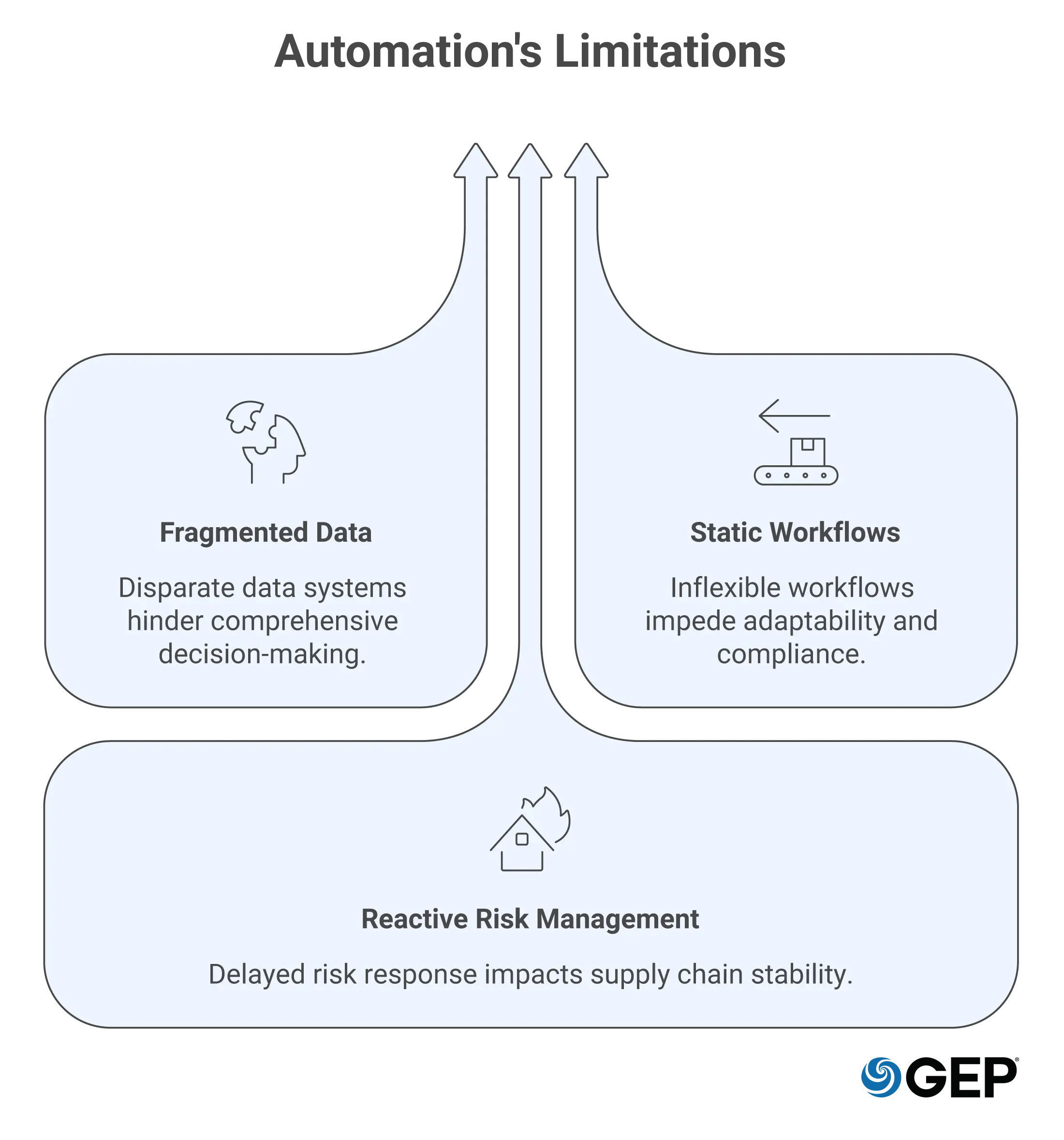
Fragmented Data
Spending, contracts, and supplier data are all in different systems. No one team has a complete, up-to-date view of exposure or opportunity, so decisions are made with only partial information at best.
Static workflows
Automation based on rules can't change to fit new buying situations. Exceptions are handled by manual workarounds that make compliance harder, extend cycle times, and create gaps that audits always find.
Reactive risk management
Supplier risk signals usually come after a problem has already entered the supply chain, not before it happens. The business has already felt the effects by the time procurement takes action.
The fundamental misconception is the belief that increased automation leads to improved procurement. Automation just speeds up processes without any intelligence on top of it.
Ready to Move from Automation to Intelligence?
Find out where your procurement function stands and what it takes to move forward.
How AI is Revolutionizing Procurement Process Transformation
The companies that are really making progress aren't using AI as a separate tool. They are adding intelligence to current procurement processes at the exact times and places where decisions are made and mistakes cost the most.
Five mechanisms are driving the most tangible results:
Predictive spend analytics
AI models find hidden spending patterns, spot unusual buying behavior, and warn about category risk before the budget cycles end. Static spend dashboards can't give you this kind of foresight because they only show what has happened in the past, not how it will affect the future.
Intelligent supplier management
Instead of using scorecards every so often, AI-native supplier management keeps an eye on performance signals, financial health indicators, and ESG compliance data all the time. This gives category managers early warnings instead of post-event reporting.
Natural language contract analysis
AI can find obligations, mark unusual clauses, and spot renewal risks in thousands of contracts in a fraction of the time required by manual review. By constantly checking large amounts of contract data, it changes contract compliance from a time-consuming, periodic audit into a real-time, proactive operational control. This makes things clearer, lowers risk, and helps people make decisions faster and with more information.
Agentic workflow orchestration
The next big thing is agentic AI, which lets systems start sourcing events, approve low-risk purchase requests, and route exceptions on their own based on rules and limits set by procurement leadership.
AI-native forecasting
AI helps procurement teams predict changes in demand before they cause problems with supply by combining signals from internal consumption data, market trends, and macroeconomic indicators. These changes plan from reacting to restocking to proactively positioning, which lowers costs for both excess inventory and emergency purchases.
All of these are practical operating levers that you can use right now. The problem isn't with the capability itself; it's with the design of the implementation and the readiness of the data.
Best Practices to Optimize Procurement Processes with AI
When you use AI in procurement without a plan, you often end up with pilots that don't work and proofs-of-concept that never make it to production. The organizations that move the fastest all use the same implementation logic.
Here's a five-step framework to put AI to work across your procurement function.
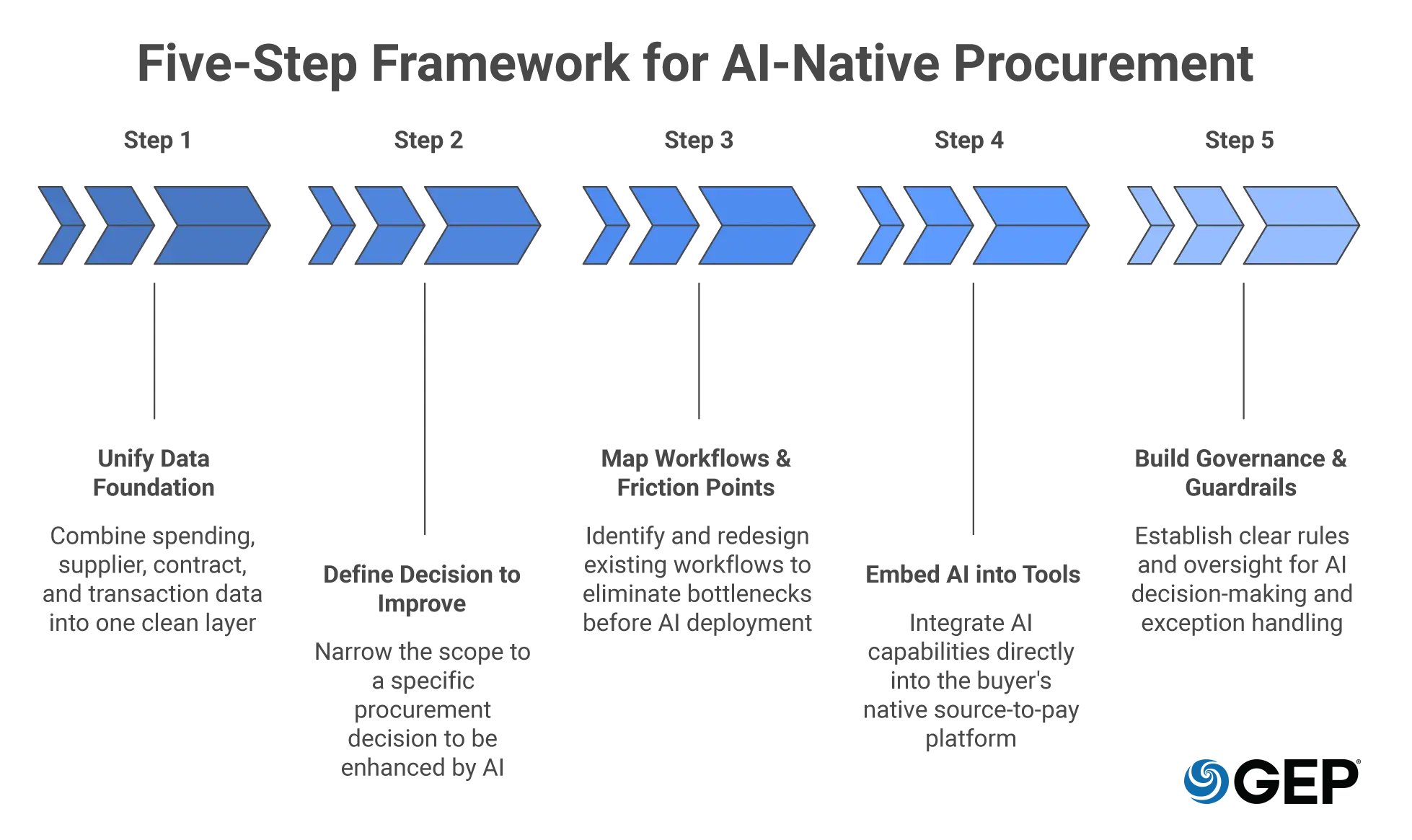
Unify your data foundation first
The data that AI learns from is what makes it good. Before adding intelligence on top, combine spending, supplier, contract, and transaction data into one clean layer. AI makes inconsistency worse instead of fixing it.
Define the decision you are trying to improve
Do not deploy AI to "improve procurement." Use it to cut down on the time it takes to find suppliers, make sure they deliver on time, or find ways to save money in a certain area. Narrowing the scope leads to measurable results.
Map existing workflows and identify friction points
Using AI on a broken process makes the failure worse. AI deployment and workflow redesign should happen at the same time, not one after the other.
Embed AI into the tools teams already use
AI adoption fails when it isn't part of the main source-to-pay platform. Intelligence that is built into the buyer's native workflow leads to much higher usage rates and faster value realization than standalone tools that users have to navigate separately.
Build governance and guardrails from day one
Set clear rules for what decisions AI can make on its own, what decisions need to be reviewed by a human, and how exceptions are handled. Governance doesn't limit the value of AI; it makes it possible to safely scale it across the organization.
Build a Procurement Function That Thinks Ahead
Explore how GEP SOFTWARE™ brings AI-native intelligence to every stage of your procurement operation.
The Future of Procurement: AI's Role in Shaping the Industry
AI will gradually change the role of the procurement leader from overseeing transactions to managing strategic exceptions, developing suppliers, and influencing people in different departments.
This doesn't pose a risk to procurement professionals. It's a chance to put human skills to work on things that automation has never been able to do, like managing supplier relationships, coming up with new ideas, judging risks, and getting everyone on the same page.
The procurement functions that will be in charge in the next three years are working on this skill now. They are putting money into data infrastructure, teaching their teams how to use AI, and choosing platform partners that can adapt as the technology and rules change. People who wait too long may have to deal with the tools from the last disruption cycle when the next one starts.
The Takeaway
The shift from automation to intelligence is more than just a technology upgrade. It is a strategic shift in what procurement can do for the company. Functions that are moving now are creating a compounding advantage by giving you better data, making better decisions, shortening cycle times, and making supply chains more resilient.
The question is not whether AI will transform procurement. It is already. The question is whether your function will cause that change or react to it.
Talk to the GEP team directly if you want to learn more about what a smart, unified source-to-pay model could look like for your business.




FAQs
AI changes procurement from getting things done faster to making better choices. AI can predict changes in demand, warn of supplier risk before it happens, check contracts for compliance gaps in real time, and automatically route exceptions through agentic workflows. This is different from rules-based automation. The function goes from reporting on what happened to actively directing what happens next.
AI-native procurement gives you a clearer picture of your spending by showing you patterns and maverick purchases that static dashboards overlook. Supplier management goes from using scorecards that only show how well a supplier is doing to always keeping an eye on their performance, finances, and ESG indicators. AI looks at big portfolios in real time to find gaps in obligations and renewal risk, making contract compliance a live operational control instead of a periodic audit. AI-native demand forecasting helps avoid supply problems by allowing for preemptive planning, while agentic AI takes care of low-risk approvals on its own, letting teams focus on more important tasks.