


How EV Procurement Consulting Can Simplify the Transition to Electric Vehicles?
- EV procurement consulting gives companies a clear roadmap for managing the full cost of transition, from vehicle selection to charging infrastructure and regulatory compliance.
- The right consulting partner turns a fragmented incentive landscape into a coherent financial strategy, capturing rebates and grants that often go unclaimed.
- Companies that treat EV adoption as a procurement challenge rather than a logistics challenge close the gap between commitment and deployment faster.
May 22, 2026 | Procurement Strategy 5 minutes read
The Growing Importance of EV Procurement Consulting
Fleet electrification is no longer a future-state goal. Regulatory pressure is building, fuel cost volatility favors electric alternatives, and corporate sustainability commitments are being tested by investors and regulators alike. The will to transition to electric vehicles is there. The capability to execute it, however, is not keeping pace.
A 2025 report from Climate Group's EV100 network, found that despite challenging economic conditions and geopolitical uncertainties, members collectively added 127,000 EVs over the reporting period, while still falling well short of their total committed fleets.
Delivery operations with predictable routes were advancing faster than other fleet types, while the gap between commitments and operational vehicles remained a persistent challenge industry-wide. The culprits were familiar: infrastructure delays, regulatory complexity and procurement missteps.
That is exactly the terrain where EV procurement consulting delivers. Transitioning a fleet to electric is not a single purchasing decision. It requires finance, operations, sustainability and legal teams to move in the same direction at the same time. Companies that try to manage that coordination without dedicated expertise almost always underestimate how hard it is.
Important Benefits of EV Procurement Consulting for Companies Transitioning to Electric Vehicles
Here is what good EV consulting actually looks like in practice:
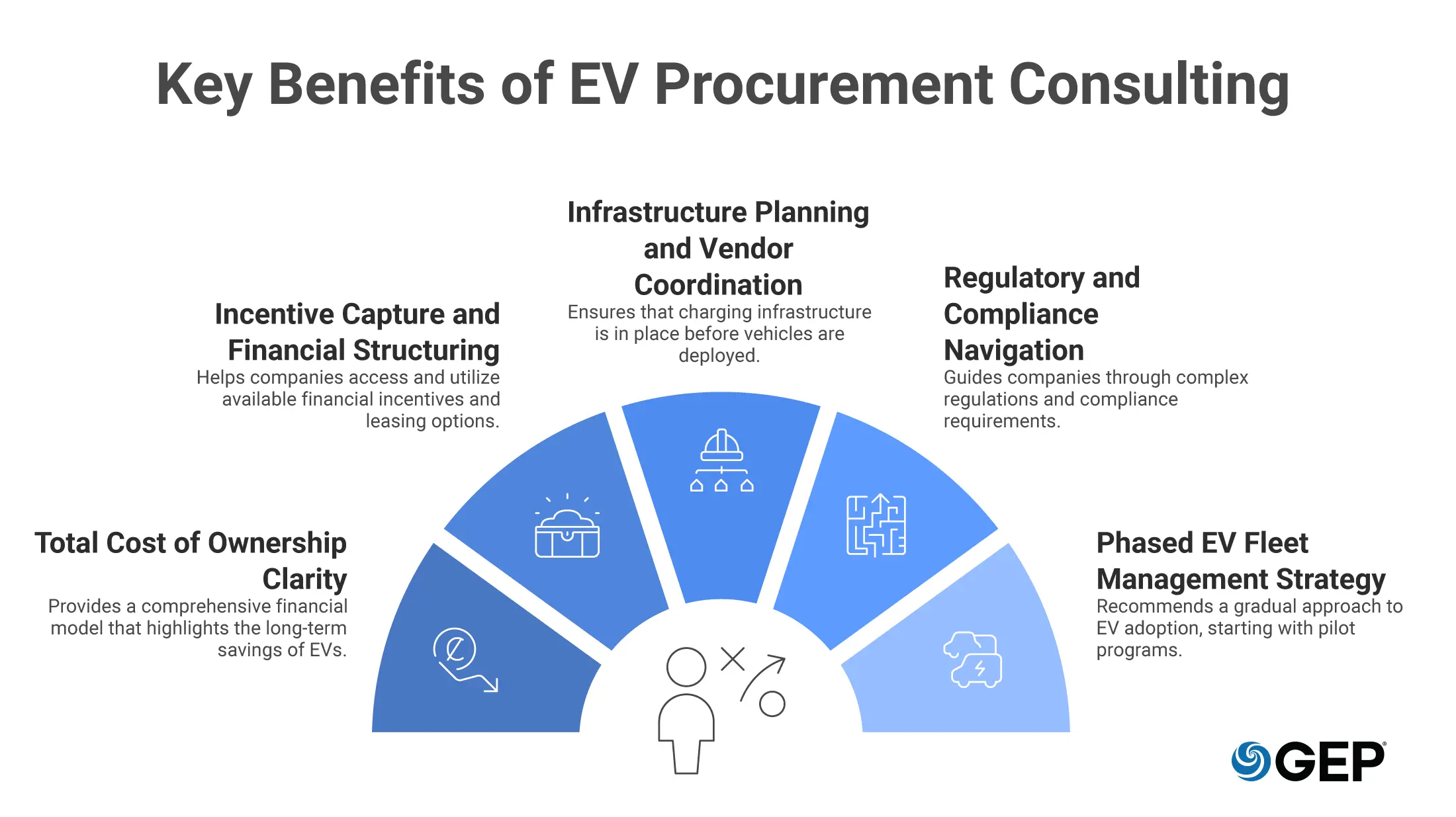
Total Cost of Ownership Clarity
Higher up-front vehicle costs are still the most common concern, cited by 33% of fleet professionals in a 2025 survey. But sticker price is the wrong number to anchor on. What consultants bring is a rigorous total cost of ownership (TCO) model: one that accounts for fuel savings, lower maintenance costs and the changing depreciation curve of EV technology. Run that model at fleet scale and the economics shift. Electric vehicles cost less than half as much per mile to operate as comparable gas-powered vehicles, and the gap widens as fleets grow.
Incentive Capture and Financial Structuring
EV incentives exist at federal, state and local levels, and they do not coordinate neatly with each other. Most companies leave money on the table simply because navigating the programs requires more time and expertise than internal teams can spare. Procurement consultants map eligible grants, rebates and tax credits against each company's fleet profile and timeline. They also bring expert knowledge of how to structure deal terms, using options like operational leasing or electrification-as-a-service to keep capital expenditure off the balance sheet.
Infrastructure Planning and Vendor Coordination
Here is the piece that surprises most organizations: electric vehicles can be ordered much faster than utilities can plan and build the infrastructure needed to charge them, and a lag in grid investment can stall electrification even when vehicles are ready to deploy. Industry experts are clear on this point: meet with your utility in person as soon as you start thinking about electric trucks, because getting the power you need takes time. EV consulting services build that lead time into the plan from day one, coordinating utility providers, site developers and vendors well before vehicle orders are placed.
Regulatory and Compliance Navigation
For companies operating fleets across multiple states, regulatory variation creates real planning risk. Incentive programs are different in every jurisdiction, utility readiness varies and vehicle eligibility rules shift often. An experienced EV transition strategy partner maps this complexity into a structured compliance plan so that permit gaps and specification mismatches don't become costly delays.
Phased EV Fleet Management Strategy
The most effective transitions start small and scale deliberately. Consultants typically recommend piloting on predictable, return-to-base routes where range requirements are well understood and charging logistics are manageable. That pilot generates real operational data, surfaces integration issues early and builds the internal proof points needed to secure broader organizational buy-in. Companies that skip the pilot phase and try to scale immediately report higher disruption and longer recovery times.
Is Hydrogen Right for Your Fleet?
See how Hydrogen Gives Fleets a Flexible Path to Zero Emissions
Best Practices for Leveraging EV Procurement Consulting to Ensure a Smooth EV Transition
The organizations making the fastest progress bring in consulting expertise before procurement decisions are made, not after. They treat grid engagement and infrastructure planning as the critical path, not an afterthought. And they build internal readiness in parallel with external procurement.
Organizations consistently underestimate the operational shift required for EV fleet management. Drivers need training on range management and charging habits. Fleet managers need updated monitoring tools and revised performance metrics. Procurement teams need vendor frameworks broad enough to cover charging hardware, energy contracts and maintenance agreements, not just vehicle acquisition.
The transitions that stick are the ones with C-suite visibility from the start. When finance, operations and sustainability leaders share a common EV transition strategy and agree on how to measure success, decisions move faster and course corrections are cheaper.
That kind of cross-functional alignment is the same discipline that effective procurement consulting services bring to any complex category transformation. The fundamentals don’t change: align stakeholders, make trade-offs explicit and build a roadmap grounded in real operational constraints.




FAQs
Consultants identify incentives that most companies miss, structure procurement agreements to reduce upfront capital and build TCO models that make the long-term financial case visible to finance leadership. They also design charging infrastructure to minimize peak demand charges, which can quietly become one of the largest ongoing costs in an electrified fleet.
The most common obstacles are infrastructure readiness, incentive complexity and multi-stakeholder alignment, and companies that try to manage all three without dedicated expertise consistently report longer deployment timelines and more expensive mid-course corrections. EV procurement consultants address each directly, from managing utility engagement to facilitating C-suite alignment around a shared EV transition strategy.
Ready to build a smarter EV transition strategy? Explore how advanced procurement software can support your organization's electrification roadmap.