


Procure-to-Pay Software for Manufacturing: Eliminating Invoice and GRN Mismatches
- Procurement control depends on synchronized transactional states.
- Three-way matching fails without receipt-level intelligence.
- Modern procure-to-pay systems create structured data from complex inputs in real-time.
March 12, 2026 | Procure to Pay 5 minutes read
Manufacturing procurement leaders face a problem that doesn’t disappear with scale. Invoice and Goods Receipt Note (GRN) mismatches create friction across procurement and finance, slow down payments, strain supplier relationships, and blur visibility into working capital.
As operations expand, manual reconciliation stops being dependable. This is precisely when procurement teams switch to procure-to-pay software, custom-built for the manufacturing industry environment, where speed, accuracy, and control are non-negotiable.
This article breaks down what causes invoice and GRN mismatches, why traditional processes continue to fall short, and how modern, AI-driven procure-to-pay systems address the problem at its source.
Stop Invoice and GRN Mismatches at the Source
Event-level validation and AI guides matching, preventing downstream issues
Understanding Procure to Pay Software and Why It Matters at Scale
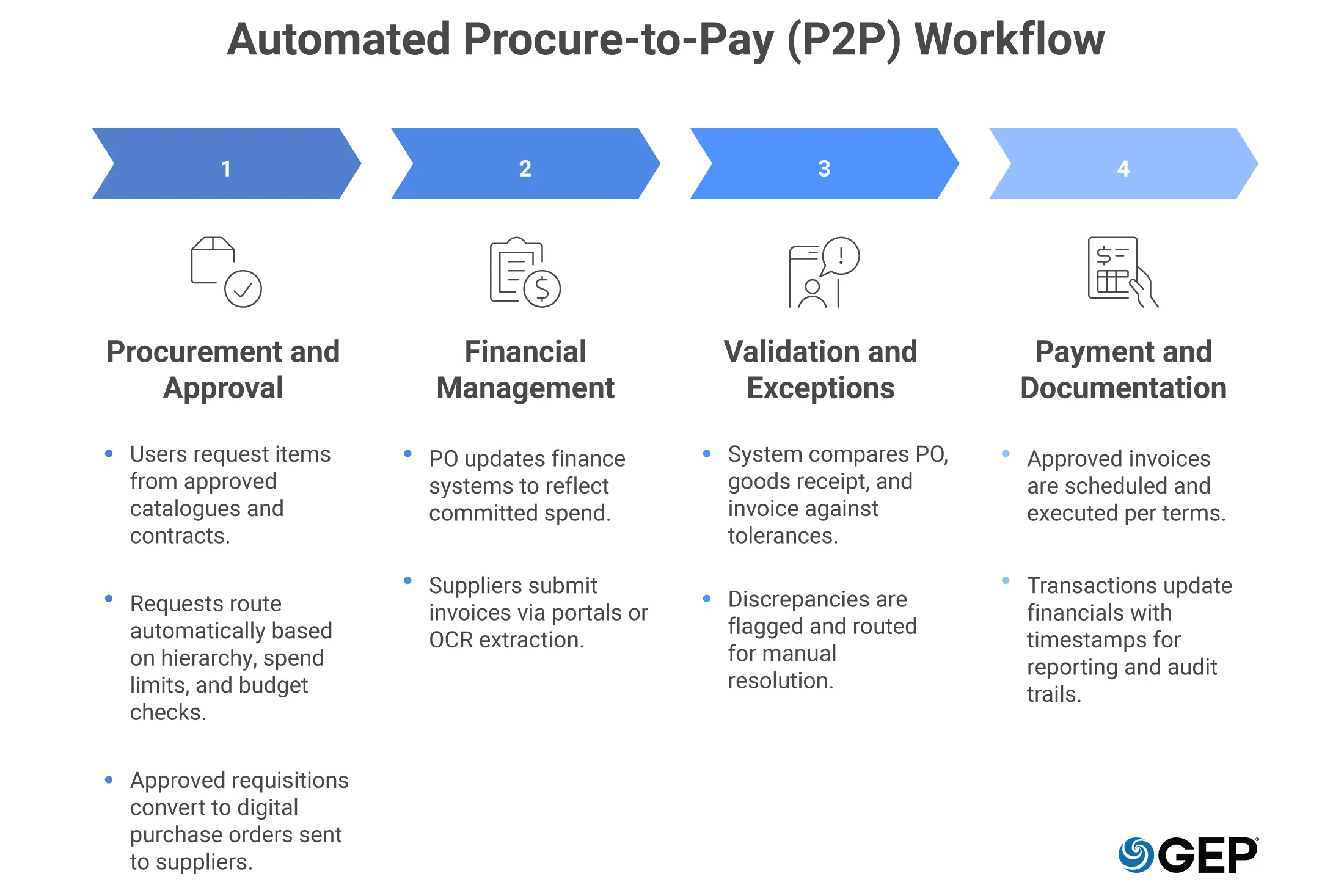
Procure-to-pay software connects purchase requisitions, goods receipts, and supplier payments into a controlled workflow.
You move away from fragmented systems and manual coordination, and shared data keeps purchasing activity aligned with what’s received and what’s paid for. That consistency creates control as volume grows, making procure-to-pay software for the manufacturing industry essential.
In manufacturing environments, the impact goes beyond efficiency. Transaction volumes increase. Bills of materials become harder to manage. Partial deliveries and quality checks collide with production schedules that allow little margin for error. When procurement, warehouse operations, and accounts payable operate independently, mismatches become routine.
Modern P2P platforms change the equation because they do more than record transactions. They interpret activity as it happens. The system tracks what was ordered and what arrived. Approvals connect directly to payment decisions using the same logic across large transaction volumes.
Common Causes of Invoice and GRN Mismatches in Manufacturing
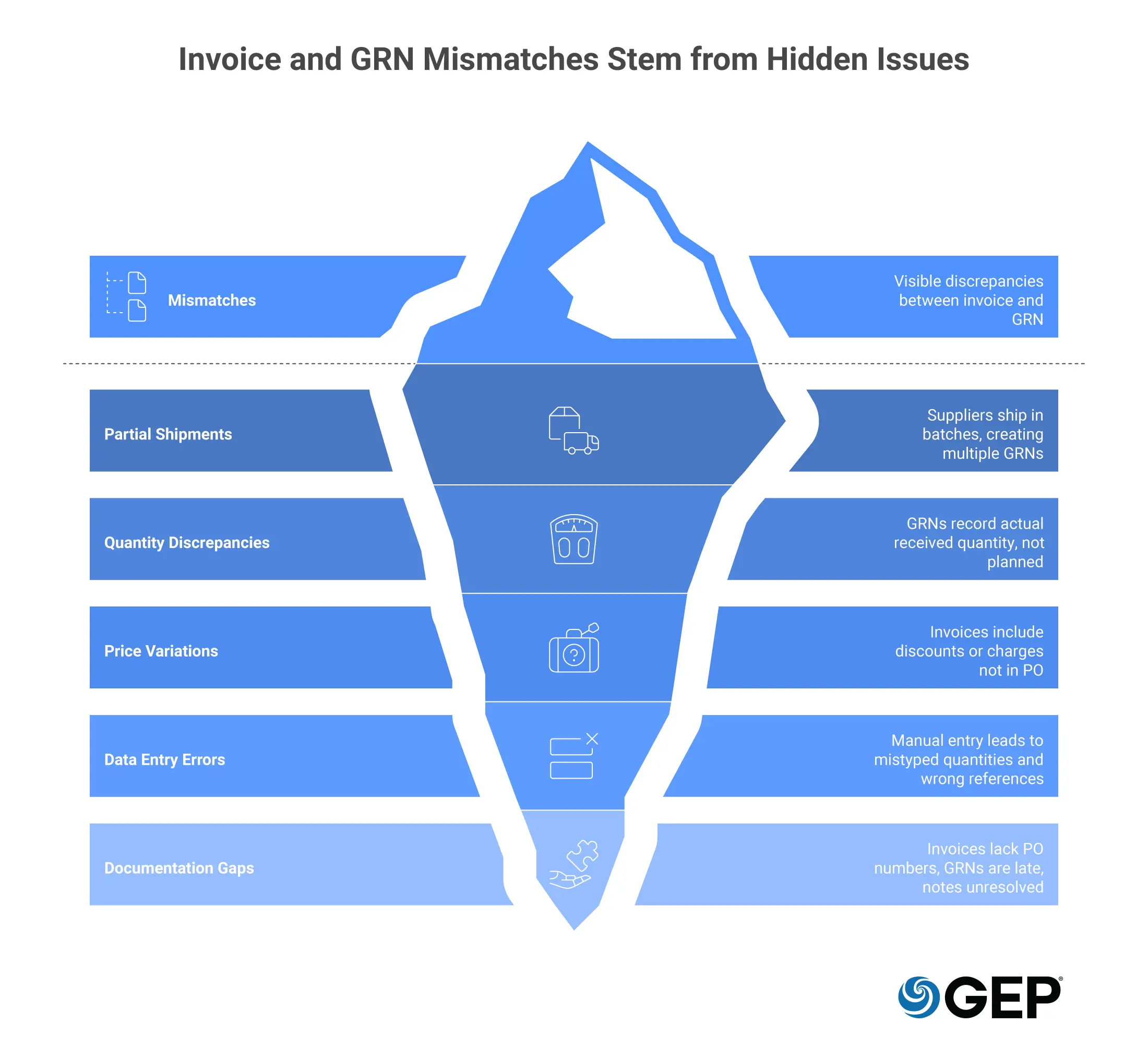
Partial Shipments
Suppliers ship in batches when capacity or transport forces the issue. Each delivery creates its own GRN. Invoices, however, often reference the full purchase order. Most systems fail to reconcile those receipts cleanly. Manual cleanup follows.
Quantity Discrepancies
GRNs record what actually shows up. That number rarely matches what was planned or billed. Short shipments and rejected items widen the gap, and the mismatch surfaces the moment the invoice is processed.
Price Variations
Invoices include discounts or extra charges that never made it into the purchase order. Freight is a common culprit. Tolerance limits get breached quickly. Side agreements made outside the system make reconciliation harder, not easier.
Data Entry Errors
Manual entry creates problems fast. Quantities are mistyped. Units get mixed up. Purchase order references are wrong. Duplicate GRNs or invoices arrive through different channels and compound the confusion.
Documentation Gaps
Invoices arrive without purchase order numbers. GRNs are recorded late. Credit and debit notes sit unresolved. Payments stall, and the risk of paying for unverified goods increases.
Discover GEP’s – AI Powered Procurement Software
Role of Procure to Pay Software in Preventing Invoice and GRN Mismatches
The real value of P2P software shows up in prevention, not in correction. Strong platforms reduce mismatches by changing how decisions are made and executed across procurement, receiving, and finance.
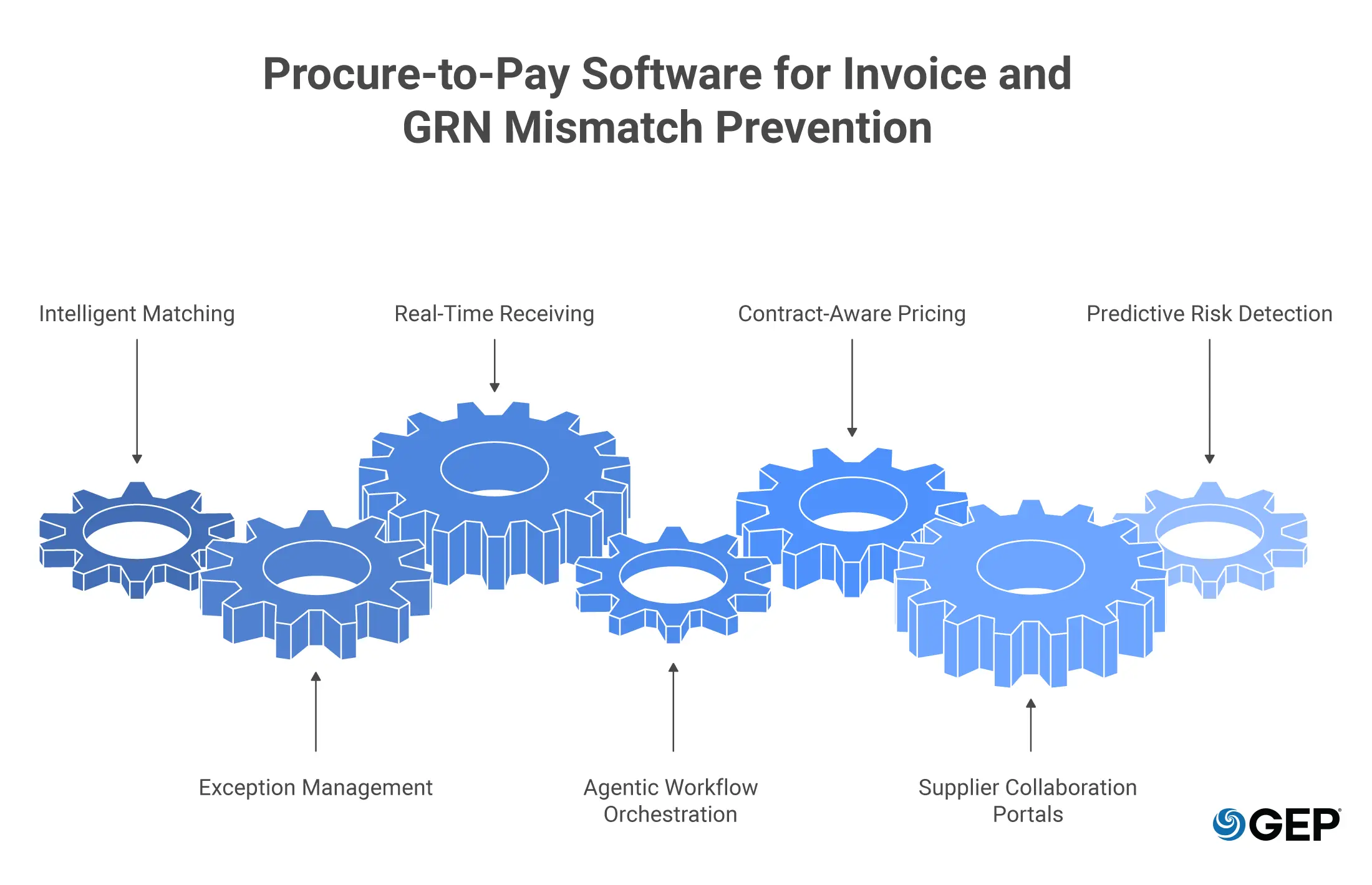
The focus shifts away from fixing errors after the fact and toward avoiding them altogether.
Intelligent Three-Way and Multi-Way Matching
Advanced procure-to-pay systems automate matching between purchase orders, GRNs, inspection records, contracts, and invoices. Models learn acceptable tolerance ranges for quantity and pricing while accounting for delivery timing. Legitimate variations pass without interruption. True anomalies are identified early with clear context.
Exception Management with Embedded Intelligence
Exceptions are classified by risk and likely cause instead of being routed automatically for manual review. Low-risk issues resolve automatically based on prior outcomes. High-risk cases escalate with context and clear recommendations.
Real-Time Receiving and Validation
When warehouse and quality teams record receipts as events occur, the system validates entries against purchase order terms immediately. Errors are corrected at the point of receipt. They do not surface weeks later during invoice processing.
Agentic Workflow Orchestration
Agentic AI coordinates actions across functions. When a partial delivery arrives, the system anticipates downstream impact. Matching logic adjusts. Expected invoices update. Suppliers receive changes automatically.
Contract-Aware Pricing Intelligence
Procure-to-pay software with contract intelligence automatically applies correct pricing and discount structures. Index-based adjustments follow agreed terms. One of the most common sources of invoice discrepancies is removed before invoices are submitted.
Supplier Collaboration Portals
Suppliers operate from the same source of truth. Approved purchase orders and receipt confirmations remain visible alongside payment expectations. Invoice errors drop before submission.
Predictive Risk Detection
By analyzing patterns across locations and suppliers, AI predicts where mismatches are likely to occur. You act early, before exceptions disrupt cash flow or production.
Is Your Grid Prepared for Supply Volatility?
See how predictive analytics strengthens sourcing decisions
The Future of Procurement Moves Toward Autonomy
Invoice and GRN mismatches are not a clerical issue. They signal misalignment between procurement, operations, and finance functions. With intelligent procure-to-pay systems in place, manual reconciliation is replaced by continuous control. Teams reduce time spent resolving discrepancies and redirect effort toward resilience and supplier strategy that supports sustained value.
The future of manufacturing procurement depends on platforms that interpret information, adapt over time, and take action alongside your teams. Control holds as operational complexity increases.
Many teams implement tools that automate transactions while leaving decision logic unchanged. Others focus on surface features and overlook intelligence, orchestration, and how exceptions are actually resolved. The result? A software that pushes errors through the system faster instead of preventing them upstream.
You can prevent this by moving beyond reconciliation and building lasting control at scale. Talk to us if you’d like to know how GEP’s Procure-to-Pay Software Solutions can help you work fast, at scale.




FAQs
Procure-to-pay software uses matching engines that process invoices and GRNs in parallel rather than sequentially. Transactions are grouped by supplier and location, then evaluated using contract context and delivery patterns. Large volumes can be validated at once while audit integrity remains intact.
Embedded logic monitors transaction behavior for anomalies, including duplicate invoices and unauthorized price changes. Irregular delivery patterns surface early. Approval policies are enforced dynamically, reducing reliance on manual controls that weaken under pressure.
Yes. Platforms allow configuration of matching tolerances and inspection workflows, along with contract logic and approval structures that reflect plant-level realities. The system adapts to your manufacturing model rather than forcing teams into operational workarounds.