


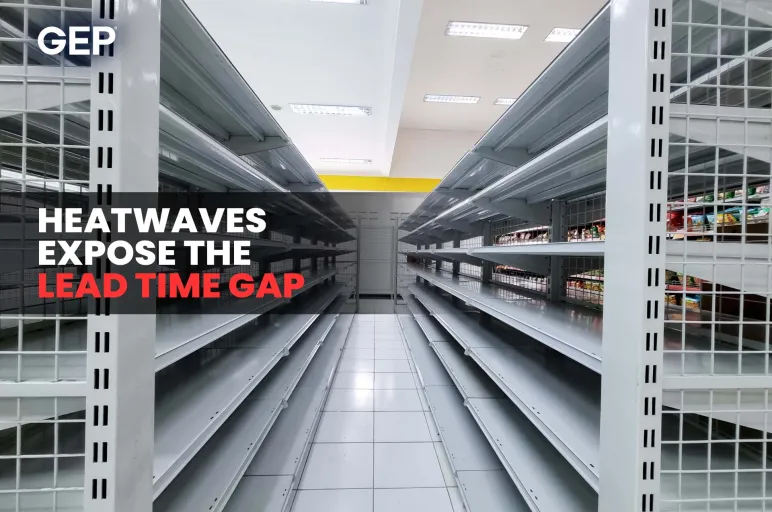
After Europe’s Record Heatwaves, Retailers Are Rethinking Lead Times
- September results from H&M, Inditex and John Lewis Partnership show that 2026 summer's heat has reached retailers' sourcing plans and margins.
- The core problem is timing: heatwaves peak within days, while most seasonal stock is ordered months ahead.
- Procurement teams setting 2027 sourcing plans, supplier terms and refrigeration budgets should now plan for heat every summer.
October 09, 2026 | Supply Chain Strategy 4 minutes read
When H&M reported third-quarter results on September 24, CEO Daniel Ervér talked about lead times. The company is buying more with shorter lead times and from factories closer to its main markets, he said, citing fast-moving trends and increasingly unpredictable weather.
H&M isn't alone.
Coverage of Inditex's trading update on September 9 noted that retailers are changing sourcing schedules because hot weather now runs into back-to-school, when stores usually start selling coats. The next day, John Lewis Partnership said the cost of running its operations through the heatwaves helped push supermarket chain Waitrose's operating margin down to 2.6% from 2.8%. A recent Global Electronics Association survey found two-fifths of electronics manufacturers had heat-related supply chain disruptions this year, with late supplier deliveries the biggest impact.
This is the first reporting season since Western Europe's hottest June and July on record. What retailers learned is mostly about timing.
Rethink Where You Source for Faster Response
Learn when regional sourcing beats global, and how to build a supply base that responds faster
Demand Moved in Days, Supply Needed Months
French retail chain Carrefour sold 30,000 fans and air conditioners on one day in late June, "a thousand times more than on a normal day," according to its CEO. In Germany, cooling products sold out at many retailers, and DIY chain Hornbach couldn't give a delivery date for new stock.
Swiss brand Stadler Form planned for very high volumes and still sold out. Its fans take about four months from production to delivery, so it expects new stock in mid-to-late October, long after the heat has gone.
Fashion has the same problem in reverse. When summer runs into September, autumn ranges arrive to warm weather and sit unsold while summer lines run out. Buying on a fixed calendar months ahead means markdowns on one side and stock-outs on the other.
Shorter lead times address both. Near-shore suppliers cost more per unit, but they let a retailer reorder while demand is still there.
Cold Chains Weren't Built for This
Grocers found a different weak point. In the U.K., Tesco, Aldi, Marks & Spencer and Sainsbury's all had to warn customers after chillers broke down. Refrigeration specified for a milder climate failed in the heat, and where it held, it cost more to run. Waitrose's margin shows that cost.
Waitrose, M&S and Sainsbury's are now upgrading to equipment rated for much higher temperatures. Waitrose is developing systems that work at up to 48°C.
Shorten Lead Times Before Next Summer
GEP helps retailers rebalance sourcing between offshore and near-shore suppliers so they can reorder while demand is still there
What Procurement Teams Should Do Before Next Summer
- Move some volume closer to market. For cooling products, summer apparel and other weather-sensitive lines, shift a share of buying to shorter-lead-time suppliers, even at a higher unit cost.
- Leave room in the buy. Hold back part of the open-to-buy and agree reserved capacity or flexible volume bands, instead of committing full-season quantities months out.
- Get stock in place early. Position heat-sensitive stock near stores before June. Agree in advance what a heat forecast triggers, from stock transfers to supplier calls.
- Write heat into refrigeration tenders. Specify equipment for higher ambient temperatures and require maintenance contracts to guarantee engineer response during heatwaves, when breakdowns cluster.
- Plan by region and by week. Use weather data to forecast by category and region. GEP's monthly data on adapting supply chains to volatility argues for decision cycles measured in days or weeks rather than quarters.
Much of next summer's range will be bought over the coming months. Retailers that build in shorter lead times and more flexibility now will be able to respond when the heat returns.



Frequently Asked Questions
Heatwaves raise cooling and refrigeration costs, slow warehouse and transport operations, and shift consumer demand suddenly toward some products and away from others. They can also disrupt suppliers in heat- and drought-exposed sourcing regions.
It's a way of forecasting that pays more attention to what's happening now than to what happened last year. A retailer using demand sensing watches short-term signals like the weather forecast, till data and website traffic, and adjusts its forecast as those signals change. If a heatwave is coming, stock can be moved to the stores that will need it before the shelves run empty, rather than after.
Start by finding out where the weak spots are. That means knowing which suppliers, ports and warehouses sit in areas prone to heat, drought or flooding. From there, most retailers look at spreading sourcing across more regions and keeping some inventory further back in the network, where it's easier to redirect. Climate risk should also shape bigger decisions, such as which stores to refit or where to build the next distribution center, since that equipment and those buildings will be in use for years.
CPG companies are squeezed from both ends. A drought or flood can cut off ingredients and raw materials, and extreme weather also makes it harder to predict what shoppers will buy. Suppliers that share forecasts with their retail partners and plan promotions and replenishment together tend to handle these swings better. They end up with fewer empty shelves and less excess stock to clear.