



Incentivizing Supplier Carbon Data Sharing: A Procurement Playbook
- Suppliers share carbon data when disclosure delivers value, not when it's mandated.
- Tie transparency to what suppliers value most: future business and better cash flow.
- Absorb the reporting burden, return insights, and guarantee data confidentiality to sustain trust.
July 17, 2026 | Sustainability 5 minutes read
Scope 3 emissions typically account for more than 70% of a company's carbon footprint, yet most enterprises still calculate them using industry averages and spend-based proxies. The reason is simple: suppliers aren't sharing their actual emissions data.
Closing that gap isn't a matter of sending more surveys. It's a matter of making disclosure worth a supplier's while. Here's how procurement leaders can turn carbon transparency from an unfunded mandate into a mutually valuable exchange.
Cut Emissions. Grow Margins.
Discover the tech and strategies supply chain teams are using to decarbonize logistics — without sacrificing profitability.
Why Primary Carbon Data Matters More Than Estimated Emissions Figures
Primary data — emissions measured at the supplier's facility, product or process level — is the difference between directional guesswork and decision-grade insight. Estimated figures can tell you your footprint is large; only primary data can tell you where to act. It enables accurate product carbon footprints, credible science-based target progress, and defensible disclosures under frameworks like CSRD and the SEC climate rules. Crucially, it also reveals which suppliers are genuinely decarbonizing, enabling procurement to reward performance rather than averages.
Also Read: Scope 3 Emissions Guide
Why Suppliers Are Hesitant to Share Carbon Data Today
Supplier reluctance is rational. Emissions data can expose production efficiency, energy sourcing and, indirectly, cost structures, which are considered sensitive intelligence in a price negotiation. Many suppliers, particularly SMEs and sub-tier vendors, lack the tools, expertise or headcount to measure emissions at all.
Others face survey fatigue: dozens of customers requesting the same data in different formats, with no feedback and no reward. When disclosure carries cost and risk but delivers nothing in return, silence is the sensible strategy.
The Primary Data Imperative: Moving Beyond Inaccurate Spend-Based Estimates
Spend-based estimates have a perverse flaw: they tie emissions to dollars, so a supplier that raises prices appears "dirtier," while one that decarbonizes sees no improvement in your ledger. That makes it impossible to credit real progress or steer sourcing decisions toward lower-carbon options.
Regulators and auditors are also tightening expectations around data quality. The imperative is clear, but you cannot mandate your way to primary data across thousands of suppliers. You have to incentivize it.
Commercial Levers: Tying Carbon Transparency to Volume and Growth Guarantees
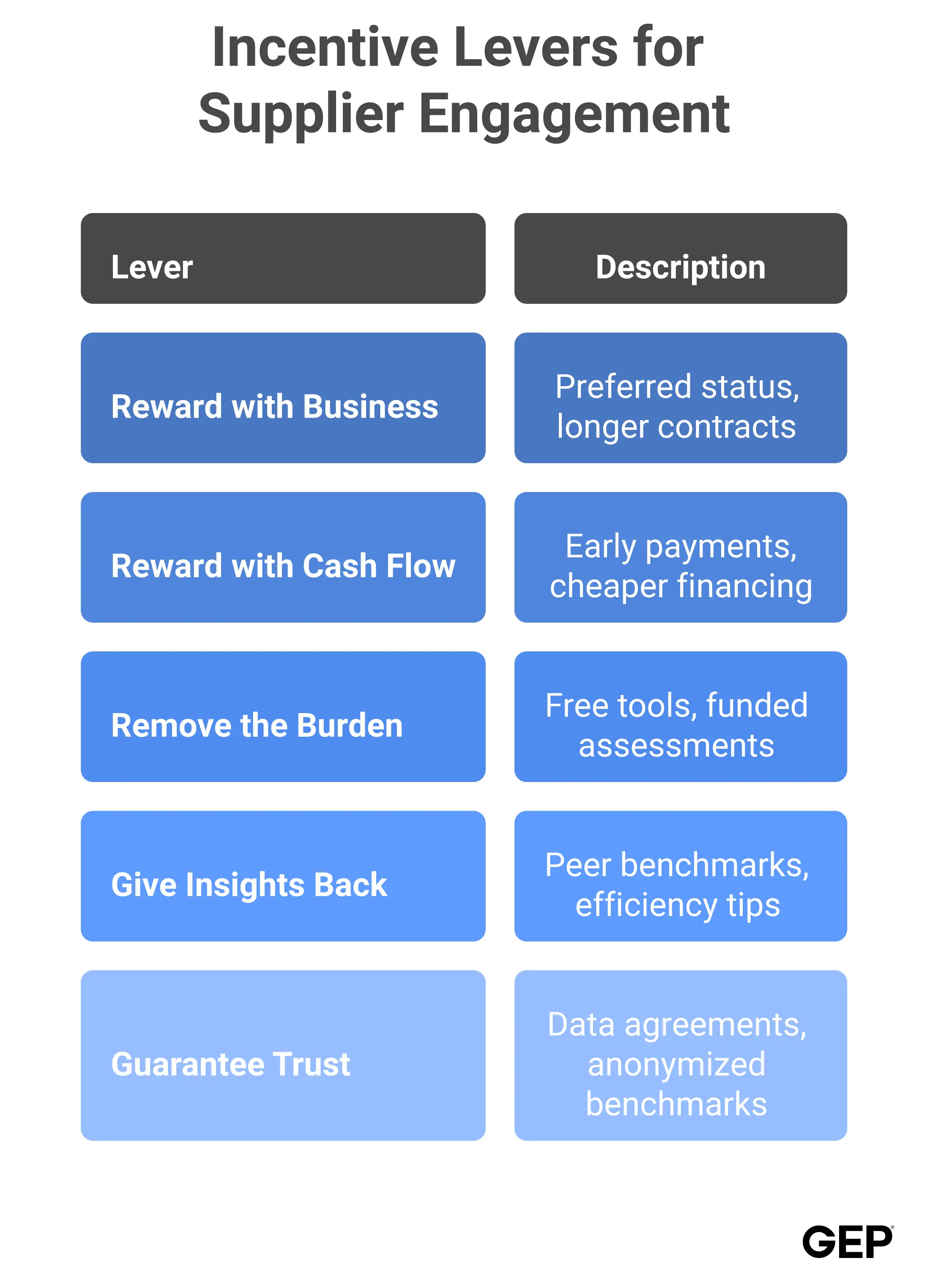
The most powerful currency procurement holds is future business. Embed data-sharing and decarbonization criteria into supplier scorecards, RFP weightings and preferred-supplier programs. Offer longer contract terms, volume commitments or first-look access to new business for suppliers who disclose verified primary data. When transparency becomes a pathway to growth rather than a compliance checkbox, response rates change dramatically; suppliers compete to share data instead of avoiding the ask.
Linking Environmental Disclosures to Working Capital Perks
Cash flow speaks louder than sustainability pledges, especially for smaller suppliers. Green supply chain finance programs tie preferential payment terms, early-payment discounts or lower-cost financing to environmental disclosure and performance.
A supplier who shares primary emissions data, and improves against it, earns faster payment or cheaper access to capital, often funded through banking partners at little cost to the buyer. For working-capital-constrained vendors, this is frequently the single most persuasive incentive available.
Absorbing the Technical Burden for Sub-Tier Vendors
If measurement is the barrier, remove it. Provide suppliers with free access to simplified carbon calculators, standardized templates and training. Fund or co-fund third-party assessments for strategic sub-tier vendors. Accept data in the formats suppliers already produce and let your platform do the normalization.
Modern procurement and sustainability platforms can ingest supplier data once and reuse it across reporting needs, sparing vendors the burden of answering the same questions repeatedly. The principle: the buyer with the mandate should carry the technical load, not the SME at tier 3.
Sharing Benchmarks and Efficiency Insights Back with Vendors
Data-sharing shouldn't be a one-way extraction. Return value to suppliers by benchmarking their emissions intensity against anonymized peer groups, flagging efficiency opportunities and highlighting where energy or process improvements would cut both carbon and cost. Suppliers who see that disclosure earns them actionable insight begin to view your data requests as a service rather than a demand. This feedback loop also improves data quality over time, as suppliers gain the fluency to measure more precisely.
Protecting Supplier Trust: Implementing Bulletproof Data Governance and Confidentiality
None of the aforementioned incentive strategies can work without trust. Be explicit about who sees supplier data, how it's used and what it will never be used for, such as reverse-engineering margins in negotiations. Use role-based access controls, aggregate or anonymize data in benchmarks, and codify protections in contractual data-use agreements.
Where sensitivity is acute, third-party verification bodies can validate emissions without exposing underlying operational detail. Trust, once established, compounds: suppliers who feel safe disclosing carbon data become willing partners on deeper collaboration.
Lead with Agentic AI
Drive smarter procurement and resilient supply chains with GEP’s enterprise-proven AI-native platform
Conclusion: Shifting Supply Chains from Compliance Pressures to Shared Value
Suppliers share primary carbon data when the exchange is fair — when disclosure unlocks growth, cash flow, insight and support instead of risk and unpaid work. Procurement leaders who build that value exchange won't just fill in their Scope 3 ledger; they'll build more resilient, more efficient and more decarbonized supply chains.
The shift from compliance pressure to shared value isn't just better sustainability strategy. It's better business.
Explore GEP’s AI-Native ESG Tracking & Reporting Platform




FAQs
Preferred-supplier status tied to disclosure is typically the highest-impact, lowest-cost lever. Weighting carbon transparency into scorecards, RFP evaluations and contract renewal decisions costs nothing directly, but it simply redirects business you were already going to award toward suppliers who share verified primary data. Volume commitments and longer contract terms follow the same logic: they trade certainty, not margin. Because these incentives touch a supplier's revenue rather than your price, response rates rise without any discount to procurement economics.
Combine contractual, technical and structural safeguards. Contractually, sign data-use agreements that explicitly prohibit using emissions data in price negotiations and define permitted purposes, retention periods and access rights. Technically, enforce role-based access so sourcing negotiators never see facility-level detail, and present shared benchmarks only in aggregated, anonymized form. Structurally, route sensitive disclosures through independent third-party verifiers or neutral data platforms, so the buyer receives validated emissions figures without visibility into the underlying operational data that could expose cost structures.
Standardize, simplify and absorb. Request data once through a single platform and reuse it across all internal reporting needs instead of issuing repeated surveys. Align questionnaires with recognized frameworks (such as the GHG Protocol or CDP) so suppliers can reuse responses across customers. Provide free calculators, templates and training for suppliers without measurement capability, accept data in the formats vendors already produce, and fund third-party assessments for strategic sub-tier suppliers. The guiding principle: every hour of effort you can shift from the supplier to your own systems raises response rates.
Green supply chain finance links a supplier's access to working capital — early payments, dynamic discounting or preferential financing rates — to their environmental disclosure and performance. Suppliers who share primary emissions data and improve against targets qualify for faster payment or cheaper financing, usually funded through banking partners rather than the buyer's margin. For sub-tier suppliers, who are often small, cash-constrained and far from the brand pressure driving sustainability programs, cheaper capital is a tangible, immediate reward that makes carbon measurement and disclosure a commercially rational investment rather than an unfunded compliance cost.