


Procurement Outsourcing for Friendshoring: Mitigating Geopolitical Risk in 2026
- Friendshoring is becoming the default framework for enterprises that need to reduce geopolitical vulnerability without sacrificing procurement efficiency.
- Procurement outsourcing gives organizations the specialized expertise and on-the-ground supplier networks needed to execute a friendshoring strategy at scale.
- Success depends on choosing the right outsourcing partner, establishing strong governance and using technology to maintain visibility across a more distributed supply chain.
June 17, 2026 | Procurement Strategy 5 minutes read
Companies that felt good about their supply chains a year ago are now scrambling. New tariffs, sanctions and export controls have a way of exposing exactly where your sourcing is fragile. Diversification used to be a long-term goal; now it’s an urgent one.
That’s where procurement outsourcing for friendshoring comes in. By working with specialized providers and shifting sourcing toward countries your government actually gets along with, you can cut your exposure to geopolitical risk without gutting efficiency.
Understanding Friendshoring and Its Growing Importance in 2026
So, what is friendshoring, exactly? It means sourcing from countries that share your trade agreements, regulatory standards and political values. It is different from nearshoring, which is really just about geography. Friendshoring is about choosing suppliers in places where a sudden policy change, sanction or border dispute is less likely to shut you down.
The stakes keep rising. Trading blocs are hardening, and regulators in the EU, US and elsewhere are now requiring companies to show they know where their goods come from and how their suppliers operate. Friendshoring helps with both.
The Impact of Geopolitical Risk on Global Procurement
Not long ago, supply chain disruptions meant a hurricane or a port strike. Now they are just as likely to start with a policy announcement. Tariffs can reset your landed costs overnight. Export controls can make a key input vanish. Sanctions can wipe out a supplier relationship you spent years building.
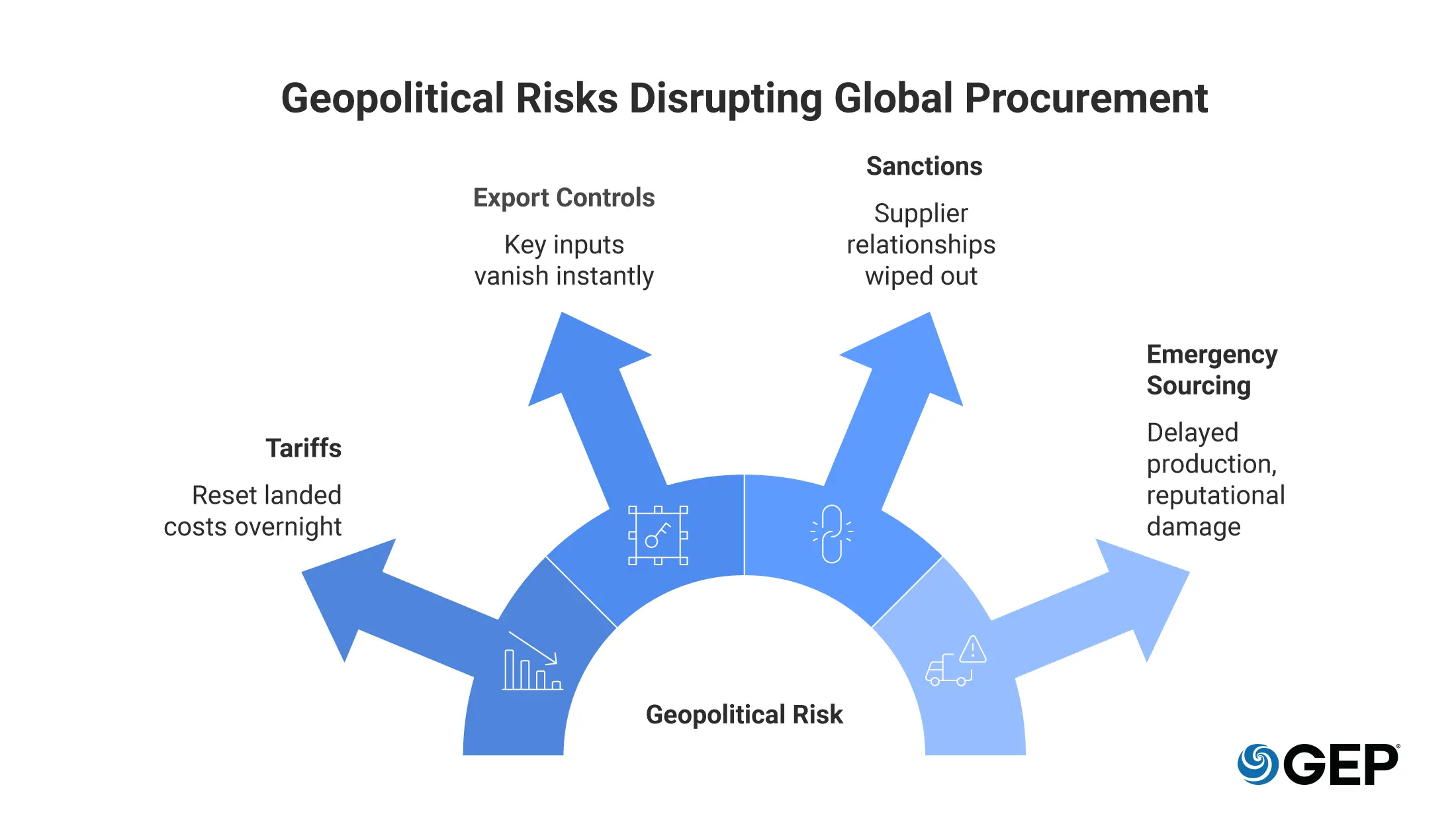
And the costs are significant. When a trade lane shuts down or a supplier lands on a restricted list, you are looking at emergency sourcing, delayed production and reputational damage. This is not a temporary rough patch. Procurement teams are being asked to build resilience into their operations while still hitting cost and service targets.
The numbers back this up. The WEF Global Risks Report 2026 found that geoeconomic confrontation — tariffs, sanctions and investment screening — now tops he near-term global risk rankings. One in five respondents called it the risk most likely to trigger a global crisis in 2026.
Why Procurement Outsourcing Is a Key Strategy
Here is the problem most procurement teams face: friendshoring requires capabilities they do not have in-house. You need market knowledge in new trade corridors, existing relationships with vetted suppliers in stable regions and people who understand local regulatory requirements. Building all of that from scratch takes time most teams do not have.
Outsourcing providers already have the supplier networks, regional expertise and category knowledge you need. You get speed and lower risk, without spending years building what they already have.
End-to-end procurement outsourcing handles everything from strategic sourcing and supplier qualification to contract management and performance tracking — so your team can move faster than it ever could on its own.
Benefits of Friendshoring: Reducing Risk and Enhancing Stability
Friendshoring does more than just reduce risk. Spreading your supply base across stable, aligned regions makes it harder for any one tariff decision or political flare-up to knock you off course. It also tends to make tariff scenario planning less of a guessing game. And because you have better visibility into how your suppliers operate, meeting labor and environmental compliance requirements gets a lot easier.
Best Practices for Implementing Procurement Outsourcing in a Friendshoring Strategy
Start by figuring out where you are actually exposed. Map your spend against political risk data and look for categories or suppliers with heavy concentration in unstable regions. That gives you a real priority list instead of just reacting to whatever crisis hits next.
Governance matters from the start. Assign clear ownership, set criteria for how you will choose new markets and suppliers and put reporting in place so leadership can actually track progress. Without that structure, friendshoring initiatives tend to lose momentum fast.
Evaluating Potential Partners for Friendshoring: What to Look for in 2026
Not every outsourcing provider is set up to support a friendshoring strategy. Look for real experience in your target regions and categories. Make sure they understand the trade agreement and compliance requirements you will actually face. And check that their technology gives you live visibility into supplier performance, risk signals and spend; managing a more distributed supply base without good data is a nightmare.
Procurement services should cover supplier qualification, contract management and the ability to grow with you. A provider that helps you find suppliers but cannot help you manage them long-term just creates a different kind of headache.
AI Has Moved From Experiment to Execution
Learn How It’s Shortening the Time From Signal to Action
The Strategic Imperative for 2026
Global trade is not going back to the way it was. Competing blocs, new sanctions and tightening export controls are not a phase — they are the new normal for procurement teams.
The companies building more resilient and geographically diverse supply chains right now will be in a much stronger position when the next disruption hits. Procurement outsourcing gives you the tools and expertise to make that shift happen. The longer you wait, the more likely it is that a crisis makes the decision for you.
Want to explore how leading companies are managing geopolitical risk in their supply chains? Download the full GEP Outlook 2026 report for detailed insights on the critical themes procurement and supply chain leaders need to be aware of in 2026.




FAQs
What exactly is friendshoring, and how is it different from nearshoring and offshoring?
Friendshoring means buying from countries that share your trade agreements and political values, not just the cheapest or closest ones. Nearshoring is about distance; offshoring is about cost; friendshoring is about trust and stability.
What are the financial implications of implementing a friendshoring strategy for global businesses?
There are upfront costs, but over time you spend less on supply chain emergencies and regulatory penalties. You also get more predictable landed costs, because you are less exposed to sudden tariff swings.
How does procurement outsourcing help mitigate geopolitical risks in supply chains?
Good outsourcing providers already have supplier networks in stable regions, so you are not starting from zero. They also bring compliance know-how and risk monitoring your internal team probably does not have the bandwidth for.
What technologies can assist in the efficient management of procurement outsourcing and friendshoring?
AI-powered procurement platforms give you supplier intelligence, spend visibility and risk monitoring in one place. Integrated source-to-pay software keeps your diversification on track and makes sure governance does not fall through the cracks.