


Agentic AI in BFSI Procurement: From Insights to Autonomous Action
- Agentic AI turns procurement insights into structured, policy-aligned action instead of static reports.
- It makes risk management, cost control, and compliance continuous rather than periodic.
- The real advantage comes from balancing autonomous execution with strong governance and clear human oversight.
August 14, 2026 | Procurement Strategy 6 minutes read
If you look at procurement inside banking, financial services, and insurance today, it is carrying more weight than ever. It is not just about negotiating rates or managing vendors. It is about regulatory exposure, third party risk, technology investments, ESG scrutiny, and cost discipline all at once.
Most BFSI organizations already have analytics. There are dashboards for spend. Tools for supplier risk. Systems for contracts. The visibility is there.
What is often missing is momentum.
Insights sit in reports. Alerts sit in inboxes. Decisions wait for meetings. That is the gap Agentic AI in BFSI procurement is designed to close.
Instead of stopping at analysis, agentic systems interpret context, apply policy logic, and move the workflow forward. Sometimes that means recommending an action. In clearly defined cases, it means executing one. This is where AI- driven procurement automation starts to feel practical rather than theoretical.
In simple terms, Agentic AI connects what the data is saying to what the organization actually does next.
Move from Insight to Intelligent Action
Bring Agentic AI to BFSI procurement and optimize risk, cost and compliance
Key Benefits of Agentic AI in BFSI Procurement
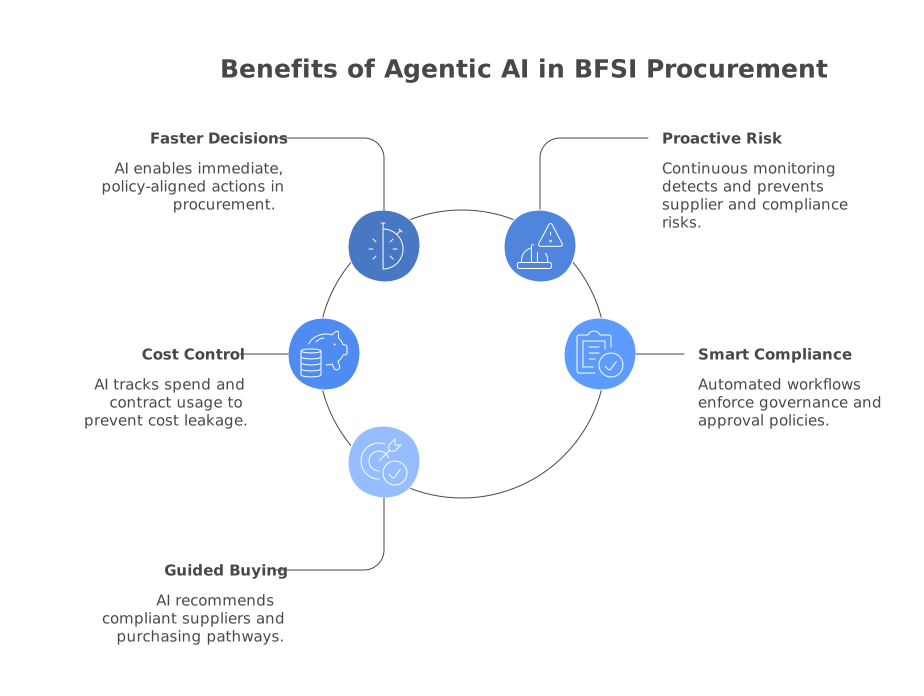
Smarter Decisions, Without the Lag
AI in procurement decision- making for BFSI allows systems to continuously evaluate spend patterns, supplier performance, contract compliance, and market benchmarks.
Instead of waiting for quarterly reviews to spot an issue, the system highlights what needs attention as it happens. If policies allow, it can also trigger the next step automatically. That is what real data- driven procurement in BFSI looks like. Not reactive. Not rushed. Just steady and informed.
Risk Management That Is Actually Proactive
In financial institutions, supplier risk is never static. A vendor’s financial health can change. A sanctions list can be updated. A cybersecurity concern can surface overnight.
Agentic AI for financial institutions procurement monitors these signals in the background. When something shifts, it does more than send a notification. It can initiate a reassessment workflow, alert compliance teams, or suggest alternate suppliers based on predefined criteria.
That is autonomous action in BFSI procurement, but always within guardrails.
Continuous Cost Discipline
Cost optimization in BFSI is not just about negotiating a better rate once a year. It is about monitoring license usage, tracking contract leakage, and identifying consolidation opportunities across categories.
AI- based financial procurement systems look at these patterns together rather than in isolation. They can flag underutilized software licenses, identify price variances, and surface renegotiation windows early.
Improving efficiency in BFSI procurement with AI becomes part of daily operations rather than a one- time initiative.
Governance That Does Not Slow You Down
Compliance is part of the DNA of BFSI organizations. Every procurement decision must be documented, approved, and defensible.
Agentic AI enforces workflows automatically. It records why a decision was made and ensures approval hierarchies are respected. Instead of adding friction, it embeds control directly into the process.
So when someone asks, What is Agentic AI in BFSI procurement, the clearest answer is this: it is AI that understands policy, respects boundaries, and helps move decisions forward responsibly.
Real-World Applications of Agentic AI in BFSI Procurement
Always On Supplier Risk Monitoring
BFSI procurement insights through Agentic AI make supplier risk assessment continuous rather than periodic.
Financial indicators, ESG ratings, compliance updates, and adverse media signals are evaluated on an ongoing basis. If a supplier’s profile changes, the system can automatically initiate a review and recommend mitigation steps.
The response becomes structured and timely instead of reactive.
Contract Intelligence That Goes Beyond Storage
AI in banking procurement process often begins with contract analytics. Agentic systems extract key clauses, compare them against standard templates, and highlight deviations.
But it does not stop there. Suggested revisions can be routed to legal teams. Updated versions can be stored automatically. Obligations can be tracked in real time.
The role of AI in autonomous procurement actions becomes clear when contract governance happens seamlessly in the background.
Technology and Cloud Spend Oversight
Digital transformation has expanded software and cloud spending across BFSI organizations. Managing that spend requires constant attention.
Agentic AI in BFSI procurement can track utilization rates, forecast renewal needs, and flag contracts that are approaching expiration. Instead of scrambling at the last minute, procurement teams get structured visibility and time to negotiate strategically.
Guided Buying That Protects Compliance
Business units want speed. Procurement needs control. That tension is familiar.
Agentic systems can interpret business requests, match them to approved suppliers or catalogs, and guide users through compliant pathways. The experience feels intuitive for end users while still protecting policy standards.
This is how Agentic AI drives autonomous actions in BFSI procurement. It operates inside everyday workflows, not outside them.
Key Considerations for Integrating Agentic AI in BFSI Industry
Strong Data Foundations
High- quality data is essential. Clean supplier master records, consistent category taxonomies, and accurate contract metadata form the backbone of effective automation.
Without this groundwork, AI- based financial procurement systems cannot deliver reliable results.
Security and Regulatory Alignment
Is Agentic AI secure for use in BFSI procurement, given the sensitive data involved? It can be, provided it is implemented within secure enterprise environments.
Encryption, strict access controls, audit logs, and alignment with regulatory frameworks are non-negotiable. Agentic AI for financial institutions procurement must reflect the organization’s risk tolerance and compliance obligations.
Clear Governance and Oversight
Agentic AI should operate within clearly defined authority levels. Some actions may be fully automated. Others may require human approval.
Clarity around thresholds, escalation paths, and accountability ensures that automation strengthens governance rather than weakening it.
Transparency and Explainability
In regulated sectors, decisions must be explainable. Stakeholders need to understand why a supplier was flagged or why a workflow was triggered.
Transparent logic builds trust and supports audit requirements.
Stay ahead of shifting spend dynamics across key categories.
Explore the GEP Spend Category Outlook to inform data driven decisions.
How Agentic AI Integrates with Existing Systems in BFSI Industry
BFSI technology environments are layered and interconnected. ERP systems, sourcing platforms, contract lifecycle management tools, and risk management applications all play a role.
Agentic AI does not replace these systems. It sits above them as an orchestration layer.
Through secure integrations and APIs, the system pulls data from existing platforms, analyzes it, and then pushes actions back into the same workflows. This creates a connected decision framework rather than another isolated tool.
An Agentic AI Procurement Orchestration Platform can unify spend analytics, supplier management, and contract governance into a coordinated ecosystem. Solutions such as the Agentic AI Procurement Orchestration Platform illustrate how AI can strengthen existing infrastructure without disrupting it.
That is how AI for financial procurement insights becomes operational and actionable.
Role of Agentic AI in transforming procurement in the BFSI sector
Procurement in BFSI operates under constant pressure to reduce costs, manage complex supplier ecosystems, and meet strict regulatory expectations.
Agentic AI in BFSI procurement offers a practical evolution. It links insight to action. It embeds AI driven procurement automation into everyday workflows. It supports data driven procurement in BFSI that runs continuously and responsibly.
BFSI procurement transformation with AI is not about removing human expertise. It is about enhancing it with intelligent systems that operate within guardrails and take structured, policy aligned actions when needed.
In an environment defined by complexity and scrutiny, that balance between autonomy and control is where real value emerges.




FAQs
Agentic AI improves efficiency by automating repetitive workflows, continuously monitoring supplier and spend data, and initiating pre approved actions within defined authority levels. This reduces delays, shortens cycle times, and increases consistency.
Agentic AI analyzes supplier performance history, financial stability, compliance records, ESG metrics, and pricing benchmarks. It produces data driven shortlists aligned with policy and risk appetite, supporting more objective decision making.
When deployed within secure enterprise architectures that include encryption, access controls, audit logging, and regulatory alignment, Agentic AI can operate safely. Strong governance ensures sensitive procurement data remains protected while enabling advanced automation.