



Green Procurement Policy: How to Turn Sustainability Targets Into Buying Rules
- Set measurable RFP criteria so buyers can score bids the same way
- Check supplier claims against certifications and raw emissions data
- Put green commitments in contracts and track them with scorecards
October 08, 2026 | Sustainability 4 minutes read
Purchased goods and services can make up half of what a company spends, sometimes more. Whoever signs off on that spend has a large say in the company's environmental footprint.
Most large companies have sustainability targets on their websites. Far fewer have rewritten the rules their category managers follow when they're scoring an RFP on a Tuesday afternoon. A green procurement policy connects the two by turning broad commitments into criteria buyers apply on every purchase.
Map and Reduce Your Scope 3 Emissions
Get GEP's quick start guide on building a Scope 3 baseline and planning emission cuts with suppliers
What is a Green Procurement Policy?
In plain terms, it's the rulebook for buying. Every purchase gets judged on its effect on the environment and on human health.
It covers what you use to run the business (printer paper, laptops, cleaning supplies, break-room food) and the inputs that end up in what you sell. It also asks where a product goes once you're done with it.
Why Enterprise Procurement Must Go Green?
Governments got here first. In the US, the Department of Agriculture built its green purchasing program on laws such as the Resource Conservation and Recovery Act. Companies are catching up, pushed by regulators and by customers who prefer greener businesses.
There's a cost argument too. Efficient equipment uses less energy, and less packaging means less waste to pay for. Clear standards also save buyers hours of comparing products against fuzzy criteria.
Key Components of an Enterprise Green Procurement Policy
Start with a one-page statement tying the policy to company targets, signed by senior leadership.
Defining Clear Environmental Criteria and Thresholds for RFPs
Telling buyers to "prefer eco-friendly options" sounds fine until they have to score six bids against it. Each category needs measurable criteria written into its RFP template: minimum recycled content, energy ratings, a restricted chemicals list, and packaging limits. Make some of these pass/fail and weigh the rest.
Supplier Code of Conduct
This is where supplier expectations get written down, covering emissions reporting, waste, hazardous substances, labor standards and the consequences of falling short. Johnson & Johnson's program is a useful model, pairing requirements with real support for suppliers.
Life Cycle Assessment (LCA) Standards in Category Management
LCA standards push category managers to look at a product's full life, from raw material extraction through use and disposal. Running a full assessment on every purchase would swamp the team, so save it for high-impact categories like packaging, electronics, facilities and fleet.
Common Challenges in Green Procurement Policy
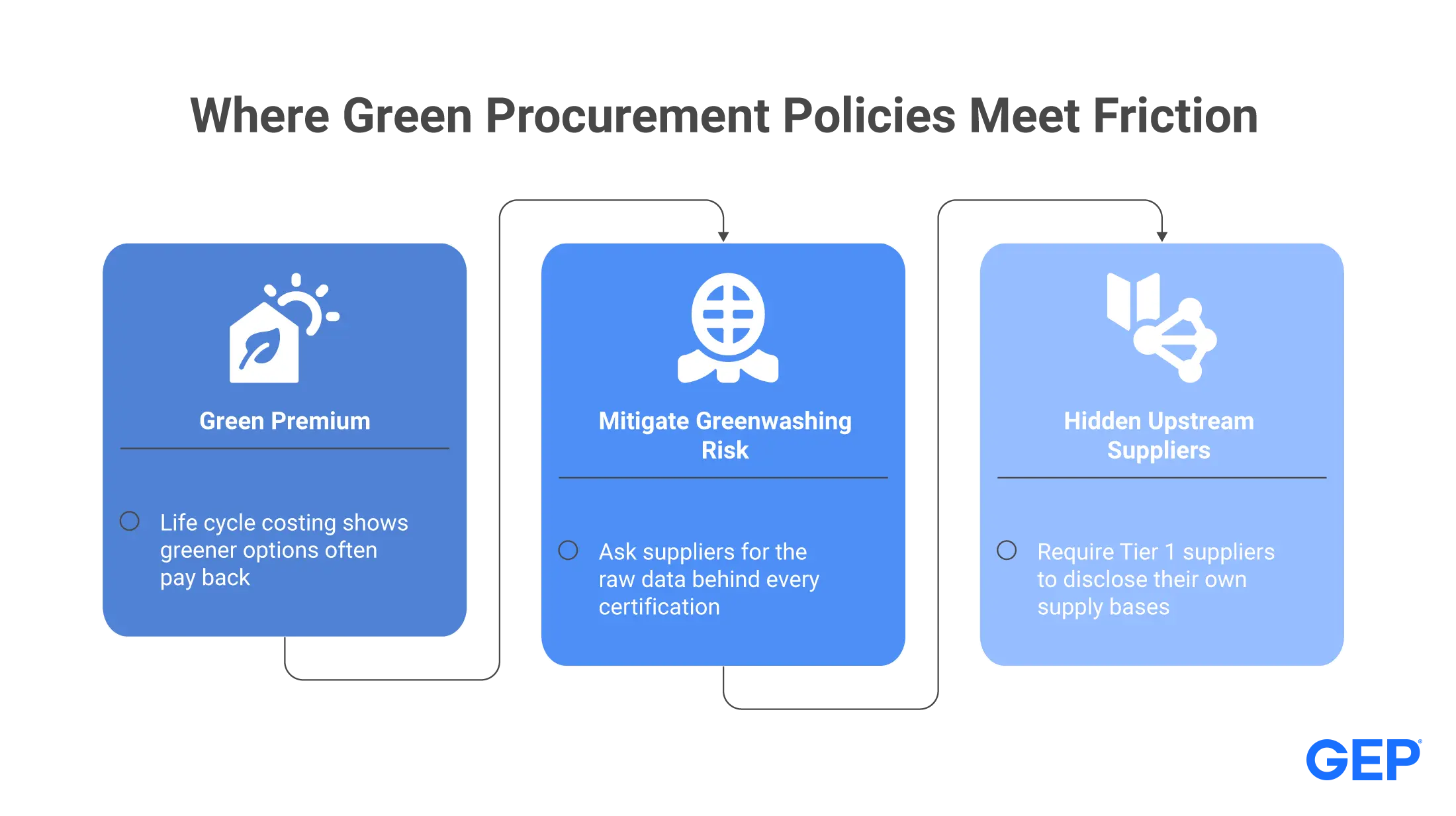
Approval is usually the easy part. Things get harder once buyers apply the policy to live sourcing events.
Mitigating the "Green Premium": Long-Term vs. Short-Term Value
Yes, some greener products cost more upfront, and budget owners will say so. Life cycle costing tends to change that conversation. Energy savings and rebates (ENERGY STAR lists many of them) often cover the difference over time.
Fighting Greenwashing: Verifying Third-Party Certifications and Raw Data
Some supplier claims hold up under scrutiny. Others amount to a logo on a spec sheet. Third-party certifications make a reasonable first filter, but ask for the underlying data too. If you're unsure which labels to trust, the UN Forum on Sustainability Standards keeps a catalog of voluntary standards.
Addressing Multi-Tier Supplier Visibility Bottlenecks
You probably know your Tier 1 suppliers well. What about the processor a few steps upstream who supplies their raw materials? Environmental risk often concentrates there. The fix starts in the contract: require Tier 1 suppliers to disclose their own supply bases.
Implementation Roadmap: Green Procurement Best Practices
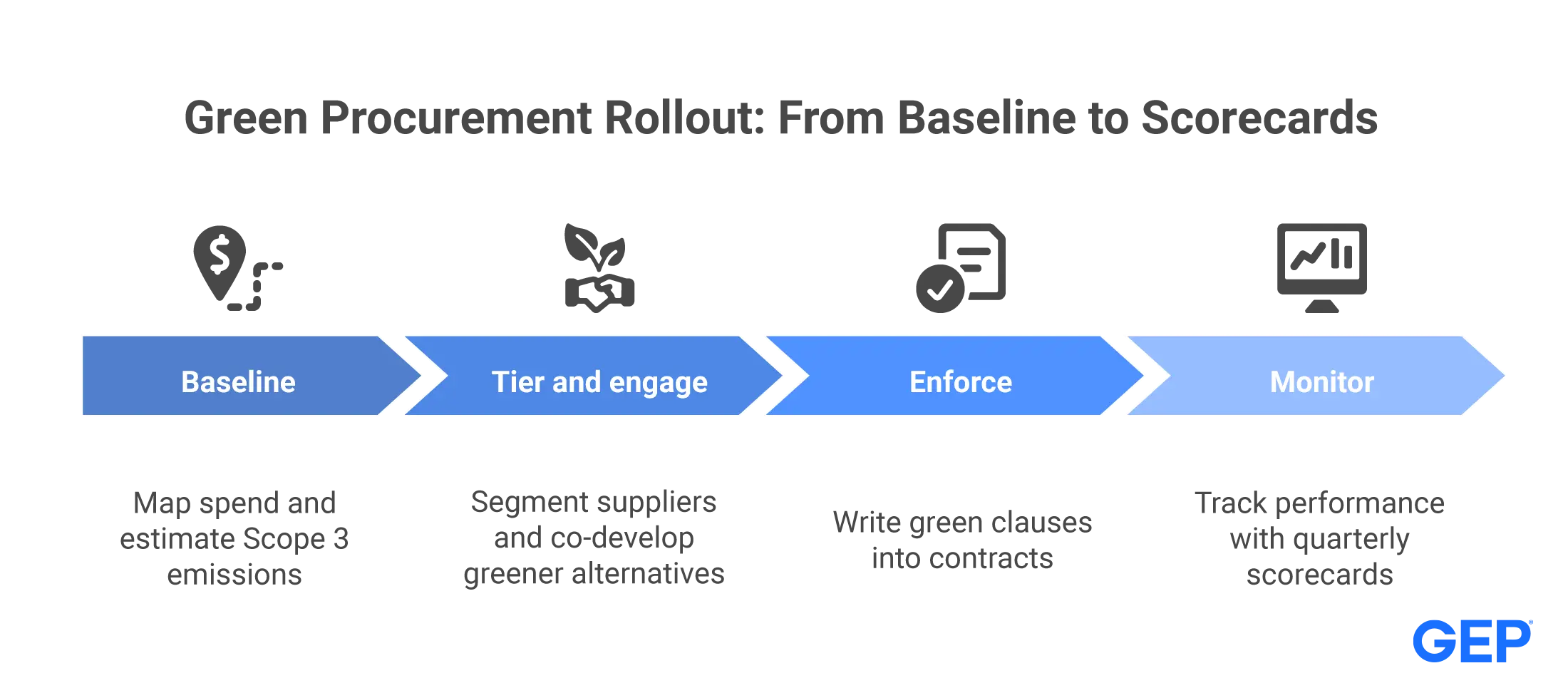
Rollout goes better in stages, because each step needs data from the one before it.
Baseline Assessment: Measuring Scope 3 Carbon Footprint Across Supply Tiers
Map your spend by category and supplier, then put an emissions estimate against each line. Spend-based estimates are fine for a first pass. Swap in supplier-specific numbers as they come in.
Supplier Tiering and Engagement: Co-Creating Sustainable Product Alternatives
Segment suppliers by how much you spend with them and how emissions-intensive their work is. For the high-spend, high-impact group, set up joint working sessions on alternative materials or lower-carbon logistics.
Contractual Enforcement: Integrating Green Clauses
Whatever a supplier promises during sourcing should show up in the contract. That means clauses on emissions reporting, reduction targets, audit rights and remedies for missed milestones. When those clauses shape the renewal decision, suppliers take them seriously.
Continuous Monitoring: Utilizing Supplier Sustainability Scorecards
Scorecards keep all of this visible after signing. Track emissions intensity, certification status and progress against targets every quarter. AI-native platforms can update scores continuously from supplier submissions and outside risk signals, so category managers catch slippage early.
Build a Supply Base That Supports Your Climate Targets
Talk to GEP about embedding sustainability criteria into sourcing and supplier management
Where to Start This Quarter
Pick a handful of high-emission categories and pilot the criteria and scorecards there first. A few quarters of results give you hard evidence for expanding it.
Put ownership with procurement, and have sustainability and finance review the numbers each quarter so the program survives the next budget cycle.
Unlock the Potential with GEP’s - AI-Native ESG Tracking & Reporting Software



FAQs
They overlap a lot. Green procurement focuses on environmental impact like emissions and waste, while sustainable procurement adds social and economic factors such as labor conditions.
LCC adds up everything a product costs you over its life: purchase price, running costs, maintenance and disposal. Greener options often come out cheaper on that basis.
Ask for recognized third-party certifications, then ask for the raw data behind the claim. Put audit rights in the contract and cross-check disclosures against external data.
Lower operating costs come first. Buyers also decide faster with clear standards, and the company carries less regulatory and reputational risk.