



The Role of Procurement Services in Driving Supplier Diversity & Inclusive Sourcing Outcomes
- Supplier diversity is no longer a compliance checkbox; it's a proven lever for supply chain resilience, innovation and competitive advantage.
- Procurement services teams unlock diverse supplier networks by combining market expertise, technology and structured sourcing programs.
- Real, measurable outcomes depend on the right data, stakeholder alignment, and accountability, all areas where procurement services providers add clear value.
May 04, 2026 | Procurement Strategy 4 minutes read
Most companies say they are committed to supplier diversity. Far fewer can show results. The gap is rarely about values. It's about execution.
Building a real supplier diversity program takes structure, data and sustained focus. For most procurement teams, that's the problem. They're already managing costs, risks and technology changes. Diversity in procurement gets pushed aside when capacity runs short.
That's where procurement services come in. They bring the expertise, bandwidth and tools needed to turn good intentions into real, lasting outcomes.
What Is the Importance of Supplier Diversity and Inclusive Sourcing in Procurement?
The business case for supplier diversity goes well beyond social responsibility. Companies with diverse supplier bases tend to outperform peers on innovation, cost and supply chain agility. Sourcing from women-owned, minority-owned, veteran-owned and small businesses brings in new ideas and healthy competition. That makes the whole supply base stronger.
Inclusive procurement also reduces risk by ensuring a company is not relying too heavily on a few large suppliers. Diverse vendors often work in different regions and use different methods. That variety provides a natural buffer when disruptions hit.
The social impact matters too. Spending with diverse suppliers supports local jobs and communities. It also matters to investors, regulators and customers. For many companies, supplier diversity data now appears in ESG reports and supplier disclosures. It has moved from a nice-to-have to a board-level priority.
How Procurement Services Unlock Diverse Supplier Networks
The biggest barrier to supplier diversity isn't intent. It's discovery. Most internal teams source from the same suppliers they've always used. Finding certified diverse vendors takes active outreach, verified credentials and market knowledge. That's a lot to ask of a stretched team.
Procurement services providers already have those connections. They keep current databases of certified minority-owned, women-owned, veteran-owned, LGBTQ+-owned and disability-owned businesses. This saves internal teams time and ensures spend data reflects real, verified diverse vendor activity.
Good procurement services teams also help diverse vendors get ready to compete. They assist with compliance requirements, system onboarding, and qualification steps. This grows the pool of eligible diverse suppliers over time, which benefits everyone.
The Technology Edge: Enabling Inclusive Sourcing at Scale
Without the right tools, teams struggle to track diverse supplier spend, find gaps or prove progress. Procurement services providers backed by strong technology change that.
Modern source-to-pay platforms tag and track diverse vendor spend in real time. They surface opportunities to shift spend toward certified diverse suppliers as sourcing decisions are being made. AI tools can scan spending patterns and flag categories where diverse options exist but haven't been used. Reporting becomes active, not just a year-end exercise.
Technology alone isn't enough, though. The services team is what turns data into action. They design the strategy, build supplier relationships and keep the program on track.
Key Procurement Services Capabilities for Driving Both Goals
Supplier diversity programs need specific skills to work, and most companies don't have all of them in-house. That's where a strong procurement services partner makes the difference.
Supplier identification and certification management keeps spend data clean and accurate. Many companies discover that their reported diverse spend includes vendors with lapsed certifications: an easy oversight that creates real disclosure risk. Ongoing management by a dedicated services team prevents it.
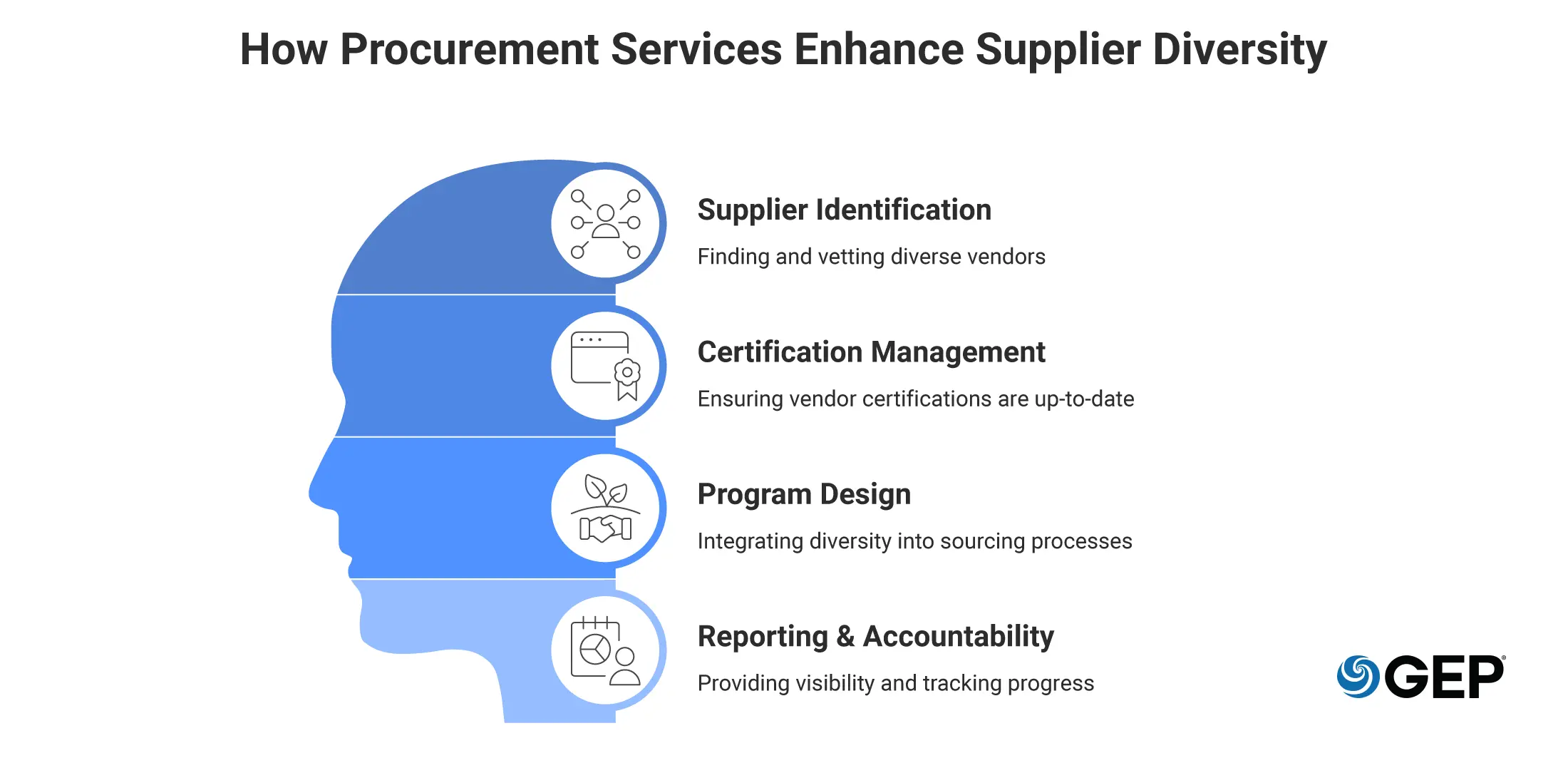
Sourcing program design should put diversity into the process from the start, not as an afterthought. A good services team builds it into RFPs, sets spend targets by category, and creates fair evaluation criteria so diverse vendors have a genuine shot at winning business.
Finally, strong reporting and accountability capabilities close the loop. Leaders need visibility into progress, business units need clear targets, and external stakeholders need verified data. Procurement services teams build the dashboards and governance structures that make all of that possible.
What Do DEI Policy Shifts Mean for Supplier Diversity?
Learn how to strengthen inclusive sourcing in a changing policy environment
Turning Commitment Into Competitive Advantage
Supplier diversity and inclusive procurement drive real business results. They build stronger supply chains, reduce risk and create value for the business and the communities around it. The companies that win aren't just the ones with the best intentions. They're the ones who execute well and measure what matters.
Procurement services provide the infrastructure to do that. They bring together market access, technology and supplier development to help teams move from good intentions to real outcomes.
The benefits build over time: better supplier relationships, a more resilient supply chain and a procurement function that creates genuine value. The right partner gets you there faster.




FAQs
By identifying certified diverse vendors, building diversity criteria into sourcing events, and tracking spend accurately. They also help diverse suppliers qualify, which grows the eligible pool over time.
Through spend metrics, supplier onboarding rates, and vendor performance data. Good providers build real-time dashboards so leaders can track progress against targets at any time.