



Beyond Transparency: The Future of Supply Chain Visibility
- Knowing where your goods are is table stakes in 2026. The real competitive edge belongs to organizations that can predict what happens next and act before disruption strikes.
- Most supply chains are still flying blind beyond Tier 1, leaving them exposed to risks that AI-native visibility platforms are now purpose-built to catch.
- The road to the autonomous supply chain runs through predictive intelligence: organizations that invest in end-to-end visibility today are building the data foundation that autonomous operations will require by 2030.
May 20, 2026 | Procurement Software 4 minutes read
For years, supply chain visibility meant a dashboard showing you where your shipments were. If you knew where your containers sat, you were ahead of the pack.
That era is over. Knowing where things are is no longer a differentiator. The future of supply chain visibility is about moving from tracking to thinking: from transparency to predictive intelligence that tells you what will happen and recommends what to do before a disruption ever touches your operations.
Evolving From Visibility to Predictive Intelligence
The traditional visibility model was reactive by design. A shipment stalled at a congested port. An alert fired. A planner scrambled. That sequence still describes many organizations today.
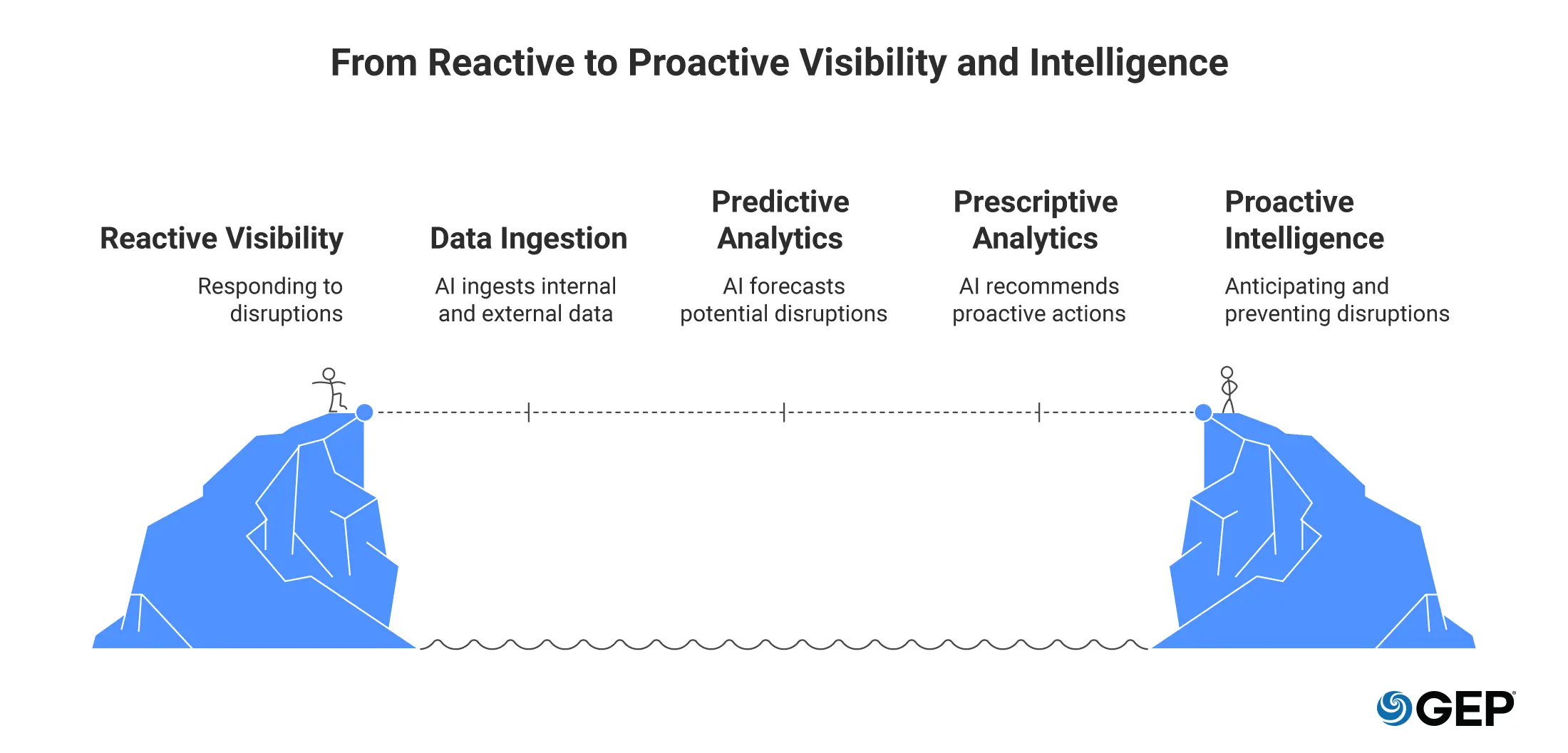
The shift underway is more fundamental. AI-native platforms are moving from descriptive analytics (what happened) to predictive and prescriptive analytics (what will happen and what should you do). Machine learning models ingest external signals like weather patterns, port congestion data and freight rate indices alongside internal ERP data to forecast disruptions before they materialize.
When AI can surface a likely Tier 2 supplier failure weeks before it becomes a Tier 1 shortage, procurement teams have time to qualify alternatives and adjust inventory. When they find out after the fact, every option costs more.
Challenges in Supply Chain Ecosystems for 2026 and Beyond
The most significant visibility challenge in 2026 is not technological. It is structural. The biggest risks live in places most organizations have never looked – in the Tier 2 and Tier 3 supplier that sit behind their direct partners, largely unmonitored.
Regulatory pressure is making multi-tier transparency urgent. Sustainability reporting frameworks and supply chain due diligence laws now require companies to account for labor practices, environmental impact and material origins deep into their supplier networks. You cannot report what you cannot see.
Emerging Technologies Driving Next-Gen Supply Chain Visibility
Three developments are redefining what end-to-end visibility looks like in practice.
AI and machine learning are the backbone of next-generation visibility. These systems process vast streams of internal and external data simultaneously, surfacing actionable signals before they become visible problems. Predictive ETA models that account for over 150 variables deliver accuracy far beyond what GPS coordinates alone can provide.
Digital twins allow organizations to stress-test supply chain designs, model alternative sourcing strategies and simulate tariff impacts before committing to a course of action, turning executive intuition into data-driven decision-making.
Network-based supplier data platforms tackle the Tier 2 and beyond problem by creating shared environments where visibility propagates through supplier relationships rather than requiring direct integration at every tier. Multi-tier transparency is becoming operationally feasible at scale for the first time.
See Beyond Tier 1. Act Before Disruption Strikes.
Discover how AI-native supply chain visibility transforms tracking into predictive intelligence.
Practical Steps to Future-Proof Your Supply Chain Visibility
Start with your data foundation. AI is only as powerful as the data it runs on, and most organizations have cleanup work to do before advanced analytics can deliver reliable signals. Building a unified data model is the unglamorous prerequisite for everything that follows.
Prioritize visibility beyond Tier 1 by starting with your highest-risk supplier relationships. Map one product line to understand where upstream exposure really sits and use that pilot to develop data-sharing agreements before scaling.
Align investments to business outcomes. The question is not "what can this platform track?" but "what decisions does my organization need to make faster?" Framing visibility as a decision-support system makes the C-suite budget conversation about risk reduction and margin protection rather than IT infrastructure.
The Road Ahead: Autonomous Supply Chains by 2030
The autonomous supply chain is where visibility is ultimately headed. In that model, AI does not just flag a disruption and wait for a human response. It evaluates options, selects the best course of action within predefined parameters and executes, whether that means rerouting a shipment, triggering an inventory transfer or initiating a supplier qualification process.
Autonomous operations require trusted data, mapped supplier networks and AI models trained on years of operational history. Every visibility investment made today is a building block for 2030. The leaders who will define the next decade are building that foundation now, while their competitors are still debating whether the investment is justified.
Want to explore supply chain visibility and execution solutions? Learn more about GEP Quantum Intelligence and how leading organizations are building the foundation for predictive intelligence.



FAQs
AI moves visibility from a rearview mirror to a radar system: instead of confirming where a shipment is, it forecasts where problems will emerge and surfaces recommendations before disruption hits. Machine learning models pull in external signals like port congestion, weather and supplier performance data to give teams the lead time to act rather than react.
The biggest barriers are structural: most buying organizations have no direct contractual relationship with sub-tier suppliers, which means no natural leverage to request data sharing. Fragmented internal systems compound the problem, since when procurement, logistics and finance operate in silos, even Tier 1 visibility is incomplete.