What the US-China Tariff Cuts Change for Procurement, and What They Don't
- Washington and Beijing have identified roughly $30 billion of goods each for potential tariff reductions following the Trump-Xi summit.
- The proposed relief is concentrated in non-sensitive consumer, agricultural and other goods, leaves national-security export controls untouched, and comes as the broader trade truce runs through January 10, 2027.
- Procurement teams can start assessing where duty savings may emerge, but the short horizon is a reason to continue diversification work.
October 22, 2026 | Procurement News 4 minutes read
For the better part of two years, trade headlines have moved faster than sourcing decisions can follow. This latest development is relatively clear in scope.
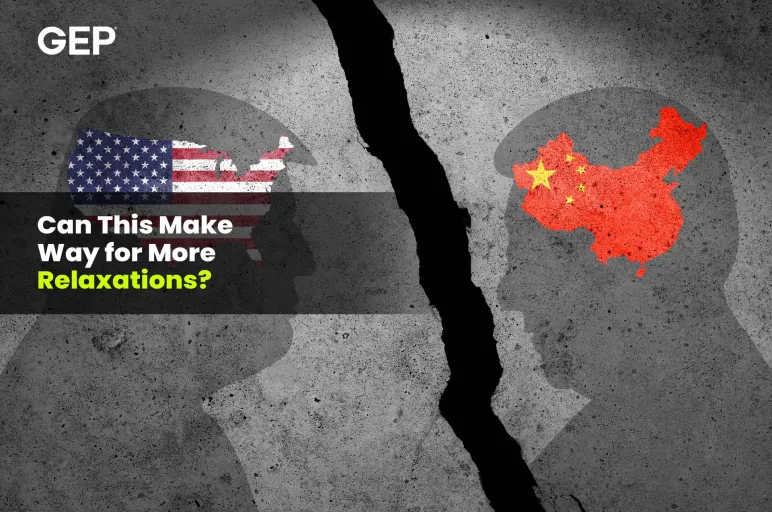
Following this month's summit between President Trump and President Xi Jinping in Washington, the two governments have released reciprocal lists covering around $30 billion of trade on each side. The products have been recommended for more favorable tariff treatment, although the final tariff reductions and implementation timetable have not yet been announced.
The product mix is more revealing than the $30 billion headline. China's list runs to more than 1,600 product categories, spanning agricultural commodities, personal care products, timber, medical equipment and coal. The U.S. list is far narrower at 77 categories, weighted toward consumer goods: fireworks, tableware, glassware, ornaments and sporting goods.
The Board of Trade is focused on non-sensitive commerce. U.S. Trade Representative Jamieson Greer has said national-security export controls are outside its scope. Export controls on high-end AI chips were not part of these discussions. The broader truce now runs to January 10, 2027. Key operational details are still pending, including the size of the tariff reductions and when they will take effect.
How to Reconfigure Your Supply Chain in a High-Tariff World
Lessons from India, Brazil, and Indonesia
What This Means for Procurement and Supply Chains
For buyers of consumer goods, seasonal products, food and agriculture, and parts of medical equipment, there could be duty savings once the tariff changes take effect. Procurement teams can screen bills of material against the published product lists and estimate potential exposure.
For many industrial categories, however, the immediate tariff picture changes little. The lists do not reach semiconductors, industrial machinery, electronics assemblies, battery components or automotive electrification parts.
For many manufacturers, the bigger supply chain issue remains rare earths. China's expanded rare-earth export controls are suspended through November 10, 2026. The suspended rules would cover certain foreign-made products in which specified Chinese-origin rare-earth items account for at least 0.1% of the product's value, as well as specified products made using Chinese rare-earth processing technology. An earlier licensing regime has stayed active throughout.
China accounted for about 85% of global rare-earth refining in 2025, leaving many manufacturers heavily exposed to Chinese processing capacity. That November deadline may therefore matter more to some industrial supply chains than the products included in the tariff framework. The status of the suspension after November 10 remains uncertain.
The direction of U.S.-China trade policy is increasingly category-specific. Tariffs may ease on non-sensitive consumer and agricultural goods while restrictions remain tight around strategically important technologies and materials. If that holds, treating “China exposure” as a single risk category becomes a weak planning assumption.
Temporary tariff relief also creates a sourcing dilemma. Companies that have already qualified suppliers in Vietnam, India or Mexico could see Chinese landed costs improve while the current truce still has a relatively short horizon. Unwinding a hedge on a temporary cost delta is a good way to end up paying for diversification twice.
Also Read: Managing Supply Chain Risk Amid Expanding Tariff Powers
What Procurement Teams Should Do Now
Screen bills of material against the published lists
Match at tariff-line level, estimate the potential duty impact by category, and confirm final rates and effective dates with trade counsel before booking any savings.
Run a category-level risk screening
Score each category on annual spend, single-source concentration, the cost and lead time to qualify an alternative, and the depth of the chokepoint in the supplier chain. Use the results to decide where the cost of redundancy is proportionate to the exposure.
Audit rare-earth exposure ahead of the November deadline
Trace specified Chinese-origin inputs and processing technology beyond tier one, since the suspended rules can apply to foreign-made downstream products.
Make the second source genuinely independent
Test candidate suppliers for independence across geography, ownership and upstream inputs. A plant outside China may offer limited diversification if it shares Chinese feedstock or critical upstream suppliers. Keep a minimum volume with the second supplier, secure tooling at both sites, and agree in advance what would trigger a volume shift.
Stress-test against a truce lapse
Model the cost and service impact if the January deadline passes without extension, and keep planned diversification investments on schedule.
Geopolitical resilience in global sourcing comes down to operational readiness: an approved second supplier, tooling available in more than one location and clear rules for when volume shifts. Supplier qualification and duplicate tooling can take months to put in place. A tariff reprieve does not shorten that lead time. Procurement teams with significant concentration risk should use the current window to reduce it.
Explore GEP’s Tariff Management Resource Center