



The AI-Native Supplier Ecosystem: 5 Capabilities Procurement Leaders Need Now
- The adoption of agentic AI has transformed traditional vendor management into an active supplier network ecosystem with end-to-end visibility.
- The supplier ecosystem continuously pulls in real-time data and coordinates workflows across buyers, suppliers, and logistics providers.
- AI agents track financial and operational signals across your network, along with geopolitical events that could disrupt it.
September 02, 2026 | Supplier Management Strategy 5 minutes read
Vendor management treats suppliers as static line items to track and control. That framing breaks down the moment your supply base grows complex and interconnected. An AI-native supplier ecosystem replaces the old model with a connected, intelligent network.
Most procurement leaders sense this shift without being able to name it. You know your current approach feels outdated, but the fix isn't obvious. The real solution demands specific capabilities that most teams don't know to look for.
In this blog, we dive into what an AI-native supplier ecosystem is and its core capabilities.
What is an AI-Native Supplier Ecosystem?
A platform is truly AI-native when it is architected from the ground up with intelligence as its core operating engine. This kind of ecosystem is built from the ground up with AI as core infrastructure. Unlike traditional legacy AI software, it’s not a bolted-on plugin or a chatbot layered onto old software with algorithms retrofitted onto legacy codebases.
In an AI-native model, agentic AI actively ingests streams of operational telemetry, executes routine workflows, and continuously learns from every transaction across your enterprise. It does not sit on the sidelines waiting for manual prompts but acts autonomously while staying compliant with business protocols.
A supplier ecosystem is the end-to-end network of relationships in your procurement process. It continuously pulls in real-time data and coordinates workflows across buyers, suppliers, logistics providers, and regulatory feeds.
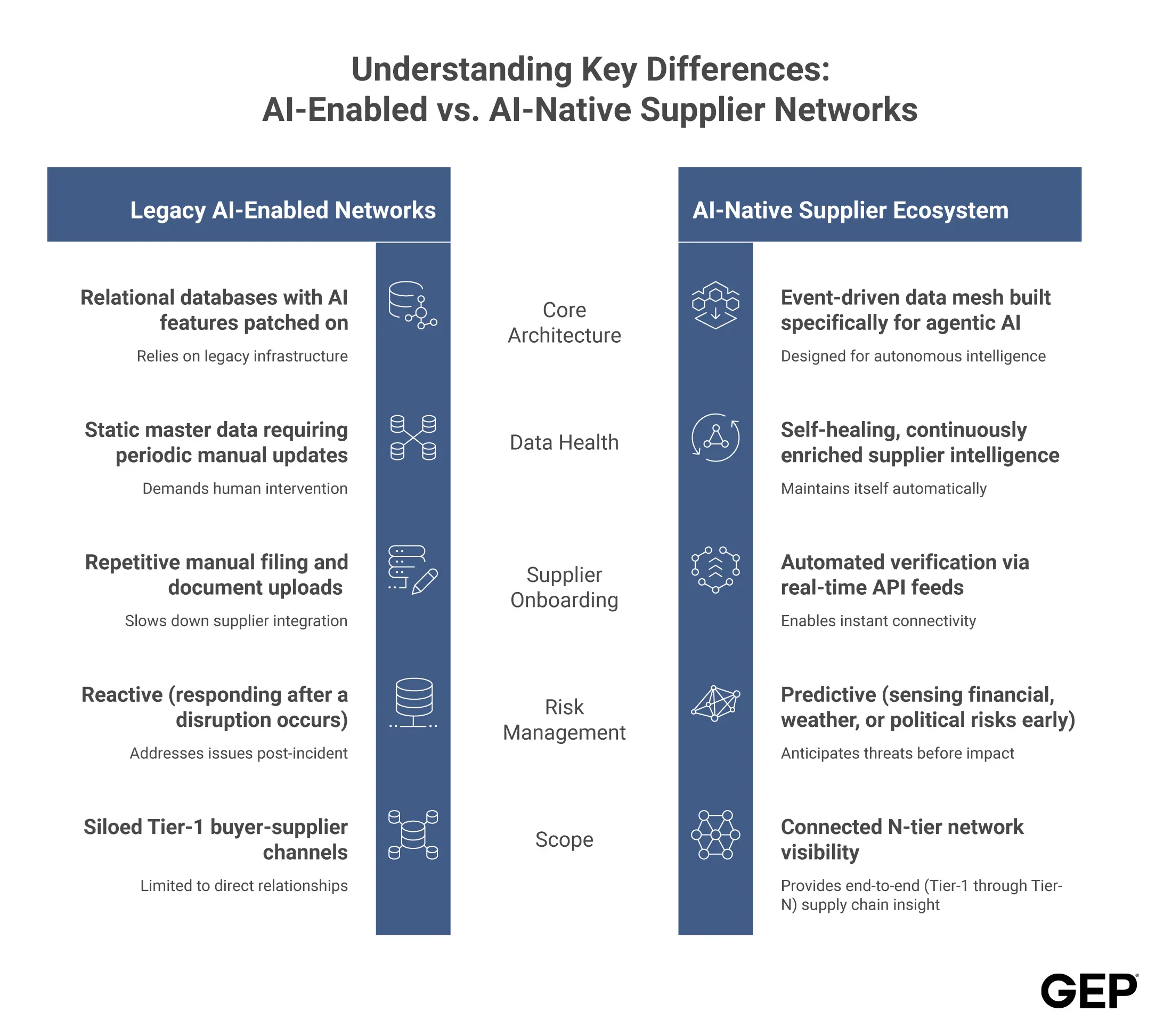
Vendor management stops at the first layer, which may be the suppliers you transact with directly. Similarly, an AI-native supplier ecosystem maps every connected layer and keeps that map current.
Moving into an AI-native supplier ecosystem is like moving from a system of records to that of action. The former just stores what is manually added. A system of action lets autonomous agents orchestrate the work itself, while you govern strategy. Your view of the N-tier supplier ecosystem stays current without the constant need for manual updates.
Is Your Procurement Platform AI-Native?
Use a practical framework to evaluate vendor claims with confidence
5 Supplier-Specific Capabilities of an AI-Native Supplier Ecosystem
What are the capabilities that separate a real AI-native ecosystem from a rebranded vendor tool? Here are five that matter most.
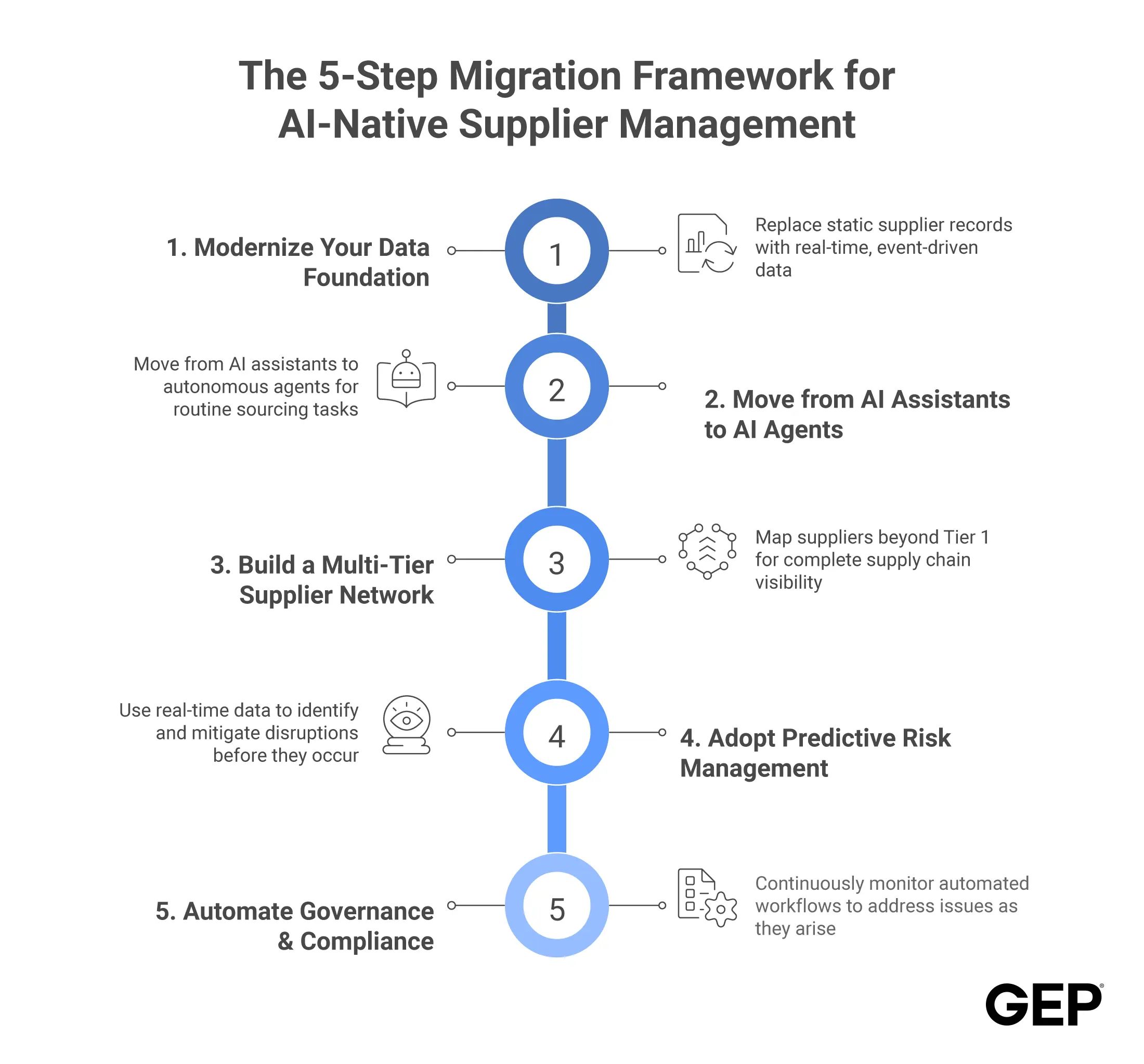
1. Predictive Supplier Risk Monitoring
An AI-native ecosystem doesn't wait for a disruption to react to it. Standard risk management alerts you only after a disruption hits your Tier-1 vendor. AI Agents track financial and operational signals across your network, along with geopolitical events that could disrupt it. You get an intelligent network that evaluates geopolitical shifts, financial distress indicators, weather anomalies, and compliance.
2. Autonomous Supplier Discovery and Qualification
Finding and vetting new suppliers used to cost procurement teams weeks of manual research. Autonomous agents now scan supplier data at scale and flag qualified matches instantly. You still make the final call, but the groundwork happens without you. The system also flags where your supplier network runs thin before a shortage forces the issue.
3. Real-Time Supplier Performance Intelligence
Static scorecards updated once a quarter can't capture how a supplier relationship actually performs. An AI-native system pulls supplier performance data continuously, from delivery timing to quality metrics. This is what supplier relationship management AI looks like in practice: a live picture instead of a stale snapshot. That visibility also makes it easier to renegotiate terms from a position of evidence rather than assumption.
4. Agentic Contract and Compliance Management
Agentic AI supplier management extends into contract management and flags deviations automatically, instead of manually auditing terms. With it, you get alerts the moment a supplier drifts from agreed commitments. This keeps compliance active instead of reactive. Over time, the system also learns which clauses cause the most friction, so you can tighten future agreements before problems repeat.
5. Autonomous Micro-Negotiations and Workflow Orchestration
Agentic AI uses multiple agents that operate within pre-approved business rules. For tactical sourcing or tail-spend purchases, the agent analyzes current market data, supplier capacity, and past performance to negotiate with suppliers in real time. It balances faster payment in exchange for lower pricing. Once an agreement is reached, the agent creates the purchase order, updates contract and ERP records, and maintains a complete audit trail. If supplier responses fall outside approved limits, the negotiation is escalated to the appropriate stakeholders for review.
Ready to Move Beyond Bolt-On AI?
See how an AI-native platform supports procurement from the core
The Shift to AI-Native Platforms is Already Underway
Supply networks will keep growing more layered, not less. Suppliers you don't manage directly already shape your risk and your performance outcomes. The organizations that adapt first will operate with visibility others can't match. Ignoring that reality doesn't make it disappear, it just delays when you have to deal with it.
You don't need to overhaul everything at once. What matters is starting with the right capabilities, especially predictive risk monitoring and continuous performance intelligence, then building outward from there. An AI-Native Supplier Management Software gives you the tools to build that network today.


Frequently Asked Questions
A vendor is transactional, someone you buy from and manage through purchase orders. A supplier is relational, connected to your operations through data, performance history, and shared risk. The real distinction in vendor management vs. supplier network thinking is scope: vendor management tracks a single relationship, while a supplier network maps how that relationship connects to everything else in your supply base.
Autonomous agents continuously scan data across every tier of your supplier network, not just your direct relationships. They flag financial instability and delivery delays as they emerge, often well before a human would catch them. They also track compliance drift across subcontractors you may never interact with directly, extending your risk visibility beyond what manual oversight could ever cover.
Supplier orchestration doesn't remove procurement staff from the process. It removes the manual work that kept them from doing higher-value work instead. Agents handle monitoring and routine data flagging, freeing your team to focus on strategy and the supplier relationships that need human judgment. That's what procurement orchestration actually changes: not headcount, but where your time goes.
There's no fixed timeline, since it depends on how fragmented your current supplier data is. Organizations with centralized records can layer in predictive monitoring within a few months. Those starting from scattered spreadsheets and disconnected systems need longer, often a year or more, to consolidate data before intelligence can run on top of it.