



Contract Standardization: Building a Clause Library That Speeds Every Negotiation
- Standardizing clauses shortens negotiation cycle times because legal reviews exceptions instead of every new redline.
- Clause tags for standard, fallback, and non-negotiable terms show negotiators how much room they have before a deal needs escalation.
- AI-native tools keep a growing clause library accurate, flagging language drift and routing only genuine exceptions to legal.
August 03, 2026 | Contract Management 4 minutes read
Negotiation teams lose real time hunting for the right clause. A redline that should take an hour stretches into a week because nobody can find the last agreed version of an indemnification clause, or because legal and procurement are working off two different templates. Standardizing contract language fixes this at the source. Build a clause library once, and every negotiator on the team pulls from the same trusted set of terms instead of starting from a blank page.
What Is a Contract Clause Library?
Think of it as a curated set of pre-approved language for the provisions that show up in nearly every commercial agreement: payment terms, liability caps, termination rights, confidentiality, data protection. Each clause comes with context attached. When should a negotiator use it? What business risk does it cover? Who signed off on the wording, and when? Legal writes the language once. Procurement and sales teams reuse it hundreds of times over.
See How GEP Ranks in Contract Lifecycle Management
The Gartner Magic Quadrant report on how AI-native contract intelligence is reshaping negotiation and compliance
Why Contract Standardization Matters for Negotiation Speed
Every custom clause means another trip through legal review. Multiply that across dozens of live deals and cycle times stretch fast. A clause library reduces that friction because negotiators start from pre-approved positions, and legal is only brought in for genuine exceptions. Deals close more quickly, and negotiators show up at the table already with language that matches the company's risk tolerance.
Standard, Fallback and Non-Negotiable Clauses: Know the Difference
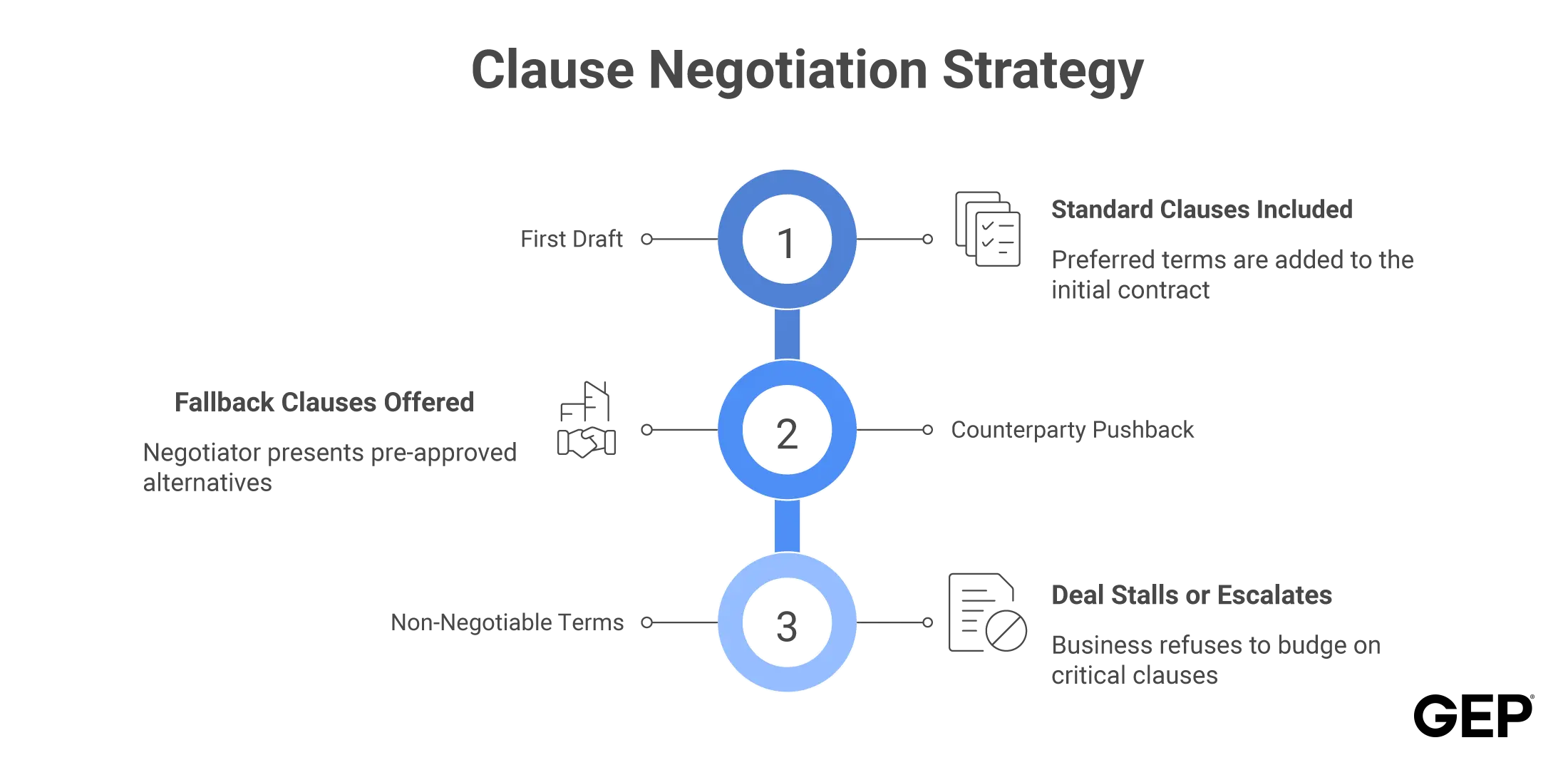
Not every clause carries the same weight. Standard clauses are the preferred position, and they go into the first draft by default. Fallback clauses are pre-approved backups a negotiator can offer when a counterparty pushes back, so legal doesn't have to review small variations one by one. Non-negotiable clauses cover the terms the business simply won't move on, things like regulatory compliance language or data residency rules. Tag each clause by category, and negotiators know instantly how much room they have before a deal needs to go up the chain.
Core Components of an Effective Contract Clause Library
A library needs more than a folder of approved paragraphs on a shared drive. The useful ones include version history, so teams can see how a clause evolved and why, plus plain-language notes explaining the business logic behind each provision. They need metadata tags for jurisdiction, contract type, and risk level too. Search matters just as much as content. A clause nobody can find isn't worth much more than one that was never written.
Common Challenges in Contract Standardization
Clause libraries tend to fall apart after launch. The initial build gets real energy behind it, then updates slowly once ownership goes fuzzy. Legal tweaks wording mid-negotiation and forgets to loop the change back into the central repository. Regional teams start building their own versions because the master library hasn't kept pace with local rules. Left alone long enough, the library turns into a reference people quietly stop trusting.
How to Build a Clause Library: A Step-by-Step Framework
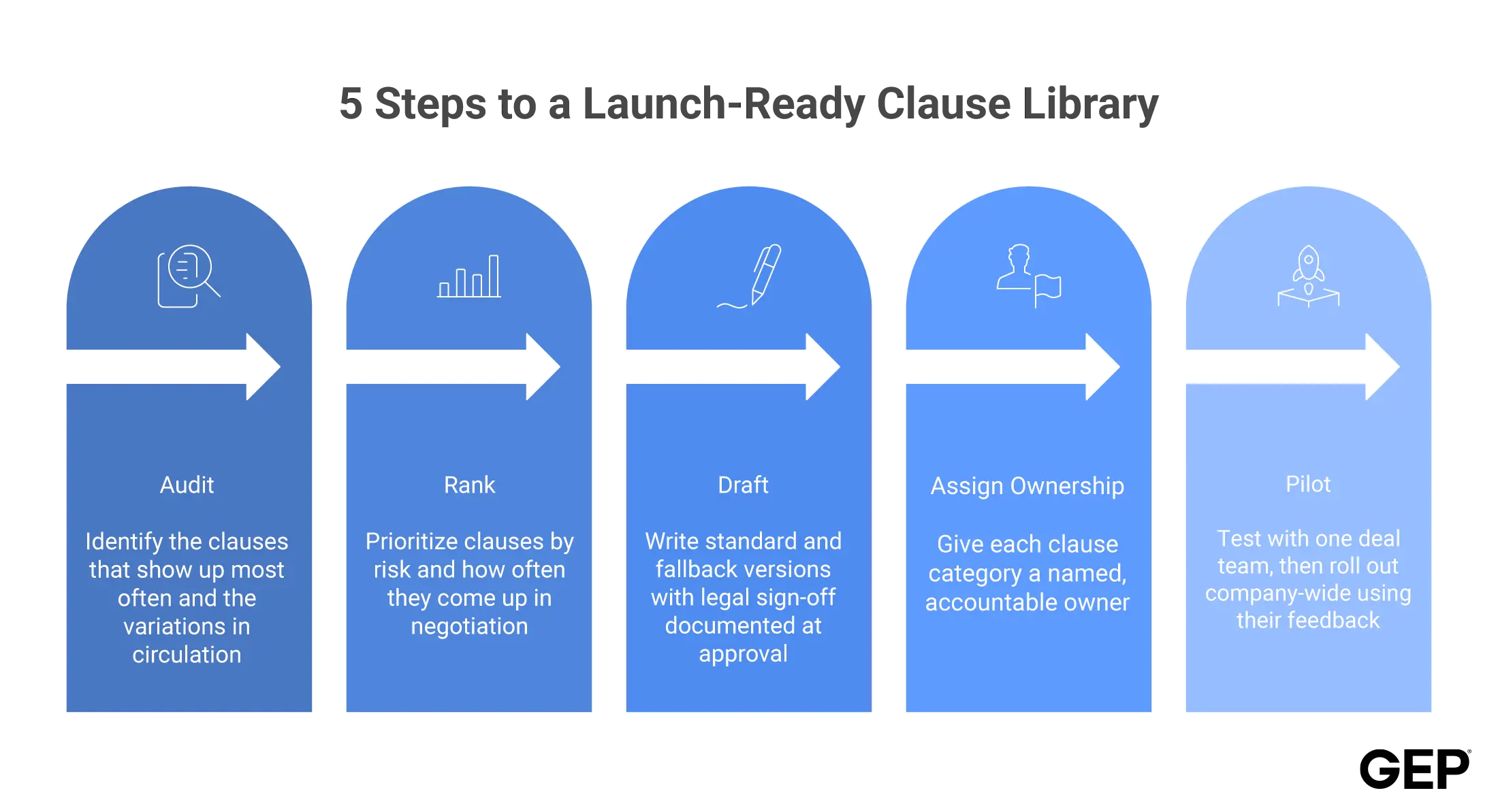
Start by auditing existing contracts. What clauses show up most often, and how many variations of each are floating around? Rank them by risk and by how often they come up in negotiation. Draft a standard and a fallback version for each priority clause and get legal sign-off documented at the point of approval, not after the fact. Give each clause category a named owner. Then pilot with a single deal team before rolling it out company-wide. Their feedback on tagging and search saves you a second round of fixes later.
Using AI-Native Tools to Maintain and Scale Your Clause Library
Manual upkeep works fine until a library grows past a few hundred clauses, and then it doesn't. AI-native platforms scan incoming contracts, flag language that drifts from the approved wording, and suggest which fallback applies to a given redline. Agentic AI takes it further, drafting first-pass responses to counterparty edits and routing only the real exceptions to legal. GEP Quantum Intelligence builds this into contract management directly, connecting the clause library to the broader negotiation and procurement workflow so approved language carries forward on its own.
Ready to Modernize Your Contract Process?
Talk to a GEP expert about connecting your clause library to an AI-native contract management platform
Governance: Keeping Your Clause Library Accurate Over Time
A library needs an owner, a review cadence, and a change log, or it drifts within a year. Quarterly reviews catch stale regulatory language before it turns into a downstream problem. Route every proposed change through the same approval chain that built the original library, so legal, procurement, and the business stay aligned on what "standard" means.
From Static Templates to a Living Negotiation Asset
A clause library earns its keep when someone treats it as a living resource. Keep it updated, keep ownership clear, and let AI-native tools handle the maintenance load that used to fall on a spreadsheet nobody wanted to own. Teams that get this right close deals faster and spend less time waiting on legal for language everyone already agreed to months ago.
Explore GEP’s AI-Native Contract Management Software




FAQs
A template is one fixed document structure. A clause library is a set of individually approved provisions that teams mix and match into whatever template a deal calls for, which gives a lot more flexibility than a static form ever could.
Most teams review core clauses every quarter, plus an immediate update whenever a regulatory change or a major negotiation outcome affects approved wording.
AI-native tools support that review; they don't take it over. They handle first-pass drafting, flagging, and routing so lawyers can focus their time on non-standard terms and genuine exceptions.