
The Front Door Problem: Why User Experience Is the First Dimension of Total Agentic Orchestration
- Most procurement breakdowns start the moment an employee decides it’s easier to go around the system than through it. Solving this UX problem is the first dimension of Total Agentic Orchestration.
- Getting the intake experience right is the foundation of compliant spend, clean data and every intelligent decision that follows.
- AI agents don’t just capture requests, they triage, route and guide them, turning intake into the entry point of an intelligent decision-making fabric that extends all the way through the enterprise value chain.
April 21, 2026 | Procurement Software 4 minutes read
There’s a moment every procurement leader knows: an employee needs something, opens the approved portal, stares at a form that looks like it was designed in 2009 and makes a decision: not today. They email a colleague. They put it on a corporate card. They figure it out.
That moment is where compliance breaks down, spend data becomes unreliable and the downstream value of every procurement investment quietly erodes. The problem isn’t a lack of technology. It’s that the front door, where every spending decision originates, has been an afterthought. Fixing it is the first dimension of Total Agentic Orchestration.
The Workaround Problem Is a Data Problem
Studies show that shadow IT can account for as much as 40% of IT spending in large enterprises. And according to Gartner's 2025 CIO and Technology Executive Survey, only 48% of digital initiatives meet or exceed their business outcome targets. Employees aren't being reckless when they find workarounds. They're responding to systems that weren't designed around how they actually work.
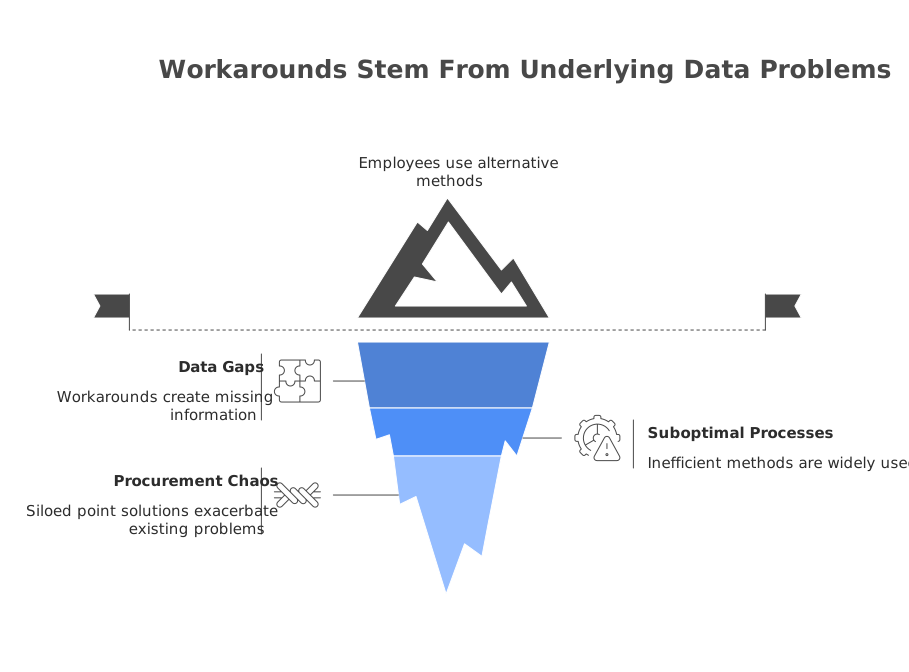
Every workaround is a data gap. Every “I’ll just email someone” is a decision that never enters the system and can never be learned from, optimized or governed. Organizations have long been using suboptimal processes – think spreadsheets, shared folders and email for buying requests. But the procurement solutions meant to bring order have, in many cases, made the chaos worse.
Adoption Is the Only Metric That Matters Here
A platform 100% of employees use is worth more than a sophisticated system only the procurement team can navigate. Adoption generates data. Data makes every downstream process smarter.
Gartner predicts that 40% of enterprise applications will be integrated with task-specific AI agents by the end of 2026, up from less than 5% today. But embedding AI into an application is not the same as getting people to use it. The experience has to meet employees where they already are: in Microsoft Teams and other collaboration tools, using natural language rather than rigid forms, getting proactive status updates rather than logging in to check.
How Orchestration Impacts the Intake User Experience
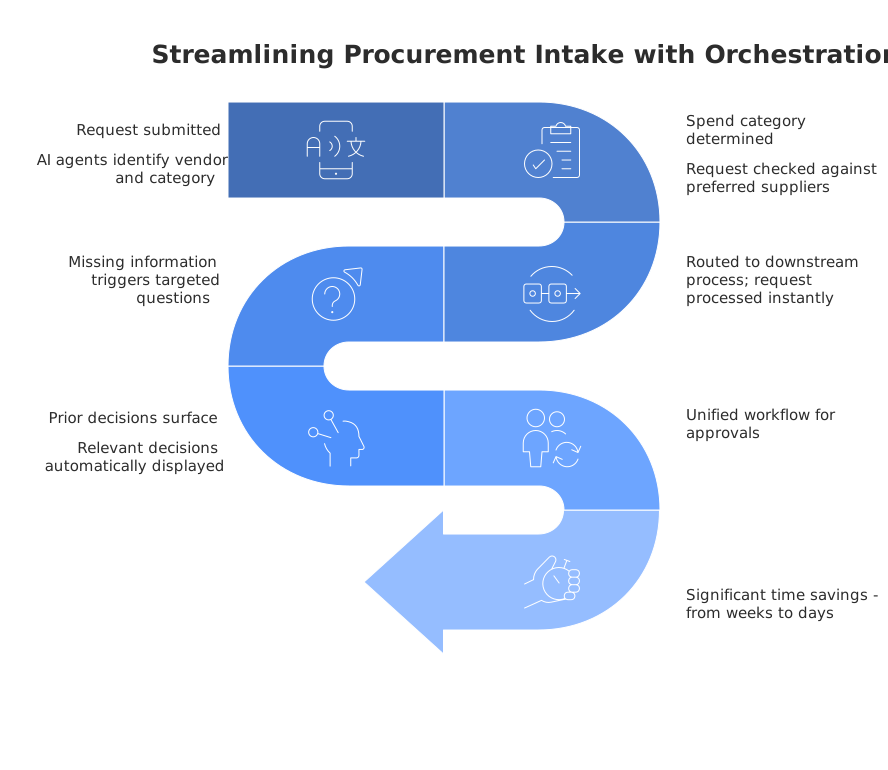
User experience separates orchestration from a well-designed intake form. When a request is submitted, AI agents don’t put it in a queue. They identify the vendor, determine the spend category, check it against preferred supplier lists and route it to the right downstream process instantly. Missing information triggers a targeted question, not a thirty-field form. Prior decisions surface automatically.
For instance, a marketing manager needs to onboard a new agency. Instead of chasing approvals across IT, Legal and Finance over email, a single request kicks off a unified workflow. All three functions engage in parallel. What once took weeks takes days. Spend Matters notes that intake and orchestration platforms are emerging as the primary response to fragmented procurement systems, unifying governance and user experience while reducing dependence on brittle point-to-point integrations.
Where Point Solutions Stop Short
A category of intake-focused tools emerged to solve the front door problem, and they do it reasonably well. But the market has grown so quickly that many vendors claim orchestration capabilities while delivering only partial solutions. A system that captures requests beautifully but hands them off into a disconnected back end hasn’t solved the problem. It has moved the chaos one step to the right.
The front door only creates value if it connects to an intelligent engine that can actually execute. That’s the distinction between a point solution and the first dimension of a true orchestration architecture.
Start on the Path to Autonomous Procurement
Move Beyond Task Automation to True Agentic Orchestration
The Foundation Everything Else Depends On
The future where AI agents seamlessly orchestrate procurement intake is here. Getting ready for that future requires a foundation of complete, high-quality data. That foundation starts at the front door.
User experience orchestration is not a UX project. It is the first of three dimensions that together form Total Agentic Orchestration, and the one that determines whether every layer above it has the data it needs to operate. Getting this first dimension right is where the journey begins.
The next two dimensions, end-to-end process orchestration across source-to-pay and strategic ecosystem orchestration across the entire value chain, build directly on this foundation. Without it, the rest cannot function at its full potential.
Want to understand how leading enterprises are building agentic AI into procurement from the ground up? Download the Agentic AI Playbook for Procurement Pros to move from hype to action.