



Retail Supply Chain Consulting Optimizing Retail Operations: The Value of Supply Chain Consulting
- Rising consumer expectations and evolving market dynamics require retailers to have a robust supply chain strategy to survive and grow
- Supply chain consultants can leverage advanced analytics and demand forecasting tools to help retailers strike the perfect balance
- Data-driven decisions can enable retailers to optimize their operations, improve forecasting accuracy, and enhance overall supply chain performance
June 01, 2023 | Supply Chain Strategy 6 minutes read
In the fast-paced and ever-changing world of retail, a well-executed supply chain strategy can mean the difference between success and struggle. The intricacies of managing a retail supply chain — from sourcing to distribution — demand expertise and strategic thinking. That's where retail supply chain consulting plays a critical role.
With consumer expectations at an all-time high, retailers need to meet their demands and manage operational costs, optimize inventory levels, and ensure timely delivery. The fast pace can rattle even the most seasoned retail professionals, but this is where the expertise of retail supply chain consultants can help.
Navigating the Complexities of Supply Chain Strategy
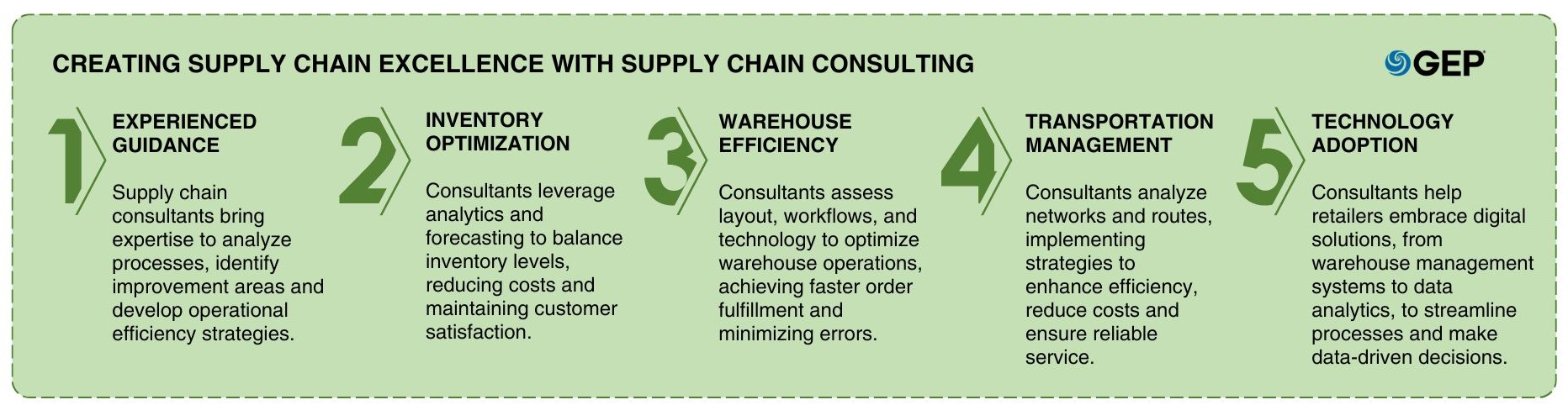
Experienced supply chain consultants bring a wealth of knowledge. They can analyze the existing supply chain processes, identify areas for improvement, and develop working strategies to augment operational efficiency. Whether it's streamlining warehouse operations, improving transportation management, or implementing inventory optimization techniques, supply chain consultants have the required know-how to transform struggling supply chains.
Inventory Optimization
One of the critical aspects of retail supply chain consulting is optimizing inventory levels. Surplus inventory ties up capital, while inadequate inventory leads to lost sales and dissatisfied customers. Supply chain consultants can leverage advanced analytics and demand forecasting tools to help retailers strike the perfect balance. By aligning inventory levels with customer demand, retailers can reduce carrying costs, minimize stockouts, and maintain customer satisfaction.
Optimizing Warehouse and Distribution Centers
Warehouses and distribution centers are the nerve centers of retail supply chains. Efficient warehouse management and distribution processes are essential for seamless operations. Retail supply chain consultants assess the layout, workflows, and technology infrastructure of these facilities. They identify areas where improvements can be made, such as optimizing storage space, implementing automation, and enhancing picking and packing processes. With their guidance, retailers can achieve faster order fulfillment, minimize errors, and increase overall customer satisfaction.
Driving Efficiency With Transportation Management
Efficient movement of goods from suppliers to stores or directly to customers is crucial for meeting delivery timelines and controlling costs. Supply chain consultants analyze transportation networks, routes, and carrier relationships. Whether it's through route consolidation, freight cost negotiation, or implementing advanced tracking systems, fine-tuning transportation management can help retailers enhance efficiency, reduce transportation costs, and provide reliable service to their customers.
Embracing Technology: Harnessing the Power of Innovation
Technology plays a pivotal role in retail supply chain success. Retail supply chain consultants have to stay ahead of industry trends and technologies, and this knowledge can enable retailers to leverage innovations that deliver a competitive advantage. From implementing advanced warehouse management systems to utilizing data analytics and artificial intelligence, retail supply chain consulting can help retailers harness the full potential of technology. By embracing digital solutions, retailers can streamline processes, gain real-time visibility, and make data-driven decisions for enhanced efficiency and profitability.
Supply Chain Resilience: Preparing for the Unexpected
Recent global disruptions have highlighted the importance of supply chain resilience. Retail supply chain consultants help retailers identify vulnerabilities in their supply chains and develop contingency plans. From diversifying suppliers to implementing risk management strategies, consultants assist in building resilient supply chains that can withstand unexpected shocks. Proactive preparation can help retailers mitigate risks, ensure business continuity, and maintain customer satisfaction even in adverse conditions.
The Rise of Omnichannel Retail
Consumers expect a seamless shopping experience across multiple channels. Retail supply chain consultants recognize the importance of omnichannel retailing and help retailers adapt to this evolving trend. Consultants assist in integrating online and offline channels, optimizing inventory allocation, and implementing efficient order fulfillment processes. Retail consulting expertise can help retailers provide a consistent and personalized experience to customers, regardless of the channel.
Harnessing Data Analytics for Smarter Decision-Making
Data analytics has become a game changer in supply chain management. Harnessing the power of data can help retailers arrive at smarter decisions. Supply chain consultants assist in implementing robust data analytics platforms that capture and analyze various supply chain data points, such as customer preferences, demand patterns, and supplier performance. By harnessing these insights, retailers can make data-driven decisions to optimize their operations, improve forecasting accuracy, and enhance overall supply chain performance.
Sustainable Supply Chain Practices
As consumers become increasingly environmentally conscious, sustainability has to be a key consideration for retailers. Retail supply chain consultants evaluate suppliers' sustainability practices, identify opportunities for waste reduction and energy efficiency, and help implement initiatives such as reverse logistics and packaging optimization. By embracing supply chain sustainability, retailers can not only reduce their environmental footprint but also appeal to socially conscious consumers and enhance their brand reputation.
Conclusion
With consumer expectations and market dynamics constantly evolving, retailers must have a robust supply chain strategy to thrive. Retail supply chain consulting offers the expertise and guidance needed to navigate the complexities of the modern marketplace. By optimizing inventory levels, improving warehouse and distribution operations, streamlining transportation management, embracing technology, and building supply chain resilience, retailers can gain a competitive edge and drive success.




Frequently Asked Questions
Global consumer response is a driving force in the supply chain management process. With ECR in supply chain management, suppliers, manufacturers, wholesalers, retailers, and other business entities can work better together. They meet the changing demands of the consumer through collaboration, ensuring higher accuracy and lower costs.
As a collaborative movement or philosophy, ECR began in 1993 and has become popular worldwide since then. The movement started with new principles and ideas around supply chain management. Collaborating with trading partners to provide better services to customers was one of them.
Companies globally came together to discuss the importance of collaborative practices. Discussions were held on how they could work together to reduce costs. Their message was simple—if we work together, we can be better and more efficient at supply chain management.
The members of the ECR discussed the important issues facing their industry and how to fix them. Members discussed factors that affected each activity, and prioritized and assigned importance to each, highlighted the potential consequences each issue brought and discussed how to solve them.
At the heart of ECR was a movement toward more advanced, at-home digital products. This was due to dramatic advancements in IT. It also included increased movements of goods across international borders. Businesses needed to reconsider how they were sending out products. It relied on what consumers really wanted.
ECR Revolutionizing the Supply Chain
The use of ECR in supply chain management has proved powerful and successful. ECR introduced a new perspective on the issues that retail supply chains faced. The focus was on the entire supply chain — from raw materials to logistics service providers.
The intention of the study was to identify and include all partners in the supply chain, including raw material suppliers, transportation service providers, logistics partners, wholesalers, warehouses and retailers. The domestic distribution service providers were also part of the supply chain.
A study on ECR covered two parts. One part focused on store formats and transportation, while the other focused on changes in the backend supply chain. With the help of technology, major changes were made to the way inventories and data were tracked.
Specific Practices of ECR
- Multiple daily order placements
- Reducing inventory and lead time
- Learning how to avoid work through close docking
ECR in supply chain management is a global organization that continues to grow. The initiative has helped many companies plan their supply chains better. ECR continues to help companies improve by publishing guides, hosting conferences and encouraging best practices.