AI Not Delivering? Your Culture Might Be the Problem
- The deployment of AI technology has created a cultural gap in many organizations.
- Business leaders must take steps to fill this gap by encouraging a culture of learning and experimentation.
- This will allow people at all levels to make the best use of powerful new systems and tools.
January 05, 2026 | Procurement Strategy 3 minutes read
Why are so many businesses still waiting to deploy AI in their operations when the value it delivers is undeniable? Are they witnessing a readiness gap within their workforce?
As AI technologies mature and their use cases within procurement and supply chain operations expand, leaders need to have a plan to align their people and processes with technology. Their tech stack may look very impressive with state-of-the-art tools and features. But their efforts toward digital transformation can be futile if teams don’t understand how to leverage technology or feel threatened by it.
If your employees are shying away from AI conversations, it’s a clear sign that they are not ready. What should you do to prepare them?
You need to build an AI culture.
The question is: How do you create such a culture?
Is Your Business Ready to Embrace AI?
Learn How to Identify People and Process Gaps
The Need for Cultural Adaptation and Integration
Many businesses now have sophisticated AI tools, but only a few have learned to use them well. These businesses have prioritized AI literacy, curiosity, and judgement that help people make sense of powerful new systems and tools.
Cultural adaptation and integration are the most important factors that will help organizations realize the true benefits of AI technology, states the GEP Outlook Report 2026. It involves creating user comfort, encouraging experimentation, and streamlining decision-making and interaction between humans and machines. Companies will also need to redefine the rules of engagement between humans and machines within an integrated system.
Business leaders should not assume that their AI investments will naturally lead employees to gain new capabilities and skills. Instead, they must create an environment that encourages learning, even if that means making mistakes initially.
Check Out GEP’s - AI-Native Procurement Software
How to Build an AI Culture
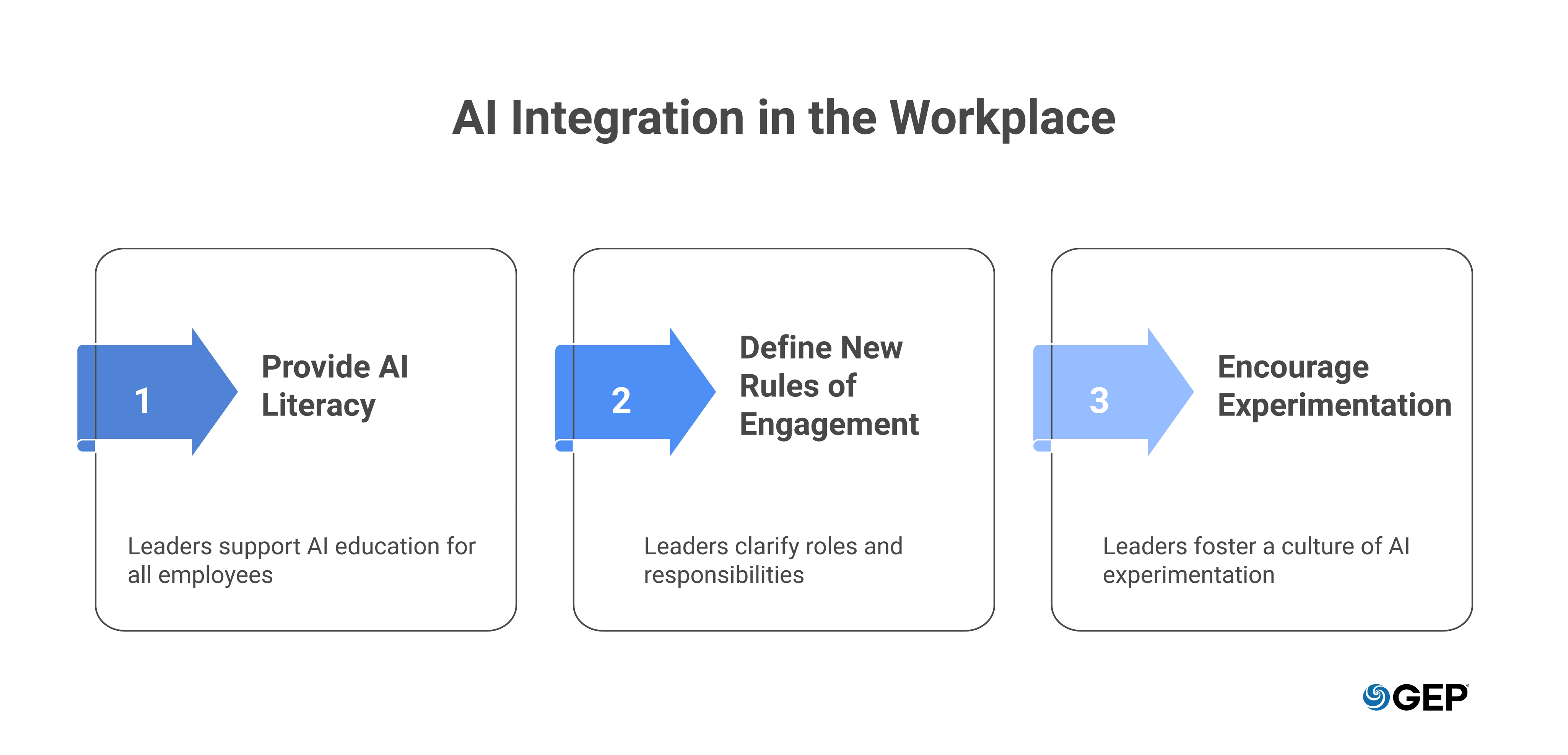
Three elements are essential to building an AI culture, notes the GEP Outlook Report 2026. These are:
Provide AI literacy
Leaders must support AI literacy at all levels. Category managers, logistics analysts and supplier relationship leads should all learn how to use AI tools in routine operations. They should also understand how AI models are trained, what data biases are, what to look out for, and when to escalate issues.
Define new rules of engagement
Leaders should use process management tools and identify the roles and responsibilities of all stakeholders. This will provide more clarity and remove ambiguity about who does what. It will also create accountability for errors or sub-optimal choices.
Don’t worry about outcomes
Employees may take a while to start feeling comfortable working with AI tools. Leaders can shorten this learning curve by building a culture of experimentation. Encourage teams to become familiar with new tools by testing and experimenting with them. When employees aren’t afraid to experiment, they are more likely to adapt and adjust quickly.
Encourage Curiosity and Continuous Learning
AI models can change quickly. When models change, workflows may change as well. This makes it imperative for organizations to invest in continuous learning. Your employees should always be eager to explore new ideas, ask questions, and seek out solutions. When you build the right culture, people are more inclined to explore the how and why behind things.
Leaders should invest in training programs, online courses, and certifications in AI and machine learning. This will help people at all levels to gain a basic understanding of AI.
Leaders can also invest in workshops to stimulate creative thinking and innovation. In a learning environment, employees will be comfortable brainstorming ideas and exploring AI’s potential use cases.
From Tasks and Workflows to Agentic Orchestration
Learn How GEP Quantum Intelligence is Redefining the Way Procurement Works
Build a Digital Workforce
There is little doubt that businesses need to leverage AI technology and tools. But as they deploy these advanced systems, they also need to build a workforce that is skilled and AI-ready. Neglecting this will create a gap between planning and execution.
You don’t want a situation where your employees ignore new tools or simply accept AI output without any judgment or oversight.
A culture of learning will allow employees to become familiar with new systems and tools. It will help them learn at their own pace. Over time, they will start trusting these tools, understand how to interpret output, and get comfortable with new roles and ways of working.