



How to Set Up Autonomous Procurement for Enterprises?
- Autonomous procurement works when decisions are designed first and automated second.
- Consistency at scale beats one off sourcing wins every time.
- Trust and transparency are what turn AI in procurement into real adoption.
February 20, 2026 | Procurement Strategy 4 minutes read
Autonomous procurement sounds ambitious, maybe even intimidating, until it is framed the right way. This is not about handing procurement over to machines or ripping out systems that already work. It is about designing procurement so routine decisions no longer slow the business down and human effort is spent where judgment actually matters.
Most enterprises already have the raw ingredients. Data exists. Processes exist. Technology exists. What is missing is orchestration. Setting up autonomous procurement is about connecting those pieces so decisions can happen faster, more consistently, and at scale without burning out teams.
For procurement leaders under pressure to do more with the same headcount, this shift is becoming less optional and more inevitable.
What is Autonomous Procurement and Why Should Enterprises Set It Up?
Autonomous procurement is the ability of procurement systems to analyze data, recommend actions, and in defined scenarios execute decisions automatically. This includes supplier selection logic, sourcing triggers, compliance checks, and buying guidance.
The reason enterprises are setting it up now is simple. Manual processes no longer scale. Complexity keeps increasing while expectations around speed, savings, and risk management keep rising.
AI based procurement tools allow organizations to embed policy and intelligence directly into workflows. Instead of policing after the fact, procurement automation guides behavior in real time. Decisions become faster, cleaner, and easier to repeat across regions and categories.
For procurement teams, this means less firefighting and more control, not less.
Autonomous Procurement That Scales
See how GEP helps automate decisions, reduce friction and drive success
Contact Us
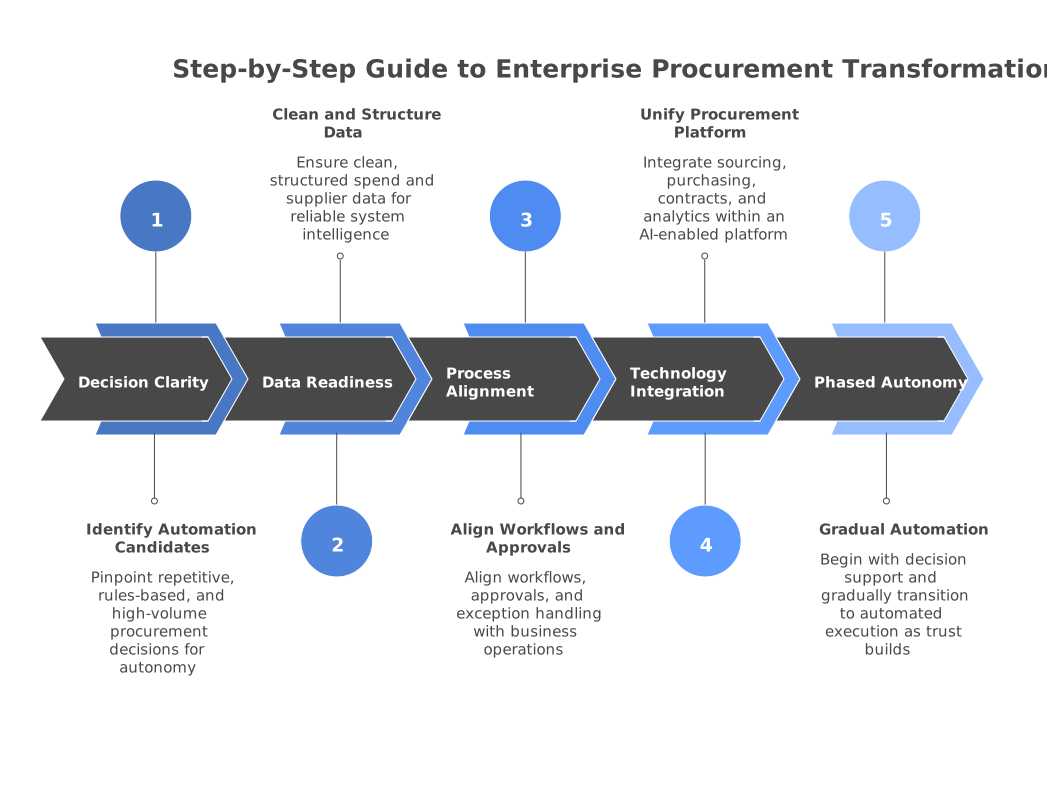
Step by Step Guide to Implementing Autonomous Procurement Systems in Enterprises
The first step is clarity. Identify which procurement decisions are repetitive, rules-based, and high volume. These are the best candidates for autonomy. Think guided buying, low risk sourcing events, supplier shortlisting, and compliance enforcement.
Next comes data readiness. Autonomous procurement systems rely on clean spend data, supplier master data, and category logic. This does not require perfection, but it does require consistency. Garbage in still produces garbage out.
The third step is process alignment. Procurement process automation works only when workflows reflect how the business actually operates. Approval paths, thresholds, and exception handling must be realistic, or users will route around the system.
Then comes technology enablement. Automated procurement system setup should integrate sourcing, purchasing, contracts, and analytics in one environment. This is where platforms that combine AI, automation, and orchestration create real leverage.
Finally, autonomy should be introduced in stages. Start with decision support. Move to decision execution only when trust is established. Enterprises that pace this transition see faster adoption and better outcomes.
Overcoming Challenges in Setting Up Autonomous Procurement for Enterprises
The biggest challenge is not technology. It is mindset.
Procurement teams often worry about losing control. In reality, autonomy increases control by enforcing rules consistently and visibly. The key is transparency. Systems must show why decisions are made, not just what decision was made.
Another challenge is change fatigue. Enterprises have rolled out enough tools to last a lifetime.
Autonomous procurement succeeds when it simplifies work instead of adding steps. If users feelfriction, adoption will stall.
Data quality can also slow progress. The solution is not waiting for perfect data but designing systems that improve data over time through use.
Enterprises that address these challenges early treat autonomous procurement as a capability, not a feature.
Discover Now GEP’s – Agentic Autonomous Procurement Orchestration with GEP Quantum Intelligence
How to Ensure a Smooth Transition to Autonomous Procurement in Enterprises
Smooth transitions start with trust. Procurement leaders should communicate clearly that autonomy supports professionals rather than replaces them.
Training should focus on outcomes, not buttons. Teams need to understand how to automate procurement decisions responsibly and when to intervene. That confidence grows quickly once early wins are visible.
Governance matters. Clear ownership, escalation paths, and audit visibility ensure autonomy never feels uncontrolled. AI-based procurement tools must operate within enterprise guardrails from day one.
When autonomy is positioned as a way to remove noise and protect value, resistance fades and momentum builds.
Stay ahead of shifting spend dynamics across key categories
Explore the GEP Spend Category Outlook to inform data driven decisions
Download Now
What This Shift Unlocks Long Term
Once autonomous procurement is set up, something subtle but powerful happens. Procurement stops reacting. It starts anticipating.
Sourcing opportunities surface automatically. Risk signals appear early. Buying behavior aligns with policy without constant enforcement. Procurement automation becomes the foundation for resilience, not just efficiency.
This is where procurement earns a different seat at the table. Not as a gatekeeper, but as an engine.




FAQ's
Security is built through role-based access, encryption, and full audit trails across systems. Decision logic remains transparent for governance and compliance teams. Trust in data is what allows autonomy to scale safely.
AI analyzes patterns, predicts outcomes, and improves recommendations over time. Machine learning enables systems to adapt based on real results. This turns procurement automation into continuous improvement rather than static rules.
Most enterprises see initial value within months by automating targeted decisions. Full maturity happens over time as autonomy expands across categories and regions. The journey is phased, not all at once.