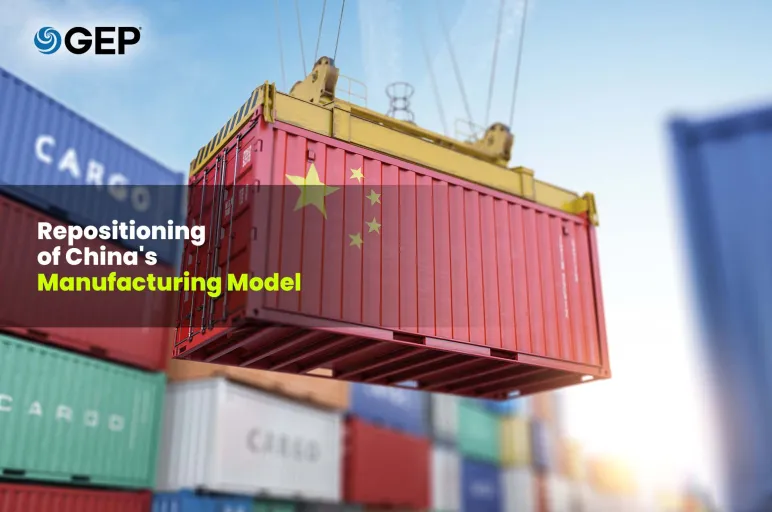
China’s Manufacturing Power Isn’t Shrinking — It’s Moving
- China is not losing manufacturing power; it is spreading it across new geographies while keeping control over capabilities and ownership structures.
- What appears to be diversification away from China often sits inside China-controlled networks, including financing, tooling, management, and upstream component ownership.
- In 2026, resilience will depend less on border count and more on understanding the ownership and influence behind every component a company buys.
December 18, 2025 | Supply Chain Strategy 5 minutes read
The U.S.–China economic relationship has been strained for years. Added tariffs, export controls, and rising geopolitical tension pushed companies to reconsider where products are made. Many analysts read the trend as a decline in China’s dominance. They point to shifting orders, new factories in Southeast Asia, and nearshoring movements in North America.
The story is not that simple. China’s manufacturing model is not collapsing. It is repositioning. Chinese companies are moving pieces of their supply chain outside China’s borders, often to tariff-safe markets. They bring with them capital, equipment, and managerial control. Output appears to “leave China,” yet the underlying ecosystem remains tied to the same networks.
The Growth Slowdown Is Not the Real Indicator
China’s growth rate has dipped from past highs. Many economists treat this as a sign of structural decline. The slowdown tells only part of the story. Manufacturing capability in China continues to expand in sophistication. Productivity remains strong. The ecosystem linking suppliers, sub-suppliers, tooling makers, logistics, and labor is still unmatched.
A lower growth rate does not reflect capability loss. It reflects a shift into a more distributed model that suits the new geopolitical reality. China adjusts by exporting its industrial footprint into new countries.
Ready for Procurement Success?
Transform your business with GEP’s AI-powered procurement and supply chain software and services
ASK US NOW
The Misread Trend: Diversification Away From China
Executives often claim they are reducing exposure to China. But many factories in Vietnam, Mexico, Indonesia, and Thailand stand up with Chinese financing, Chinese machinery, and Chinese-trained managers. Component flows eventually trace back to Chinese ownership.
On paper, companies diversify assembly locations. In practice, they still depend on China’s upstream capacity. The shift removes tariff exposure but not ecosystem reliance.
This is why reading trade flows alone can be misleading. Finished goods move from new countries, but key inputs still originate in or are controlled by Chinese enterprises.
How China Extends Its Industrial Ecosystem
China’s redistribution strategy operates through several mechanisms.
Ownership and Capital
Chinese firms invest directly in new facilities across Southeast Asia, South Asia, Africa, and Latin America. They create joint ventures or acquire local partners. These operations count as “non-China supply,” yet remain part of the same network.
Tooling and Equipment
Factories outside China rely heavily on Chinese equipment makers for machinery, molds, precision tools, and robotics. This dependence links production capability back to Chinese suppliers.
Component Pipelines
Even when assembly shifts abroad, many components still come from Chinese plants. The dependency remains upstream, invisible to many procurement teams.
Management Expertise
Chinese managers often run offshore facilities. They replicate the operating model that powered China’s manufacturing rise, bringing with them established supplier relationships and production techniques.
Logistics Integration
Chinese forwarding companies and port operators manage trade flows across new regions, tightening the network further.
This redistribution protects China’s manufacturing gravity even as global buyers attempt diversification.
Check GEP’s - AI Powered Procurement Software
Why This Redistribution Matters for Procurement
The real exposure is no longer the factory’s location. It is the ownership structure behind the materials, tools, and components. Procurement teams often believe they reduced Asia risk by working with suppliers in other regions. They may not see that their “new” suppliers depend on Chinese capital, tooling, or sub-suppliers.
That hidden dependence becomes critical during leadership shifts, export restrictions, or tariff changes. A policy aimed at China can ripple through a supplier in Vietnam if the ownership traces back to a Chinese parent.
Geographic mapping alone no longer tells the risk story.
The Impact on Cost and Lead Times
When China exports its manufacturing capability, it spreads both benefits and constraints.
Lower Tariff Exposure
Assembly outside China helps avoid direct tariff penalties. Companies capture some cost relief.
Higher Input Dependence
Upstream parts may still come from China. Those flows remain vulnerable to future restrictions.
Mixed Lead Time Effects
New facilities reduce shipping time to certain markets. But dependency on Chinese tooling and components can add complexity when disruptions occur upstream.
Local Workforce Variability
Training requirements increase as production shifts into countries with different labor structures. Chinese firms often lead the training, keeping operational knowledge tied to their ecosystem.
These mixed effects create new planning challenges for procurement and supply chain teams.

GEP Outlook Report 2026
Explore the dynamics shaping procurement & supply chain and know how to navigate them in 2026
EXPLORE THE REPORT
The Analyst Blind Spot
Many forecasts misinterpret this trend. They track visible production moves but ignore intangible forms of control. Ownership networks matter. Tooling sources matter. Upstream cash flow matters. Local assembly does not erase these links.
Companies that rely on geographic indicators alone will misjudge their exposure. The manufacturing world is growing more distributed in appearance but more interconnected beneath the surface.
What Companies Need to Examine
To understand real risk, procurement teams need deeper visibility. Here’s what they need to do:
Map Component Lineage:
Trace each part to its true point of origin, not just the final assembly site.
Review Ownership Structures:
Identify whether offshore suppliers belong to a Chinese parent company or joint venture.
Track Tooling and Equipment Sources:
Tooling ties can create surprise disruptions when export controls shift.
Understand Financing Links:
Access to Chinese funding often signals deeper ecosystem integration.
Document Managerial Influence:
Leadership pipelines and managerial control shape operational decisions.
These aforementioned layers reveal the full structure behind supply arrangements.
Why 2026 Will Shift the Resilience Conversation
As trade environments tighten again, companies will face new restrictions, new tariff schedules, and new geopolitical dynamics. The companies that succeed will be the ones that look beyond geography. A shipment crossing fewer borders offers no guarantee of insulation.
In 2026, resilience will depend on how deeply companies understand the ownership and influence behind every component they buy. That understanding will matter more than country-of-origin labels or “China-plus-one” slogans.
The Practical Shift for Procurement Leaders
Procurement teams need better tools to map supply networks and uncover ownership patterns. They need systems that track sub-tier suppliers, tooling networks, financial ties, and upstream component flows. They need risk models that go beyond location.
Leadership should prepare for a world where China’s manufacturing footprint spreads without shrinking. The question becomes not “Is this supplier outside China?” but “Who controls the capabilities behind this supplier?”
Companies that fail to answer that question will underestimate their exposure. Those who embrace this deeper view will navigate future trade disruptions more confidently.