



Businesses, Here’s How to Reduce Costs Through Energy Procurement Services
- Energy procurement services leverage market expertise and supplier relationships to negotiate better rates than businesses can achieve on their own.
- Strategic energy buying through fixed, flexible or hybrid contracts helps companies protect against price volatility while capturing savings opportunities.
- Businesses with high energy consumption, multiple locations or complex needs stand to benefit most from professional procurement partnerships.
February 11, 2026 | Cost Management 5 minutes read
Energy costs for businesses have skyrocketed over the last year, with the price of electricity up more than 6% in the commercial sector from one year ago. Tight margins leave little room for error. However, most companies have neither the time nor the expertise to navigate energy markets on their own. They renew contracts without shopping around, leaving money on the table year after year.
Energy procurement services exist to solve this problem. These firms source, negotiate and manage energy contracts, turning a confusing marketplace into a real advantage. Companies that work with skilled procurement partners routinely cut their energy spend significantly.
What Is Energy Procurement?
Energy procurement means buying electricity, natural gas or other energy supplies for a business. Simple enough. But in practice, the energy market is messy and unpredictable.
Prices swing based on supply and demand. Weather plays a role, as do geopolitics and changing regulations. Contract options run the gamut: fixed rates, variable rates, indexed pricing, blended models, with each one carrying different risks. Dozens of suppliers compete in most markets, all with different terms.
Energy procurement services navigate the energy market for you. Think of them as expert buyers whose sole job is landing you the best deal. They watch market conditions daily, study your usage patterns, gather bids from multiple suppliers, hammer out contract terms and handle the ongoing relationship.
Understanding the Role of Energy Procurement Services in Cost Reduction
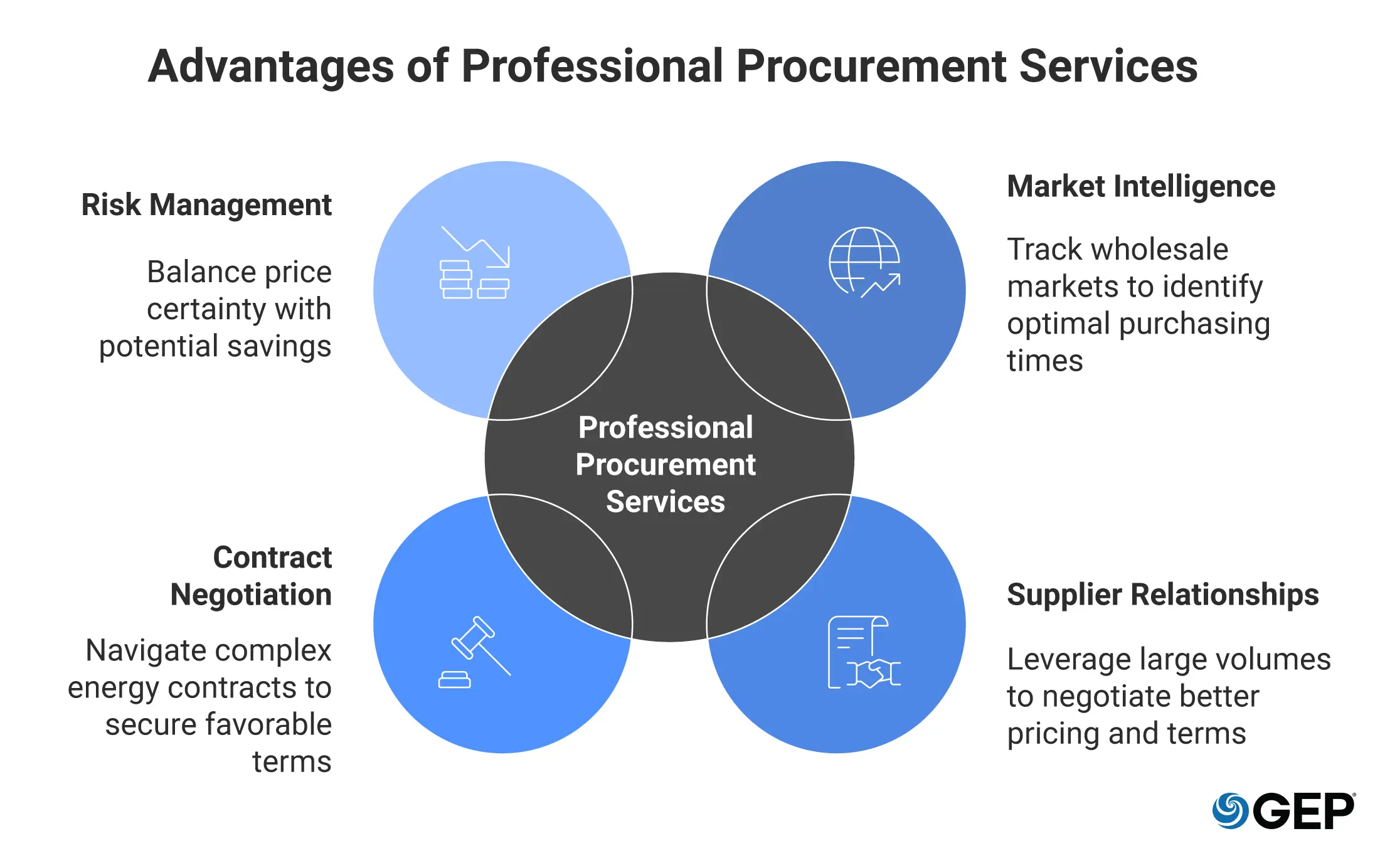
Why do professional procurement services outperform in-house efforts? A few reasons stand out.
1. Market Intelligence
Procurement specialists track wholesale markets constantly. They spot seasonal patterns and know when prices look unusually high or low. They hear which suppliers want new business badly enough to cut deals. All of this lets them time purchases carefully rather than accepting whatever rate shows up at renewal.
2. Supplier Relationships
Because procurement firms represent many clients and negotiate large volumes, they carry clout. Individual businesses rarely have this leverage. Suppliers compete harder for big accounts, which translates to better pricing and friendlier terms.
3. Contract Negotiation
Energy contracts hide plenty of traps beyond the headline rate: demand charges, capacity fees, termination penalties, auto-renewal clauses. Seasoned negotiators know where to push and where suppliers will bend.
4. Risk Management
Strong procurement partners help you decide how much price exposure makes sense and structure contracts that balance certainty against the chance to save when markets drop.
How Energy Procurement Services Optimize Energy Buying Strategies to Reduce Cost
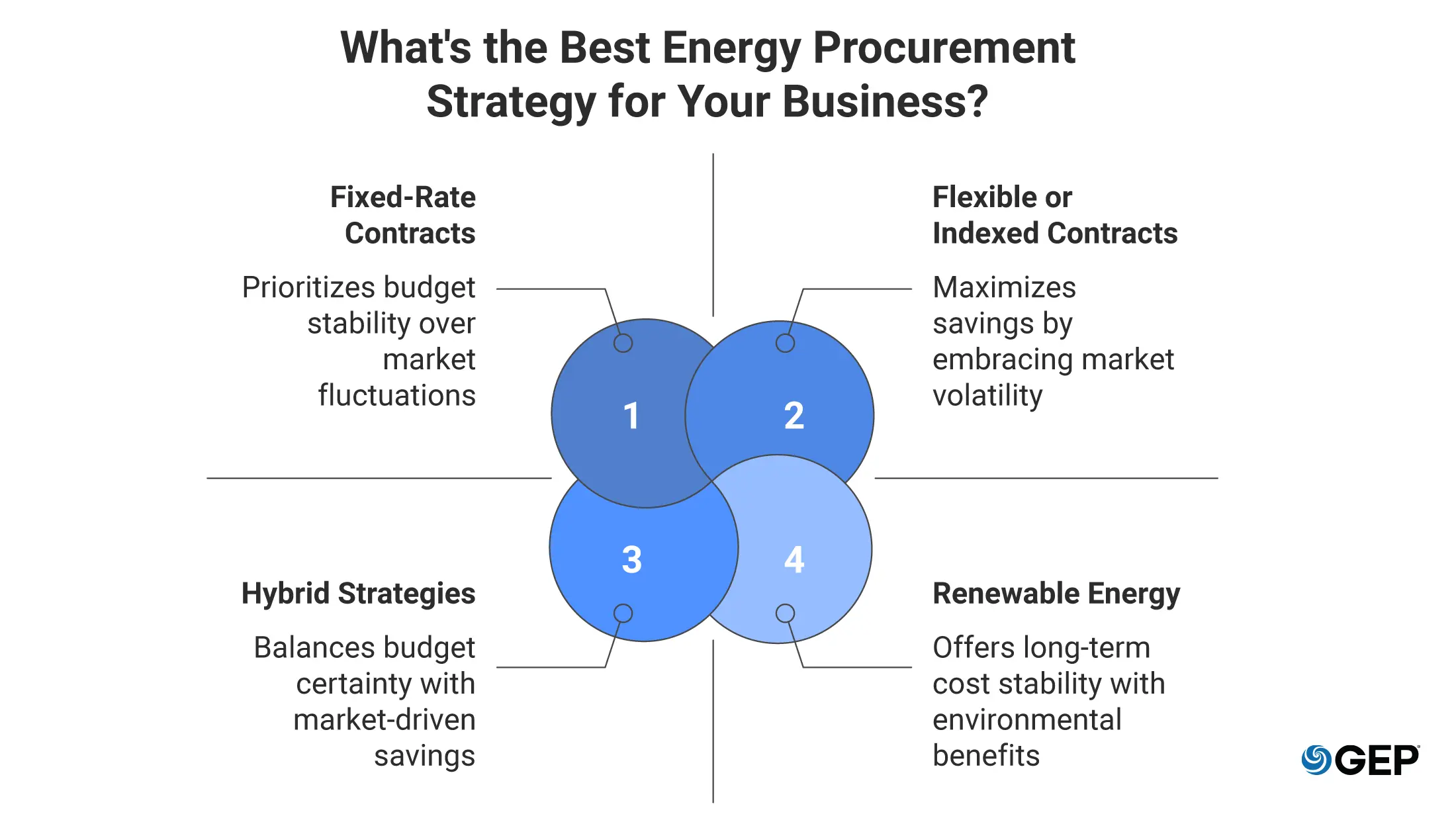
The best buying strategy depends on your business. Risk tolerance, budget needs and operational realities are all factors to consider when deciding on the right approach.
Fixed-rate contracts work well for businesses that prize stability. You lock in a set price for one to three years. Budgeting gets easier because costs stay flat no matter what the market does. The downside? If prices fall after you sign, you won't see the benefit.
Flexible or indexed contracts flip that logic. Your rates move with the market. When wholesale prices dip, so do your bills. When they spike, you pay more. This setup rewards businesses with higher risk tolerance and enough cushion to ride out bad stretches.
Hybrid strategies offer a middle path. Part of your energy gets locked at fixed rates; the rest floats with the market. You get budget certainty while still capturing upside when conditions turn favorable.
Renewable energy rounds out the strategy picture. Green power options have grown far more competitive on price. Many procurement firms help clients blend solar, wind or other renewables into their mix. Beyond the environmental upside, renewables can lock in long-term cost stability since they don't depend on volatile fuel prices.
Why Clean Energy Growth Is Stalling
See How Smart Procurement Can Break Through Renewable Energy Gridlock
Tips for Businesses to Maximize Savings with Energy Procurement Services
Getting real value from a procurement partnership takes some prep work on your end.
Start with a solid energy audit. You need clear data on how much energy you use, when you use it and where waste might be hiding. This lets procurement specialists model different scenarios and zero in on strategies that fit.
Get clear on the KPIs you’ll be tracking. Pure cost savings? Sustainability targets? A lid on price swings? Maybe some mix of all three? Your procurement partner needs to understand your priorities before they can deliver.
When selecting an energy procurement services partner, look for a track record in your industry and market. Ask tough questions about past results. The best providers explain their thinking clearly and back up recommendations with data.
Energy markets shift constantly, so review contracts regularly and stay plugged into market conditions. Steady attention beats occasional scrambles when contracts come due.
Turn Energy Procurement Into a Competitive Edge
With the right strategy, businesses can turn energy procurement into a competitive edge, trimming expenses, taming risk and advancing sustainability goals.
Professional procurement services bring the market intelligence, supplier networks and negotiating leverage to make this happen – things that most businesses can't build internally. Whether you care most about budget certainty, bottom-line savings or environmental impact, these specialists can design an approach that fits.
With energy bills too big to ignore, smart companies control costs wherever possible. Strategic energy procurement is a must-consider for any business serious about protecting margins in a volatile economic climate.




FAQs
Look for providers with real experience in your industry, clear fee structures and a history of delivering results. Ask for references and make sure they walk you through recommendations rather than just pushing contracts.
Ask for an up-front analysis comparing your current rates and terms against market benchmarks. Good providers will offer this assessment and give realistic projections based on your usage and market conditions.
By using fixed-rate contracts for budget stability, indexed contracts to catch market dips and hybrid approaches that blend both. They also time purchases strategically to help you avoid buying during price spikes.
Companies with heavy energy use, multiple sites or complicated operational needs typically see the biggest gains. That said, mid-sized businesses with substantial energy bills can also realize meaningful savings through professional help.