How to Optimize Procurement Processes in Manufacturing in 2026
- Procurement optimization is a production strategy in disguise.
- The best supply chains are designed, not negotiated.
- Visibility is the new leverage in manufacturing procurement.
February 20, 2026 | Procurement Strategy 5 minutes read
If you work in manufacturing, you already know procurement is not just a support function. It shapes production schedules, working capital, supplier risk, and ultimately whether promises made to customers can actually be kept.
What usually holds procurement back is not effort or intent. It is that many procurement processes were designed for a slower, more predictable world. Today, volatility is normal. Suppliers change. Lead times shift. Demand signals are imperfect.
Optimizing procurement processes in manufacturing is really about helping you make better decisions earlier, with fewer surprises later. It is about creating a procurement process that supports how your business actually operates, not how it operated ten years ago.
Optimize procurement to protect production and profitability
See how GEP helps manufacturers modernize procurement with confidence
Contact Us
What Does Optimized Procurement Look Like in Modern Manufacturing?
Optimized procurement does not mean perfect procurement. It means you can see what matters, act in time, and explain why decisions were made.
In practical terms, optimized procurement gives you visibility into your supply chain before problems show up on the shop floor. You understand where your suppliers are strong, where they are stretched, and where risk is quietly building.
It also means your procurement process supports tradeoffs instead of hiding them. You can weigh cost savings against delivery risk. You can decide when inventory buffers make sense and when they do not. You are not guessing; you are choosing.
When procurement works like this, it stops being reactive. It becomes a steady, predictable part of how manufacturing runs.
Procurement Bottlenecks and Statistics in Manufacturing
Most procurement bottlenecks are not dramatic failures. They are small delays that add up.
Approval steps that take too long. Supplier data that lives in too many places. Manual work that depends on individual experience rather than shared systems. These issues slow down sourcing decisions and make it harder to respond when conditions change.
You have probably seen this play out. A supplier issue is known informally but not escalated. A sourcing decision is delayed because information is incomplete. Production teams compensate by holding more inventory, which ties up cash and space.
These are not people problems. They are process problems. Optimization starts when you stop treating them as isolated frustrations and start seeing them as signals that the procurement process needs redesigning.
Strategies to Optimize Procurement Processes in Manufacturing
Strategic Vendor Consolidation: Quality over Quantity
Having too many suppliers often feels safer than it actually is.
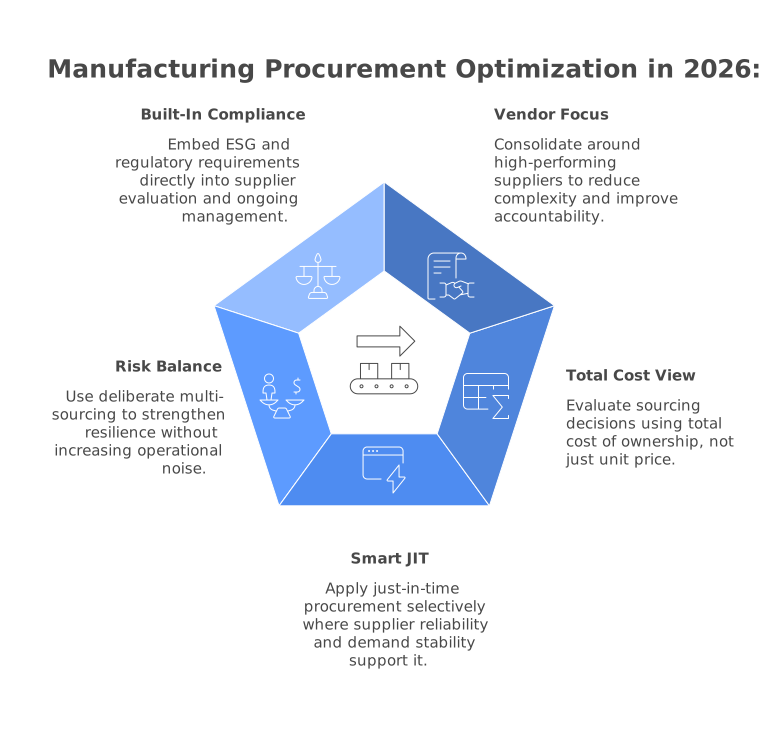
Every additional supplier increases complexity. It spreads your attention thinner and makes supplier management harder. Strategic vendor consolidation is about focusing on suppliers that consistently deliver, not just those that offer the lowest unit price.
When you work with fewer, better-performing suppliers, relationships improve. Communication improves. Accountability improves. You are able to invest time where it makes a real difference.
Consolidation only works when it is intentional. You still need backup options and clear performance expectations. The goal is focus, not fragility.
Managing Total Cost of Ownership (TCO) Beyond the Unit Price
You already know unit price does not tell the whole story. The challenge is making that reality visible in day-to-day decisions.
Late deliveries, quality issues, excess inventory, and expediting costs all hit the business, even if they never show up in procurement reports. Managing total cost of ownership means pulling those hidden costs into the conversation early.
When you look at sourcing decisions this way, priorities change. A slightly higher-priced supplier with stable lead times may be the better choice. Not because it feels safer, but because it actually costs less over time.
This is where procurement starts to reduce costs in a way that sticks.
Implementing Just-In-Time (JIT) Procurement Safely
Just-in-time procurement can work very well, but only under the right conditions.
If your suppliers are reliable, your demand signals are clear, and communication is strong, JIT can reduce inventory and improve cash flow. If those conditions are missing, JIT increases risk instead of efficiency.
Safe JIT implementation means being selective. You apply it where the supply chain is mature and keep buffers where uncertainty is high. Optimized procurement gives you the visibility to make that call deliberately.
Mitigating Risk Through Multi-Sourcing Strategies
Multi-sourcing is not about duplicating everything. It is about giving yourself options.
Some suppliers are best for steady volume. Others are better for flexibility or surge capacity. When you understand these roles clearly, you can design sourcing strategies that balance cost savings with resilience.
This also changes the nature of supplier relationships. Performance matters more than dependency. Risk is managed intentionally rather than discovered too late.
The Impact of ESG and Compliance on Procurement Efficiency
ESG and compliance often feel like extra work because they are treated as add-ons.
When compliance requirements are built into the procurement process, they actually make things smoother. Approved suppliers are easier to work with. Documentation is standardized. Fewer decisions get stuck in review cycles.
Optimized procurement treats ESG and compliance as part of supplier evaluation and ongoing management. That way, you reduce friction instead of creating it.
Leveraging Agentic AI for Predictive Demand Forecasting
AI is most useful in procurement when it helps you see change earlier.
Predictive demand forecasting does not eliminate uncertainty. It gives you better signals sooner. That extra time allows you to engage suppliers, adjust inventory plans, or rethink sourcing decisions before problems escalate.
Used well, AI supports your judgment. It does not replace it.
The Roadmap to Optimize the Procurement Processes
Analyze Current Processes
Before changing anything, you need to understand how procurement actually works today.
That includes unofficial steps, workarounds, and exceptions. These behaviors usually exist for a reason. They show you where the formal process no longer fits reality.
Define Clear, Measurable Goals
Optimization needs direction.
Clear goals around cost savings, supplier performance, inventory management, and cycle times help you focus effort. They also make progress visible, which builds credibility with stakeholders.
Invest in Technology
Technology helps when it simplifies decisions, not when it adds complexity.
Procurement platforms centralize supplier information, automate routine steps, and improve visibility across the supply chain. The value comes from using technology to reinforce good processes, not to compensate for unclear ones.
Monitor Performance
Optimization is ongoing.
Supplier performance, procurement efficiency, and risk indicators should be reviewed regularly. Not to assign blame, but to learn and adjust. What you review consistently tends to improve.
Stay ahead of shifting spend dynamics across key categories
Explore the GEP Spend Category Outlook to inform data driven decisions
Download Now
The Benefits of a Transformed Procurement Function in Manufacturing
Reduced Operational Costs
Costs come down because decisions improve upstream. Less rework, fewer surprises, and better inventory balance all add up.
Improved Production Efficiency and Reduced Downtime
Reliable suppliers and clearer signals reduce disruptions on the production line.
Enhanced Supplier Performance and Risk Management
Suppliers perform better when expectations are clear and feedback is consistent.
Better data accuracy for strategic decision-making
Accurate data allows you to move from reporting what happened to shaping what happens next.
Simplify Day-to-Day Work
Optimizing procurement processes in manufacturing is about making your day-to-day work more predictable, not more complicated.
It helps you see risk earlier, manage suppliers more deliberately, and support production with fewer last-minute interventions. When procurement works this way, it becomes a stabilizing force in the business.
Not perfect. Just reliable. And that is what manufacturing really needs.