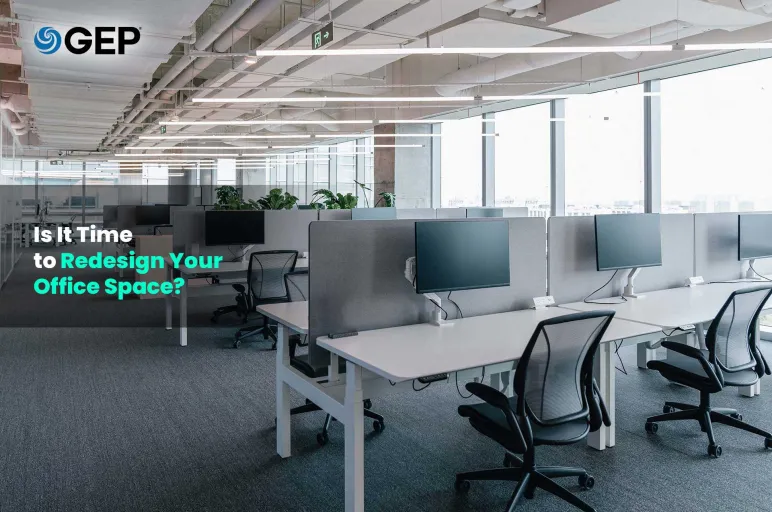
A New Era for Real Estate: Navigating the Selective Recovery of 2026
- 2026 marks a "new normal" where hybrid work is no longer a policy experiment but the default operational standard.
- Prime "Class A" office space is back in demand, while "Class B and C" properties face a critical need for repurpose.
- Data-driven agility is the theme for 2026, as companies move from broad "space-shedding" to "right-sizing" through advanced spatial analytics and AI.
February 06, 2026 | Procurement Strategy 3 minutes read
In 2026, the real estate narrative is shifting from "crisis management" to "operational discipline." While 2025 was about reacting to high vacancies and hybrid work, 2026 is about "selective recovery" where high-quality, tech-enabled spaces grow while older buildings become obsolete.
The commercial real estate landscape has entered 2026 with a distinct tone shift: We have moved past the "reset panic" of previous years and entered a phase of pragmatic optimization. The disconnect between leased and used space is finally being addressed not just through mandates, but through intentional workplace redesign.
The State of the Office: The Great Split
The numbers tell a story of a market in mid-transformation. While the 20% vacancy peaks of 2025 sent shockwaves through the United States, 2026 is seeing a "selective recovery." The narrative is no longer "the office is dead," but rather "the office has changed."
Stabilizing Utilization
Office attendance has increased from the 30% lows of 2024 to an average of 50-70% on peak days in 2026, driven by more intentional "in-office" coordination rather than blanket mandates.
The Quality Gap
A "flight to quality" has created a massive divide. While older Class B/C buildings struggle with high vacancies, Prime Class A buildings in hubs like New York, London, and Dubai are seeing record rents. These spaces now act as "hubs of collaboration" rather than just rows of desks.
Repurposing Is Reality
In 2026, the estimated $800 billion value gap in urban offices is being bridged by conversions. Obsolete office blocks are being transformed into data centers, life sciences labs, and even high-end residential units to stabilize municipal tax bases.
The Financial Impact: From Savings to Efficiency
In 2026, the goal is not just cutting costs but to achieve efficiency per square foot. With global rents projected to rise by 2-5% for prime spaces, businesses can no longer afford "ghost square footage." Companies that successfully implemented data-backed space tracking are now realizing the 40-50% cost reductions predicted in 2025. For a standard 100-employee firm, this translates to nearly $250,000 in annual savings that is being reinvested into high-tech, amenitized "flex" hubs.
Actionable Steps for Real Estate Leaders in 2026
To build a resilient portfolio this year, facility management and real estate leaders should focus on these updated strategies:
1. Enterprise Flex Has Gone Mainstream, Transition to “Flex-First” Agreements in 2026
Instead of 10-year rigid leases, negotiate for "Core + Flex" models. Keep a small permanent headquarters and use flexible, managed office memberships for your satellite teams to hedge against headcount volatility.
2. Deploy AI-Powered Spatial Analytics
The most powerful tool in 2026 isn't a spreadsheet; it's real-time data. Use IoT sensors and AI scheduling tools to monitor how people use space. If your "collaboration zones" are at 90% capacity but "fixed desks" are at 10%, you have the data needed to justify your next layout refurbishment.
3. Conduct a Substance & Governance Tax Audit
Global tax authorities are becoming more assertive in 2026. Beyond just challenging property valuations, ensure your real estate holdings have "tax substance." Avoid upcoming compliance traps by focusing on robust "defence files" that forensically record why and where commercial decisions are being made.
4. Review Security and Liquidity
With interest rates stabilizing but remaining "higher for longer" than in the 2010s, cash is king. Continue to push for corporate guarantees over cash deposits in lease renewals to keep your capital liquid for operational growth.
5. Prioritize "Human-Centric" Design
In 2026, the office must be a "destination." Focus your capex on wellness-driven design: biophilic elements, superior air filtration, and "emotionally intelligent" spaces like mindfulness zones. These aren't “nice-to-haves” anymore; they are the bare minimum if we want to keep our best people.
From Tasks and Workflows to Agentic Orchestration
See How GEP Quantum Intelligence Is Redefining Procurement
Download the bulletin
The Road Ahead
In 2026, we’re finally moving past the “one-size-fits-all” office — it just doesn't work anymore. This year is about being smart and selective. By getting real about hybrid work and using data to decide how much space we really need, we’re doing more than just cutting costs. We’re turning our offices from an expensive monthly bill into a tool that actually drives our culture and helps people get things done.
Author: Shilky Gupta