



Why Are More Procurement Leaders Turning to Strategic Sourcing?
- Strategic sourcing replaces reactive buying with informed sourcing decisions
- Strong supplier relationship management improves predictability and performance
- Long-term value comes from visibility, not just negotiation
February 18, 2026 | Procurement Strategy 4 minutes read
Strategic sourcing used to be something procurement teams talked about when budgets tightened. Today, it is something business leaders expect procurement to lead.
The shift is not accidental. Supply chains are more volatile, supplier risk is harder to spot, and spending patterns are more complex than they were even a few years ago. In that environment, traditional procurement approaches start to show their limits.
Strategic sourcing changes the conversation. It gives procurement teams a structured way to analyze goods and services, understand supplier dynamics, and make sourcing decisions that support long-term business goals, not just short-term savings. That is why the benefits of strategic sourcing show up on executive agendas, not just sourcing calendars.
Build sourcing strategies that reduce risk and unlock long-term value
See how GEP helps procurement teams make strategic sourcing stick
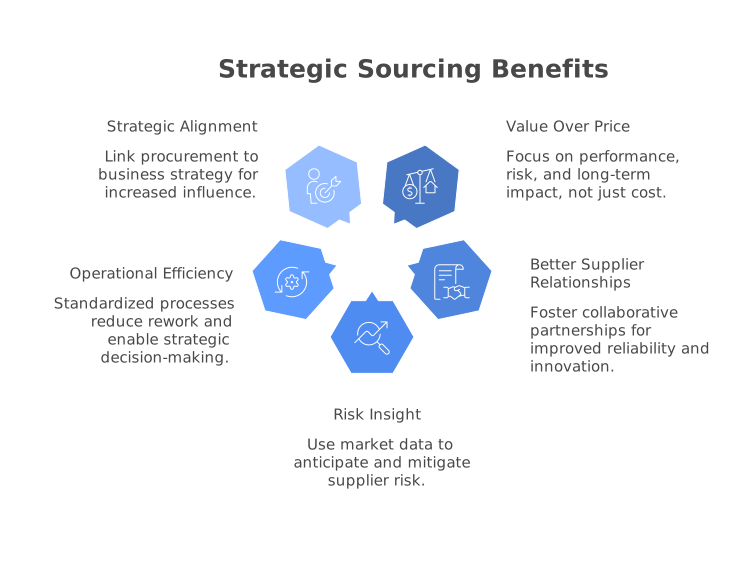
Strengthening Supply Engagement for Predictable Outcomes
One of the clearest signals that strategic sourcing is working is predictability.
When sourcing strategies are built on data and market insight, supplier engagement becomes more intentional. Instead of reacting to shortages or performance issues, procurement teams engage suppliers earlier and with clearer expectations.
This strengthens the supplier relationship and reduces surprises in the supply chain. Capacity planning improves. Lead times stabilize. Risk becomes visible instead of reactive.
Strategic sourcing helps procurement teams move away from transactional interactions and toward partnerships that support consistent outcomes, even when market conditions are anything but consistent.
Business-Focused Supplier Governance
Strategic sourcing offers a governance model that aligns procurement activities with business priorities.
Rather than treating sourcing decisions as isolated events, procurement professionals use structured sourcing processes to evaluate supplier performance, compliance, and total cost of ownership. This allows companies to formalize the way they gather information and make decisions.
The result is better alignment across finance, operations, legal, and the procurement team. Everyone understands why a supplier was selected and what success looks like.
Compared to traditional procurement, this approach creates accountability without slowing the procurement process. Governance becomes a value enabler, not a bottleneck.
Performance & Agility Benefits
Speed matters, but speed without structure creates risk.
Effective strategic sourcing allows procurement teams to move faster because the groundwork is already in place. Historical data, category strategies, and supplier insights reduce decision time without sacrificing quality.
This agility is critical in modern supply chains. When demand shifts or disruptions occur, sourcing teams can adapt decisions quickly because they are operating within a defined strategic sourcing process.
Supplier performance tracking supports this agility. Issues surface earlier, corrective actions happen faster, and the organization avoids firefighting mode.
Strategic Value Beyond Cost
Cost reduction is one of the benefits of strategic sourcing, but it is not the most important one.
The real value lies in visibility. Strategic sourcing reveals spending patterns across goods and services that are often hidden in fragmented procurement activities. It highlights opportunities to optimize the supplier base and manage risk more effectively.
By focusing on total cost of ownership, procurement professionals make sourcing decisions that support long-term business health. This is where strategic sourcing best practices outperform traditional sourcing approaches that focus narrowly on price.
Strategic sourcing is not about paying less at all costs. It is about paying wisely, consistently, and with intent.
Organizational and Cultural Impact
Strategic sourcing changes how procurement is perceived across the organization.
When procurement teams bring insight instead of just process, stakeholders engage earlier and more openly. Conversations shift from approval requests to strategic discussions about value, risk, and performance.
This naturally improves compliance. Stakeholders follow the procurement process because it helps them succeed, not because it is mandatory.
Over time, strategic sourcing helps procurement move from support function to strategic partner, embedded in how the business operates.
Stay ahead of shifting spend dynamics across key categories
Explore the GEP Spend Category Outlook to inform data driven decisions
Competency & Team Enablement
Implementing strategic sourcing also strengthens the procurement team itself.
Procurement professionals develop deeper market knowledge, stronger analytical skills, and greater confidence influencing sourcing decisions. Sourcing teams become better equipped to manage supplier relationships and guide the business through complex trade-offs.
As these competencies mature, procurement activities become more proactive. Each sourcing cycle builds on the last one, creating momentum rather than repetition.
Strategic sourcing services helps procurement teams scale impact without scaling complexity.
What's Next
Strategic sourcing is no longer a nice-to-have capability. It is a foundational discipline for organizations that want resilient supply chains and informed sourcing decisions.
It brings structure to complexity, visibility to spending, and intent to supplier relationships. Most importantly, it helps procurement teams reduce costs, boost efficiency, and drive success in an environment where uncertainty is the norm.
Organizations that invest in strategic sourcing do not just improve procurement outcomes. They improve how the business competes.




FAQs
The goals include improving supplier performance, optimizing total cost of ownership, strengthening supplier relationships, and aligning sourcing decisions with business strategy.
Key metrics include cost reduction, supplier performance, compliance levels, risk exposure, and savings measured across the supply chain.
Strategic sourcing providers bring tools, expertise, and structured sourcing processes that help procurement teams implement strategic sourcing faster and at scale.
Traditional procurement focuses on execution. Strategic sourcing focuses on analysis, planning, and long-term value creation.