



Why Technology, Media & Telecommunications (TMT) Industry Needs Real-Time Procurement Visibility
- You cannot move fast in TMT if your data moves slowly.
- Visibility turns procurement from reactive to reliable.
- Better decisions start with seeing what is happening now.
February 24, 2026 | Procurement Strategy 5 minutes read
If you work in TMT, speed is not a competitive advantage; it is the baseline. Networks expand fast. Platforms evolve constantly. Product lifecycles are short, and customer expectations are unforgiving.
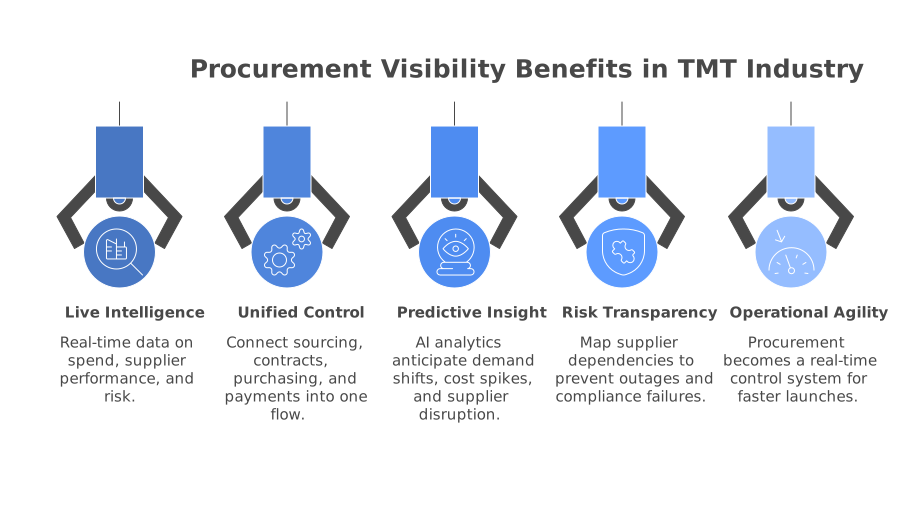
Yet procurement in many TMT organizations still runs on delayed data. Reports arrive weeks late. Spend visibility is partial. Supplier risk is often discovered after something breaks.
Real-time procurement visibility is not about dashboards for the sake of dashboards. It is about helping you make decisions while there is still time to change the outcomes. In an industry where timing defines success, static data quietly becomes a bottleneck.
Gain real-time visibility across your procurement operations.
See how GEP helps TMT organizations make faster, more confident decisions.
What is Real-Time Procurement Visibility in TMT?
Real-time procurement visibility means you can see what is happening now, not what already happened.
In practical terms, it gives you up-to-date insight into spend, supplier commitments, contract usage, shipments, and risk exposure across the TMT ecosystem. You are not stitching together information from multiple systems or waiting for month-end reports.
This matters in TMT because procurement decisions are tightly linked to deployment schedules, content delivery, and network performance. When you lack real-time data, decision-making slows down, and small delays ripple into missed launches or service disruptions.
Visibility turns procurement from a reporting function into a live control system.
The 2026 TMT Landscape: Why Static Data is the New Bottleneck
In 2026, TMT organizations are operating in an environment defined by constant change.
Telecommunications infrastructure is expanding alongside 5G and edge computing. Media companies are managing complex content rights and technology stacks. Technology firms are balancing rapid innovation with growing regulatory pressure.
In this context, static procurement data creates blind spots. A delayed shipment update can derail a rollout. Unseen SaaS overlap inflates costs. Supplier risk hidden in second- or third-tier relationships becomes a real threat.
Static data was tolerable when change was slow. In the current TMT landscape, it actively limits your ability to respond.
The Strategic Pillars of Real-Time Procurement Visibility for TMT Businesses
Unified Source-to-Pay (S2P) Orchestration
Fragmented systems fragment decisions.
Unified source-to-pay orchestration connects sourcing, contracting, purchasing, and payment into a single flow. This gives you consistent visibility across the procurement lifecycle rather than snapshots from disconnected tools.
For TMT, this matters because procurement touches everything from hardware and network equipment to software licenses and professional services. When S2P is unified, you can see how decisions upstream affect outcomes downstream.
AI-Powered Spend Analysis
Spend data is only useful if it tells you something new.
AI-powered analytics help you identify patterns that are easy to miss: duplicate vendors, underused contracts, rising costs in specific categories, or spending that does not align with forecasts.
In TMT environments with high volumes of fast-moving purchases, this level of analysis helps you leverage data for smarter decisions instead of drowning in it.
Collaborative Contract Management
Contracts often hold the answers, but they are rarely easy to access.
Collaborative contract management makes terms, obligations, and renewal timelines visible to the people who need them. This reduces leakage, improves compliance, and supports better negotiation outcomes.
In industries like telecommunications and media, where contracts are complex and time-sensitive, visibility here directly impacts profitability and risk.
Multi-Tier Supplier Risk Mapping
Most supply chain risks do not originate with your direct suppliers.
Multi-tier risk mapping gives you insight into dependencies beyond tier one. This is critical in TMT, where components, services, and content often rely on deeply interconnected supplier networks.
When risk mapping is real-time, you can respond before issues escalate into outages or delays.
Real-Time ESG and Sustainability Tracking
ESG expectations are rising, and TMT companies are under increasing scrutiny.
Real-time tracking allows you to monitor compliance, sustainability metrics, and supplier commitments continuously rather than through periodic audits. This reduces last-minute scrambles and improves credibility with regulators and customers.
Visibility here supports both responsibility and efficiency.
Upgrade to Smarter Procurement Software Today
Roadmap: Transitioning to an AI-First Procurement Ecosystem
Data Centralization
You cannot act on what you cannot see.
Centralizing procurement data across systems creates a single source of truth. This is the foundation for analytics, automation, and intelligent decision-making.
Without it, visibility efforts stall before they start.
Implementing Guided Buying
Guided buying simplifies compliance by design.
Instead of relying on policy enforcement after the fact, guided buying directs users toward approved suppliers, contracts, and options from the start. This improves user adoption while maintaining control.
In fast-moving TMT environments, this balance is essential.
Scaling with Predictive Intelligence
Predictive intelligence shifts procurement from reactive to proactive.
By combining real-time data with forecasting models, you can anticipate demand, shipment delays, or supplier constraints. This allows you to adjust plans early rather than manage crises later.
Artificial intelligence adds value when it changes timing, not just insight.
Stay ahead of shifting spend dynamics across key categories.
Explore the GEP Spend Category Outlook to inform data driven decisions.
The Benefits of Real-time Procurement Visibility in TMT
Radical Operational Agility
Real-time visibility shortens the distance between signal and action.
When you can see issues as they emerge, you can respond faster and with more confidence. Agility becomes a capability, not a scramble.
Accurate Demand Planning
Visibility improves forecasting accuracy by grounding it in live data.
This reduces overbuying, underutilization, and emergency sourcing. Demand planning becomes more reliable and less reactive.
Improved User Adoption
When procurement tools reflect how people actually work, adoption improves.
Real-time visibility reduces friction, builds trust, and encourages teams to engage with procurement systems instead of bypassing them.
Visibility as the Foundation of TMT Innovation
Innovation in TMT depends on coordination.
New products, services, and rollouts require synchronized decisions across technology, suppliers, logistics, and contracts. Without visibility, coordination breaks down.
Real-time procurement visibility provides the foundation for innovation by ensuring decisions are informed, timely, and aligned with execution.




FAQs
Yes, because most rollout delays are not caused by a single failure. They come from small issues that compound: late shipments, contract constraints, or supplier capacity limits. Real-time visibility helps you spot and address these risks earlier, when alternatives still exist.
It can significantly reduce it. When procurement visibility extends to contracts, subscriptions, and usage data, overlapping tools and unmanaged spend become visible. This allows you to consolidate platforms, renegotiate contracts, and regain control without disrupting teams.