



Which Metrics Should You Track to Measure P2P Process Success?
- Procure-to-pay metrics turn opinion into evidence across procurement and finance.
- The best metrics reveal root causes, not just symptoms.
- Consistent use of metrics enables sustainable process improvement.
February 25, 2026 | Procurement Strategy 5 minutes read
If you have worked in procurement long enough, you already know this: the procure-to-pay process is rarely judged fairly. When it works, nobody notices. When it breaks, everyone notices. Late payments, frustrated suppliers, invoice backlogs and uncomfortable finance meetings all tend to surface at once.
This is why metrics matter. Not vanity numbers. Not dashboards built for leadership presentations. But practical procure-to-pay metrics that tell you whether your process is healthy, where friction is building and what to fix next. Used correctly, P2P metrics become a shared language between procurement, accounts payable and finance. Used poorly, they become noise.
This article walks through what to track, why it matters and how to use metrics to drive real process improvement rather than reporting for reporting’s sake.
What are Procure-to-Pay Metrics?
Procure-to-pay metrics are measurable indicators that show how effectively your P2P process operates from requisition to payment. They cut across procurement, invoice handling and accounts payable. Some focus on speed. Others on cost. Others on compliance or quality.
Think of each metric as a signal. One signal alone rarely tells the full story. Together, the right metrics create a reliable source of truth for how work flows through the process. They show whether policies translate into action and whether technology is helping or slowing things down.
Good P2P metrics share three traits. They are easy to understand. They are grounded in real operational data. And they connect clearly to goals and targets that matter to the business.
Ready to Improve Your Procure-to-Pay Performance?
GEP helps teams use metrics to drive real improvement
Contact Us
Why is it Important to Track Procure-to-Pay Metrics?
Without metrics, most P2P discussions become opinion driven. Procurement says the process is fine. Finance says it is not. Accounts payable feels overloaded but cannot prove why. Metrics replace assumption with evidence.
Tracking procure-to-pay metrics helps teams spot bottlenecks early. A rising invoice processing time often shows upstream issues like poor purchase order quality. A high exception rate usually signals supplier onboarding gaps or unclear buying channels.
Metrics also support better prioritization. Not every issue deserves immediate attention. When you use metrics consistently, you can focus on the problems that create the most cost, risk or supplier dissatisfaction.
Finally, metrics help procurement demonstrate value beyond savings. When finance sees reduced late payments, lower cost per invoice and higher straight through processing, procurement credibility rises quickly.
The Key Procure-to-Pay Metrics that Procurement Professionals Need to Track
Invoice Processing Time
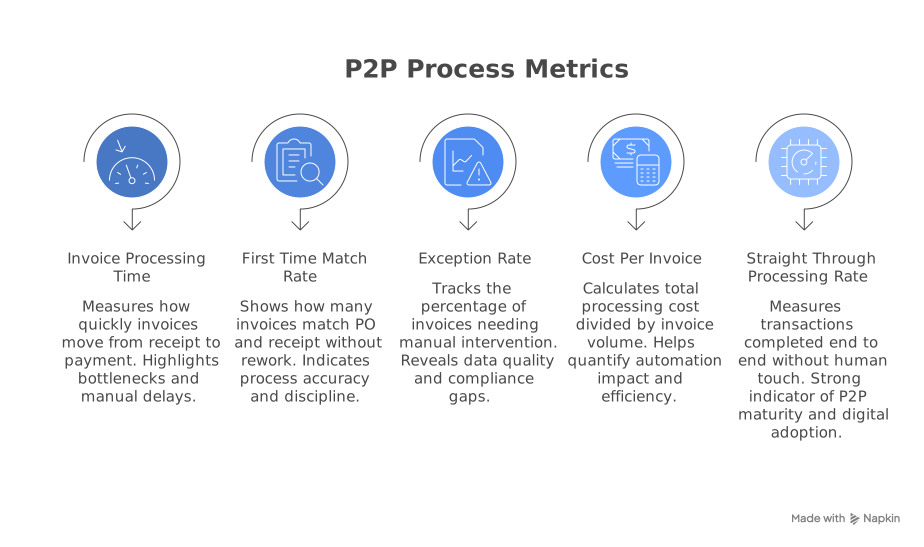
Invoice processing time measures how long it takes to move an invoice from receipt to approval and payment. It is one of the clearest indicators of P2P efficiency.
Long processing times often point to manual touchpoints, missing data or frequent exceptions. Reducing this metric improves cash forecasting and supplier relationships while easing pressure on accounts payable.
Exception Rate
Exception rate shows the percentage of invoices that require manual intervention. These exceptions slow the process and increase costs.
A high exception rate usually reflects poor data quality, non-compliant buying or weak supplier enablement. Tracking this metric helps teams focus on fixing root causes rather than firefighting symptoms.
First Time Match Rate
First time match rate measures how often invoices match purchase orders and receipts without rework. It is a strong indicator of process maturity.
Improving this metric depends on better requisition accuracy, clearer contracts and disciplined supplier behavior. When this number rises, workload and frustration across teams fall.
Purchase Order Cycle Time
Purchase order cycle time tracks how long it takes to create and approve a purchase order. While often seen as a procurement metric, it has a direct impact on downstream invoice flow.
Shorter cycle times usually lead to cleaner invoices and fewer disputes. This metric helps balance speed with control.
Cost Per Invoice
Cost per invoice calculates the total processing cost divided by invoice volume. It captures labor, systems and overhead.
This metric is especially useful when building a business case for automation. As straight through processing improves, cost per invoice should decline in parallel.
Percentage of E invoicing
This metric shows how many invoices are submitted electronically rather than manually. Higher percentages typically correlate with faster processing and fewer errors.
Tracking this helps procurement justify supplier onboarding efforts and technology investments.
Supplier Lead Time
Supplier lead time measures how long suppliers take to deliver after order placement. While not always owned by procurement alone, it directly affects planning and working capital.
Monitoring this metric supports better supplier performance management and more realistic expectations.
Contract Compliance Rate
Contract compliance rate tracks how much spend follows negotiated terms. Low compliance often leads to invoice discrepancies and missed savings.
This metric reinforces the importance of guided buying and clear communication with stakeholders.
Spend Under Management
Spend under management shows the proportion of total spend that flows through approved procurement channels. It is a foundational P2P metric.
Higher spend under management improves data quality, compliance and leverage. It also ensures metrics reflect reality rather than partial visibility.
Stay ahead of shifting spend dynamics across key categories
Explore the GEP Spend Category Outlook to inform data-driven decisions
Download the Report
Payment Term Compliance
Payment term compliance measures whether invoices are paid according to agreed terms. Poor performance here damages supplier trust and can trigger late payment penalties.
This metric connects procurement and accounts payable priorities in a very practical way.
Supplier Defect Rate
Supplier defect rate captures issues such as incorrect invoices, pricing errors or delivery mismatches. It highlights supplier related causes of process friction.
Used constructively, this metric supports collaborative improvement rather than blame.
Straight Through Processing (STP) Rate
Straight through processing rate measures how many transactions flow end to end without human intervention. It is one of the strongest indicators of P2P maturity.
As STP rises, cost per invoice falls, cycle times shrink and teams can focus on higher value work.
Review P2P Metrics Regularly
The most effective procure-to-pay metrics do not exist to impress leadership. They exist to guide daily decisions. When procurement teams use metrics consistently, they gain the right information to improve the process step by step.
The goal is not to track everything. It is to track what matters, review it regularly and act on what the data reveals. Done well, P2P metrics align procurement, accounts payable and finance around shared outcomes rather than competing narratives.
Explore how GEP’s procure-to-pay software supports better visibility, control, and measurable performance across the P2P process.




FAQs
Metrics measure activity or performance. KPIs are the small set of metrics tied directly to strategic goals and targets.
Operational metrics should be reviewed monthly. Strategic KPIs benefit from quarterly review to track trends and impact.
Cost per invoice combined with STP rate clearly shows efficiency gains and resource impact.
They improve visibility, reduce leakage and highlight where process improvement delivers measurable financial benefit.