



Here's Why You Should Consider Managed Procurement Services
- Managed procurement services let organizations reduce costs, improve efficiency and gain access to specialist expertise without expanding in-house teams.
- Managed services turn procurement from a back-office function into a strategic growth driver.
- Technology-powered procurement solutions deliver real-time visibility and automation that internal teams often struggle to build on their own.
February 03, 2026 | Procurement Strategy 5 minutes read
Most procurement teams can't keep up with today's demands using internal resources alone. That's the reality. And it's exactly why managed procurement services exist. When you partner with a specialized provider, you get to streamline your procurement function, cut costs and tap into expertise that would otherwise take years to develop. The payoff? A procurement operation that actually drives growth, instead of just keeping spend in check.
What Are Managed Procurement Services?
In simple terms, managed procurement services mean handing over some or all of your procurement work to an outside expert. These providers go by different names: managed service providers, MSPs, outsourced procurement partners, but they all do similar things.
What exactly do they handle? Sourcing. Supplier management. Contract negotiations. Compliance monitoring. Some companies outsource the whole procurement process. Others prefer to keep strategy in-house and let the MSP take care of daily operations.
Here's what makes MSPs valuable: they bring deep know-how, strong supplier networks and tech platforms that most companies simply don't have. Mid-sized firms without dedicated procurement staff find this especially useful. But plenty of large enterprises also use managed services to fill gaps in their own teams.
Why Strategic Managed Procurement Services Are Essential for Business Growth
For years, people saw procurement as a back-office function. Necessary? Sure. Strategic? Not really. That view has shifted. Now, procurement choices shape profitability, supply chain resilience and market position. Managed procurement services help organizations unlock these strategic benefits, even when they lack the internal resources to do it themselves.
Streamlining Operations and Achieving True Cost
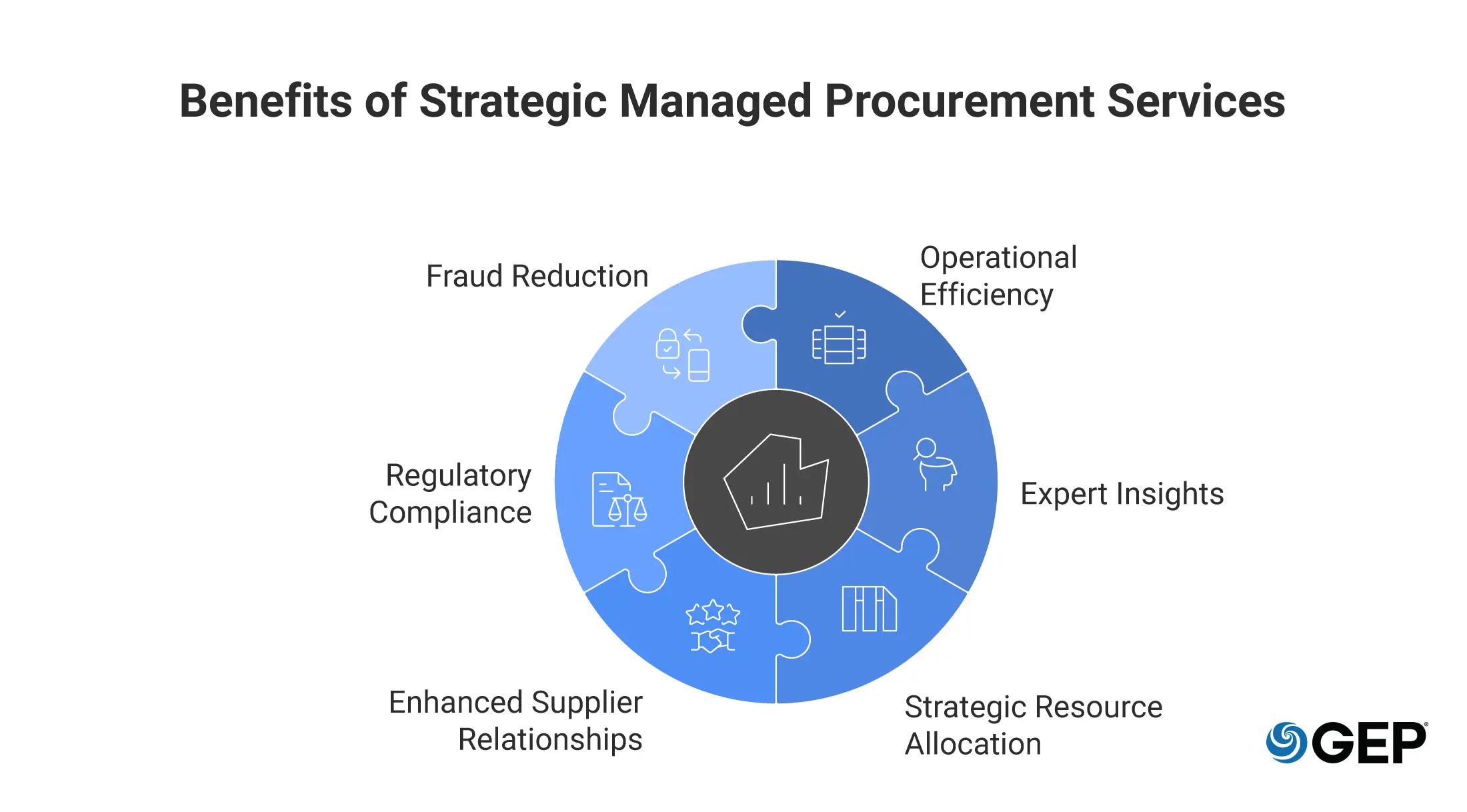
Operational efficiency is one of the first things you notice with managed procurement. MSPs have refined their processes across dozens of clients. They know where bottlenecks hide. They've already built workflows that work. When they apply that experience to your procurement function, inefficiencies start to disappear.
And then there's the money. MSPs pool spending from many clients, which gives them leverage that a single company rarely has. They negotiate harder and get better prices. But the savings don't stop at the invoice: good managed services also stamp out maverick spending, tighten contract compliance and spot savings your own team might overlook.
Expert Insights and Advanced Analytics Solutions
Modern procurement runs on data, but many companies struggle to turn that data into anything useful. MSPs invest heavily in analytics (dashboards, spend analysis, reporting tools) that would cost a fortune to build yourself. With these in place, raw numbers become insights you can act on.
Think predictive modeling. Scenario planning. Real-time supplier tracking. If a key vendor hits financial trouble or commodity prices jump, you find out fast enough to do something about it.
Strategic Resource Allocation
Every hour spent processing purchase orders or chasing approvals is an hour not spent on higher-value work. Managed procurement services take care of the routine tasks, freeing your people to focus on what matters most.
For example: a manufacturing company has a small procurement team buried in transactional work. They bring in an MSP to handle the day-to-day purchasing. Suddenly, those same employees have time for supplier innovation programs or new product support. Procurement stops being a cost center and starts contributing to growth.
Enhancing Supplier Relationships
Good supplier relationships need steady communication, fair treatment and professional management. However, many internal teams don't have the bandwidth for that level of attention. MSPs do. They bring structure and consistency to vendor relationships.
With someone focused on supplier performance full-time, you can measure how well vendors meet their commitments. A good MSP will help you catch problems before they blow up. Vendors tend to notice the professionalism, too. They often respond with better service, sharper pricing and more willingness to collaborate.
Regulatory Compliance and Risk Mitigation
Regulations change constantly. Keeping up, and documenting that you're keeping up, can swamp an internal team. MSPs bake compliance into how they work.
Risk management goes beyond ticking regulatory boxes, though. MSPs create audit trails and enforce segregation of duties. If you operate in a heavily regulated sector, this kind of systematic oversight is hard to put a price on.
Fraud Reduction
Procurement fraud drains billions from businesses each year. Worse, it often goes unnoticed for months. MSPs put controls in place that shrink this risk considerably.
Automation is a big part of the answer. When invoices and payments run through systems with built-in checks, there's less room for anyone to game the process. Pair that with professional oversight, and fraud is much easier to spot.
Stop Your Procurement Savings Leakage
Learn Why Negotiated Savings Vanish And How To Protect Your Bottom Line
Understanding the Role of Technology in Managed Procurement Services
Technology sits at the core of what MSPs offer. They pour resources into cloud platforms, automation and AI tools, investments most companies couldn't justify making on their own. When you work with an MSP, you get access to all of that without the capital outlay or the headache of maintenance.
What does that look like day to day? Automation takes care of routine transactions. Dashboards show you spending, supplier metrics and process health in real time. Everything ties into your existing enterprise systems, so data moves smoothly across the organization.
There's another benefit that's easy to miss: MSPs keep upgrading. New features roll out, and you get them without running an implementation project or retraining your staff. Over time, that technology edge compounds.
Managed Procurement Services Are a Proven Way Forward
Cost savings matter, but they're only part of the story. Managed procurement services give you access to capabilities that make procurement genuinely strategic. Better supplier relationships, lower fraud risk, smarter use of data: MSPs deliver value on multiple fronts.
If your company is wrestling with procurement complexity, stretched resources or a need to modernize fast, managed services offer a tested way forward.
Discover GEP’s Procurement Services for better managing your procurement operations.




FAQs
MSPs come with ready-to-deploy digital platforms and automation tools. That lets you skip the long slog of building and rolling out technology internally. Many organizations see digital transformation happen in months, not years.
MSPs track commodity prices and market shifts using advanced analytics. When they see trouble coming, they can lock in rates, set up hedging arrangements or negotiate protections with suppliers. Their buying power across multiple clients adds extra leverage.
You do. The client keeps ownership of key supplier relationships. The MSP handles the day-to-day contact and tracks performance, but the strategic partnership stays under your control.