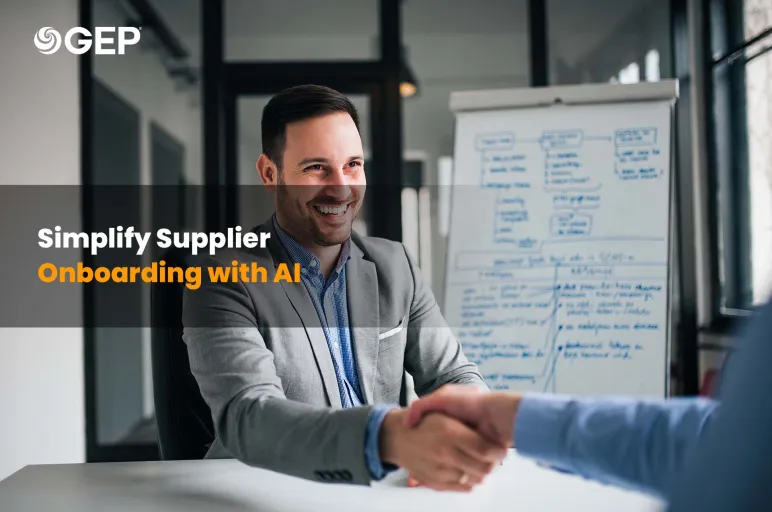
Get AI to Expedite (And Derive More Value from) Supplier Onboarding
- Supplier onboarding has traditionally been a time-consuming process involving a lot of paperwork.
- Advancements in AI have made it possible to automate this process, replacing manual checks with automated creation and verification of supplier profiles.
- Not only does AI allow procurement to focus on strategic and value adding tasks, but it also monitors risks associated with suppliers continuously.
January 06, 2026 | Procurement Software 4 minutes read
How long does your business take to bring in a supplier? Does this process involve a lot of paperwork or back-and-forth emails? Do your suppliers often have to wait a long time?
If you ask procurement professionals some of their key challenges, they will often talk about supplier onboarding. They fear they might be onboarding a vendor who looks good on paper but has hidden red flags.
The traditional process can take procurement firms 60 to 90 days to get a contract in place, involving everything from background checks to compliance verification to setting up access levels. Meanwhile, your business stakeholders wonder why it’s taking so long to bring a vendor on board.
But here's the good news: AI is fundamentally changing this process. And this isn’t a distant future scenario. This transformation is happening right now, and the results are significant.
From 90 Days to 10x Faster: The Speed Revolution
Companies are now onboarding suppliers quickly by automating manual processes and enabling data-driven decision-making. Tasks that used to take weeks now happen in days, or even hours.
AI-powered systems are doing all the heavy lifting. Machine learning and optical character recognition help validate supplier documents and automate supplier onboarding, which means no more manual data entry or chasing down paperwork.
Procurement teams leverage AI algorithms and workflow automation tools to expedite routine tasks. Automation reduces the need for manual intervention that often leads to mistakes and bottlenecks.
Having Trouble with Long Supplier Validation Checks?
Get AI-powered technology to expedite the process
Contact Us
The Real Story: Going Beyond Simple Verification
Here's where it gets interesting. AI doesn't just speed up the process; it fundamentally changes what's possible during onboarding.
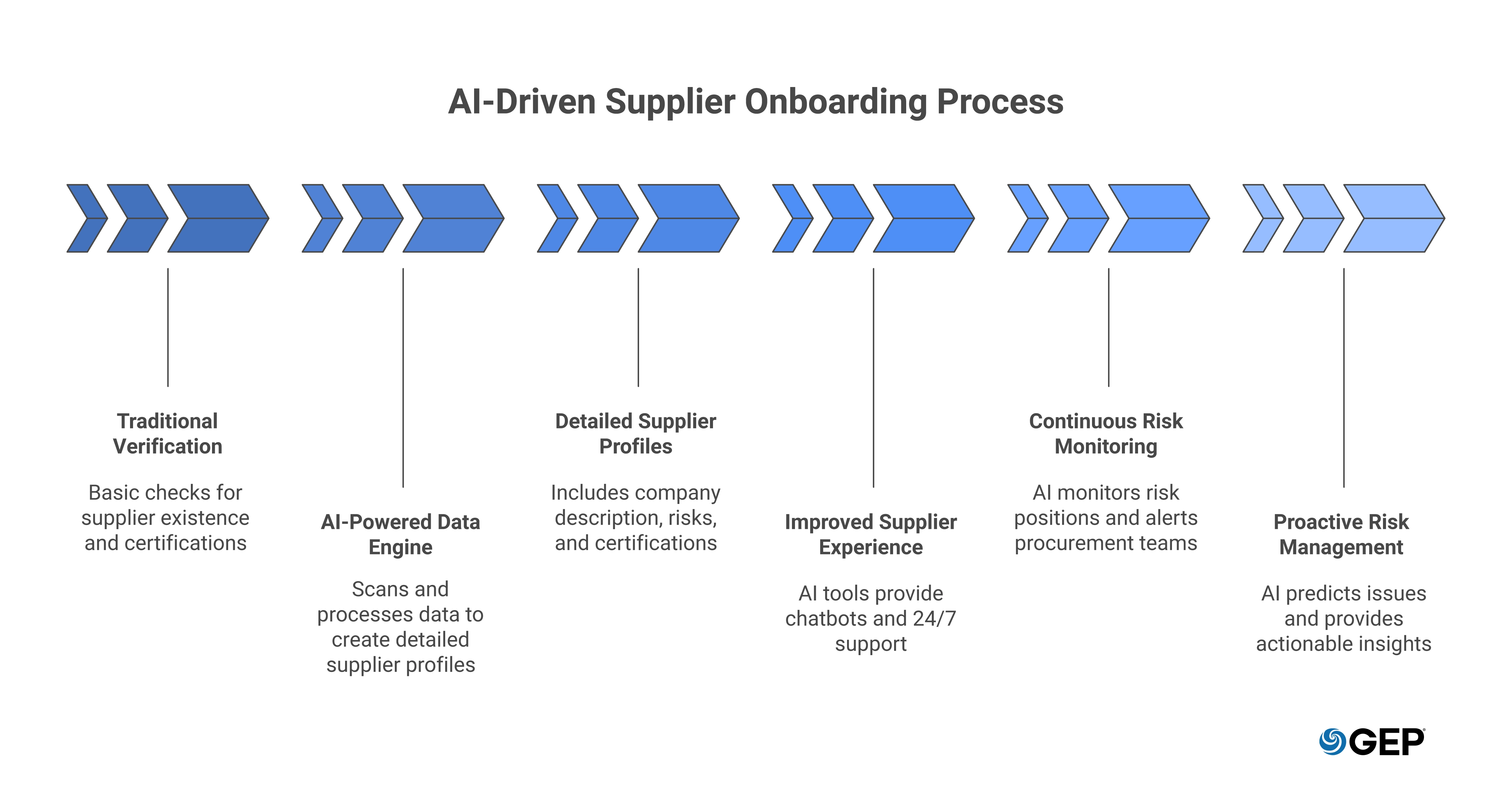
Traditional supplier verification was limited to basic checks. Does the company exist? Do they have the right certifications? But that surface-level approach has real risks.
Modern AI systems go much deeper. AI-powered data engines create detailed supplier profiles by scanning and processing data from various sources. Each supplier profile includes company description, alternative names, business categories, locations, risks, size, and certifications. This helps you move beyond basic checks and determine a supplier’s alignment with your needs.
The Experience Nobody Talks About: Making It Better for Suppliers Too
Here's something that often gets overlooked: AI doesn't just make life easier for procurement teams. It dramatically improves the experience for suppliers as well.
For a supplier, onboarding often means dealing with unclear instructions, confusing portals, and long support times.
AI-powered tools help overcome these challenges. Suppliers can access smart chatbots at every step, ask questions, and check if any documents are missing. They also get 24/7 support in multiple languages. Such a support mechanism ensures that suppliers have a smooth onboarding experience. They're more engaged from day one, which ultimately strengthens your relationship with them.
Check Out GEP’s - Supplier Management Software
Real-Time Risk Management: The Silent Guardian
One of AI's most valuable contributions is continuous risk monitoring. AI continuously monitors risk positions and alerts procurement teams in real time. This is especially useful for high-risk categories or tight timelines where teams cannot wait for periodic reviews and updates.
AI algorithms analyze large volumes of data to predict potential issues before they become problematic, providing companies with actionable insights to proactively manage supplier risk. This changes your approach from reactive firefighting to proactive risk management. You can sense early signs of non-compliance and financial distress.
The Transparency Advantage
With AI-powered platforms, stakeholders can access supplier data in real time. They can use accurate information for making informed decisions. This enhances transparency and reduces delays caused by manual intervention.
With access to real-time data, they can respond promptly to fluctuating market conditions or supply chain disruptions.
The Human Touch Still Matters
AI isn’t going to replace procurement professionals. But it can free your team from time-consuming administrative tasks. Teams can turn their attention toward supplier management strategy and relationship building. They can collaborate with finance, IT, facilities, legal, HR, and supply chain teams to capture new value-creation opportunities.
AI handles repetitive tasks like data gathering, validation, and initial risk screening.
Your team handles the nuanced decisions, negotiations, and strategic supplier partnerships that require human judgment and creativity.
What This Means for Your Procurement Function
The impact is tangible. Organizations can bring down procurement costs through AI-driven supplier onboarding. They can expedite onboarding, boost compliance and lower risks at the same time.
But perhaps more importantly, AI can transform procurement from a back-office function into a strategic partner. You're no longer processing paperwork, you're providing insights that drive business decisions, identifying opportunities for innovation, and building resilient supply chains.
Struggling to Identify AI use cases in procurement?
Learn 101 tested and proven applications of AI that every procurement pro should know
Read the GEP White Paper
How to Get Started
Businesses should focus on specific tasks in the supplier onboarding process. Start with one pain point and prove the value. Maybe it's document validation or initial supplier screening.
Once you prove its value in one task, expand it to other processes. As technology continues to evolve, its use cases are likely to increase and become more accessible to organizations of all sizes.
Expedite Supplier Onboarding Now
Supplier onboarding doesn't have to be the bottleneck it once was. AI is making the process faster, less risky, and less painful for everyone involved.
The procurement teams winning today aren't just using AI to do the same old things faster. They're reimagining how supplier onboarding can be a strategic process that sets the foundation for strong supplier relationships.
The question isn't whether AI will transform supplier onboarding. It's whether you are ready and have the capability to leverage its potential. Given how quickly this technology is advancing and how substantial the benefits are, there's never been a better time to explore what AI can do for your supplier onboarding process.