


8 Strategic Use Cases of Gen AI in Procurement Compliance
- Procurement compliance must be applied to every supplier, contract, and transaction in real-time.
- Generative AI makes compliance continuous, auditable, and explainable.
- It interprets natural language, summarizes policies, and links disparate data with a unified view across global systems.
December 02, 2025 | Procurement Software 5 minutes read
Generative AI (Gen AI) is reshaping how procurement teams handle compliance. Unlike rule-based automation, Gen AI can read contracts, invoices, and ESG reports to understand both context and intent. That ability turns compliance from a box-ticking exercise into an active governance system that spots risks early.
Leading organizations use Gen AI as a live compliance intelligence engine that monitors activity and enforces adherence across procurement. Yet many organizations still struggle to put Gen AI into practice.
Let’s explore how Gen AI plays out across different procurement functions, and how to implement it practically.
8 Core Use Cases of Generative AI in Procurement Compliance
Gen AI interprets natural language, summarizes complex policies, and links disparate data sources in ways that suit compliance work.
Below are eight strategic areas where Gen AI applies regulatory integrity and reinforces trust across the supply chain.
Ready to Make Procurement 10X Smarter?
Our AI-powered procurement and supply chain software and services will help you succeed.
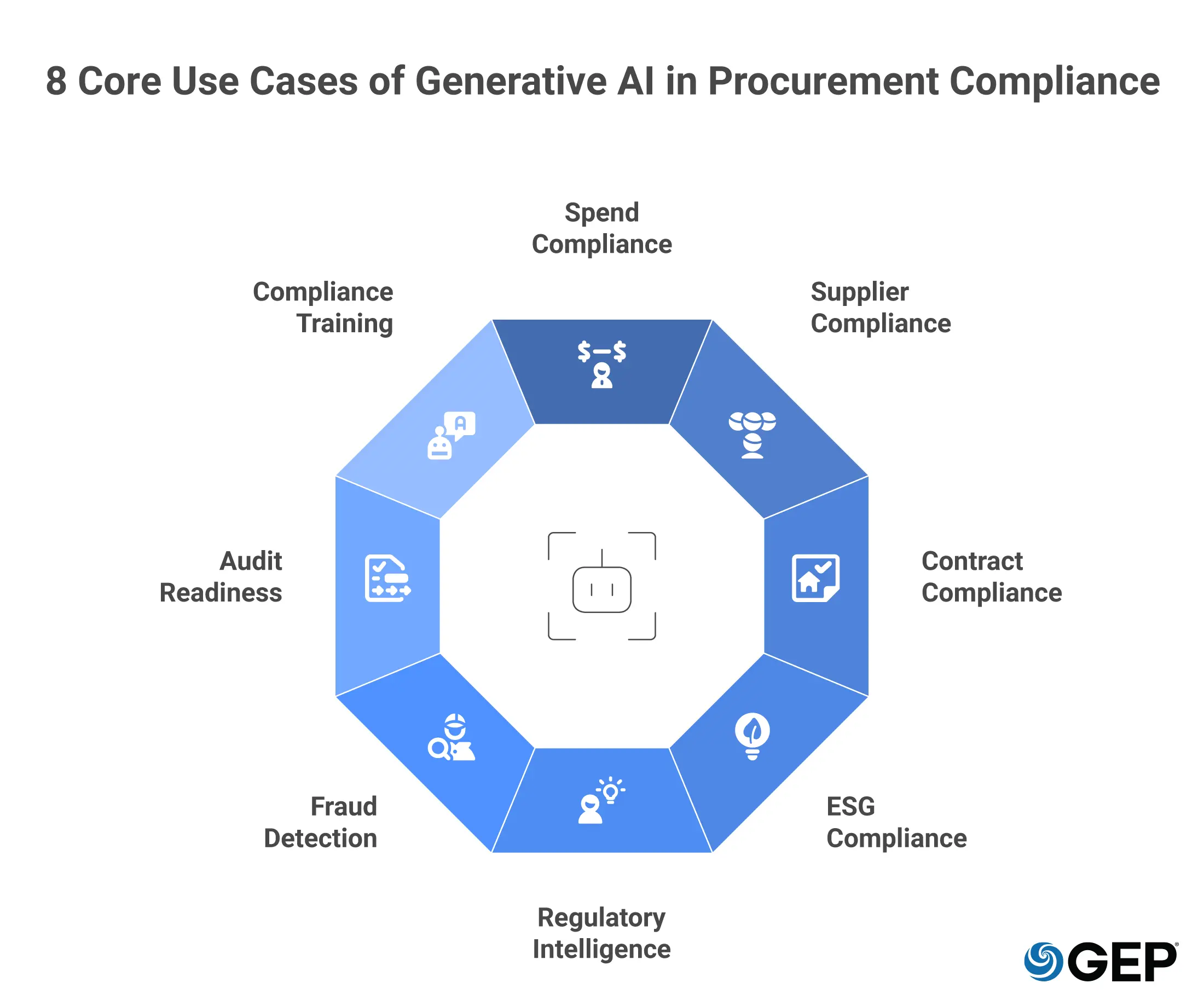
1. Spend Compliance and Rogue Spend Prevention
Rogue or maverick spending, like purchases outside approved contracts or supplier channels, drains budgets and raises compliance exposure. Gen AI monitors procurement transactions across Enterprise Resource Planning (ERP), Source-to-Pay (S2P), and expense systems in real time, applying pattern recognition and language analysis to flag purchases that fall outside approved categories or thresholds.
The system also suggests compliant alternatives, such as approved suppliers or contract routes, and explains why. This gives you better spend visibility, reduces leakage, and keeps buying friction low.
Discover Now - AI Powered Procurement Software
2. Supplier and Third-Party Compliance Management
Supplier non-compliance creates reputational, financial, and legal risks. Traditional due diligence, however, is often manual and episodic. Gen AI aggregates supplier data from financial filings, ESG disclosures, and sanctions lists. It also monitors external sources such as news feeds and regulatory bulletins for adverse events.
The platform generates narrative summaries and dynamic compliance scores, giving you a live view of supplier integrity and letting you act before risks escalate.
3. Contract Compliance and Clause Intelligence
Contracts are the frontline of procurement compliance, but reviewing thousands of clauses across jurisdictions slows teams and increases the chance of mistakes.
Gen AI reads and compares contracts against corporate templates, flags deviations or missing clauses such as data protection, anti-corruption, or sustainability terms. It then checks regional rules for alignment.
AI delivers plain-language summaries of obligations and risks. That speeds reviews and lowers legal exposure so compliance is built into contracting.
4. ESG and Sustainability Compliance
Environmental, Social, and Governance (ESG) compliance is now a regulatory expectation, yet verifying sustainability claims and supplier performance remains fragmented.
Gen AI analyzes sustainability reports, supplier audits, and emissions disclosures for completeness and credibility. It spots inconsistencies and potential greenwashing through combined text and data checks. It maps supplier performance to your sustainability goals and risk frameworks, giving you traceable evidence for boards and regulators.
5. Regulatory Policy Intelligence and Dynamic Compliance Mapping
New rules in data protection, trade controls, carbon reporting, and labor standards keep emerging, making policy upkeep difficult for global teams.
Gen AI scans legislative updates across jurisdictions, interprets relevant changes, and maps them to procurement policies, processes, and templates. The system produces localized policy summaries and alerts for regional teams, helping you move from reactive updates to adaptive governance.
6. Detection of Fraud, Bribery, or Conflict-of-Interest
Complex approval chains and siloed data make fraud and bribery hard to spot, even for mature procurement teams. Gen AI brings together purchase records, communication logs, and supplier networks, then searches for unusual overlaps or collusive behavior.
When it detects self-dealing, bid rigging, or irregular payment cycles, it raises a red flag instantly.
7. Audit Readiness and Explainability
Gen AI reviews every transaction, approval, and supplier record and builds auditable trails that show exactly how each decision was made, including exceptions.
Every output comes with a clear reasoning summary that meets explainability standards and satisfies external reviewers.
8. Compliance Training, Awareness, and Policy Reinforcement
Compliance relies on people. And this is also where compliance risks often appear. You can build interactive assistants using Gen AI that can answer everyday questions to help your compliance team. It can also turn policies into quick microlearning modules that reinforce understanding over time.
By keeping track of employee questions and activity, it spots recurring misconceptions or weak areas and helps you weave compliance naturally into daily work.
Disruption Doesn’t Stop. Neither Should You
Agentic AI is already changing procurement and supply chains. Here’s how to lead the shift
Best Practices for Generative AI in Procurement Compliance
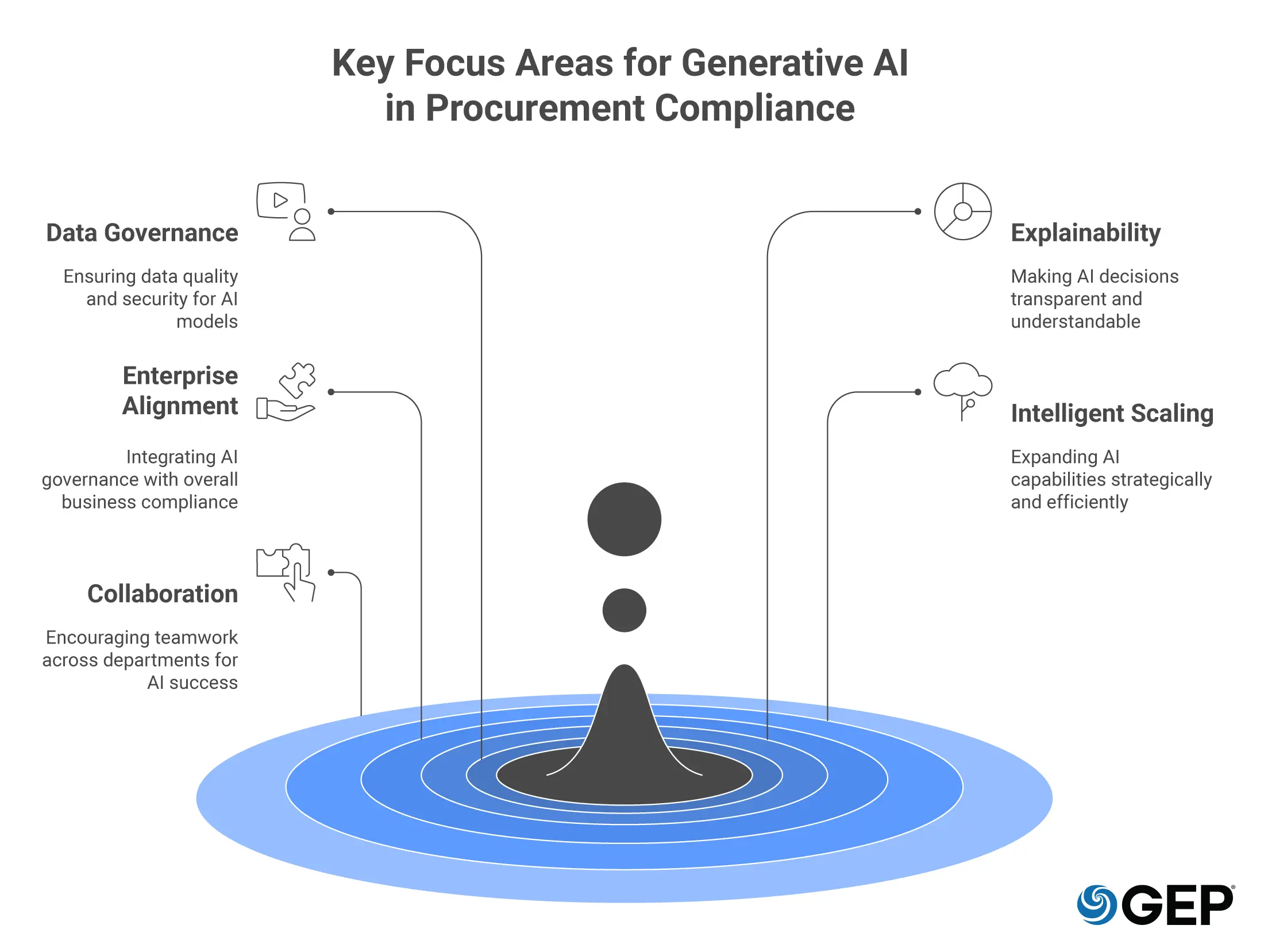
1. Establish Data Governance as the Foundation
Gen AI is only as ethical and reliable as the data it’s trained on. Build a unified data ecosystem, define data lineage, assign ownership, set security protocols that only give access controls to stakeholders. This will make AI outputs compliant and defensible in audits.
2. Embed Explainability and Human Oversight
Always keep compliance decisions explainable. Decisions tied to supplier risk, contract approvals, or policy violations must be transparent. Set up explainability frameworks that document how models reach recommendations and which data points drove each output. Keep humans in the loop for high-risk or regulatory-impact decisions and define escalation paths.
3. Align Governance with Enterprise Compliance
Procurement compliance must align with broader enterprise governance policies. Define AI ethics principles that match corporate compliance charters. Conduct periodic AI model audits to confirm they reflect changing legal and ethical standards. An integrated governance model reduces regulatory blind spots and builds organizational trust in AI systems.
4. Scale Intelligently
Start with narrow pilots, like an automated clause review or spending monitoring to validate data and user uptake. Validate data quality, governance, and user adoption during pilots before expanding. Once proven, scale across supplier risk, ESG, and audit functions.
5. Foster Cross-Functional Collaboration
Bring stakeholders together. Compliance spans procurement, legal, finance, risk, and sustainability. Form governance councils that include Chief Information Officers (CIOs) and compliance officers. The councils set shared AI policies and keep a forward view on regulatory changes; they also arbitrate differences in risk interpretation across functions. Collective oversight closes operational and strategic compliance gaps.
Gen AI Builds Trust
Generative AI changes how you manage procurement risk. It extends human capability with machine intelligence, giving you greater visibility, speed, and precision while preserving judgment with a single view of compliance across the enterprise.
Procurement’s next priority should be trust as much as efficiency. With Gen AI, compliance becomes easier to understand, explainable, and strengthens brand integrity. Get a demo of GEP SMART, a unified, intelligent procurement platform designed to drive compliant, efficient, and ethical procurement at scale.



FAQ
Gen AI reads and understands contracts, supplier data, and regulations so compliance can run continuously instead of in stop-start cycles. In practice, it reviews documents, policies, and transactions as they happen, spotting risks early and tightening controls that keep you within regulatory lines.
Gen AI reads unstructured text to detect clause deviations, missing obligations, and red flags in contracts and supplier profiles. It cross-references findings with your policy library and external regulations, producing actionable insights you can act on quickly.
Traditional systems use static rules. Gen AI understands context, adapts to new information, and learns from historical data, regulatory updates, and language cues. That lets you move from reactive exception handling to proactive compliance governance.