


Can Open-Source Procurement Software Be Suitable for Large Enterprises?
- The total cost of ownership for open-source solutions often exceeds licensed options once customization, maintenance, and specialized IT staffing are factored in.
- Licensed procurement software offers dedicated vendor support, guaranteed SLAs, and comprehensive security features that open-source alternatives typically lack.
- Enterprise-grade integration capabilities and compliance guarantees make licensed procurement software the more practical choice for large organizations.
February 23, 2026 | Procurement Software 4 minutes read
For large enterprises looking to cut costs while staying efficient, open-source vs. licensed procurement software is a perennial debate. Open-source options sound appealing: they're flexible and less expensive up-front.
But when you dig into what really matters for large organizations (scalability, security, support, longevity), things get complicated fast. While open-source software has its place, the bottom line is clear: licensed procurement software for large organizations usually delivers more value with less hassle.
The Need for Scalable Procurement Software in Large Enterprises
Large enterprises aren't like small businesses. They handle thousands of purchase orders every month. They manage supplier networks across multiple countries and coordinate procurement for dozens of departments.
This kind of operation needs scalable procurement solutions that won't crash under pressure. Open-source platforms might work fine for a startup with five users, but throw enterprise-level demand at them? That’s when they struggle.
Licensed software is built to support thousands of people using it at once. It’s able to integrate with multiple ERP systems and manages workflows that span entire organizations.
When your procurement system crashes during a critical buying period, a community forum won't cut it. You need guaranteed uptime and real technical support.
Better Support and Service with Licensed Procurement Software
Support is where the difference between open-source and licensed solutions really shows. With enterprise procurement software solutions, you get account managers, 24/7 support teams and guaranteed response times written into contracts.
Your system breaks at 2 AM on Saturday? You have someone to call who's obligated to help.
Open-source means community forums, volunteer developers and your IT team figuring things out alone. Simple problems? Fine. Complex integration bugs? You could wait weeks.
Licensed vendors provide training, keep documentation current and check your system proactively. They’re invested in your success because it impacts their own.
Total Cost of Ownership (TCO) of Open Source vs. Licensed Procurement Software
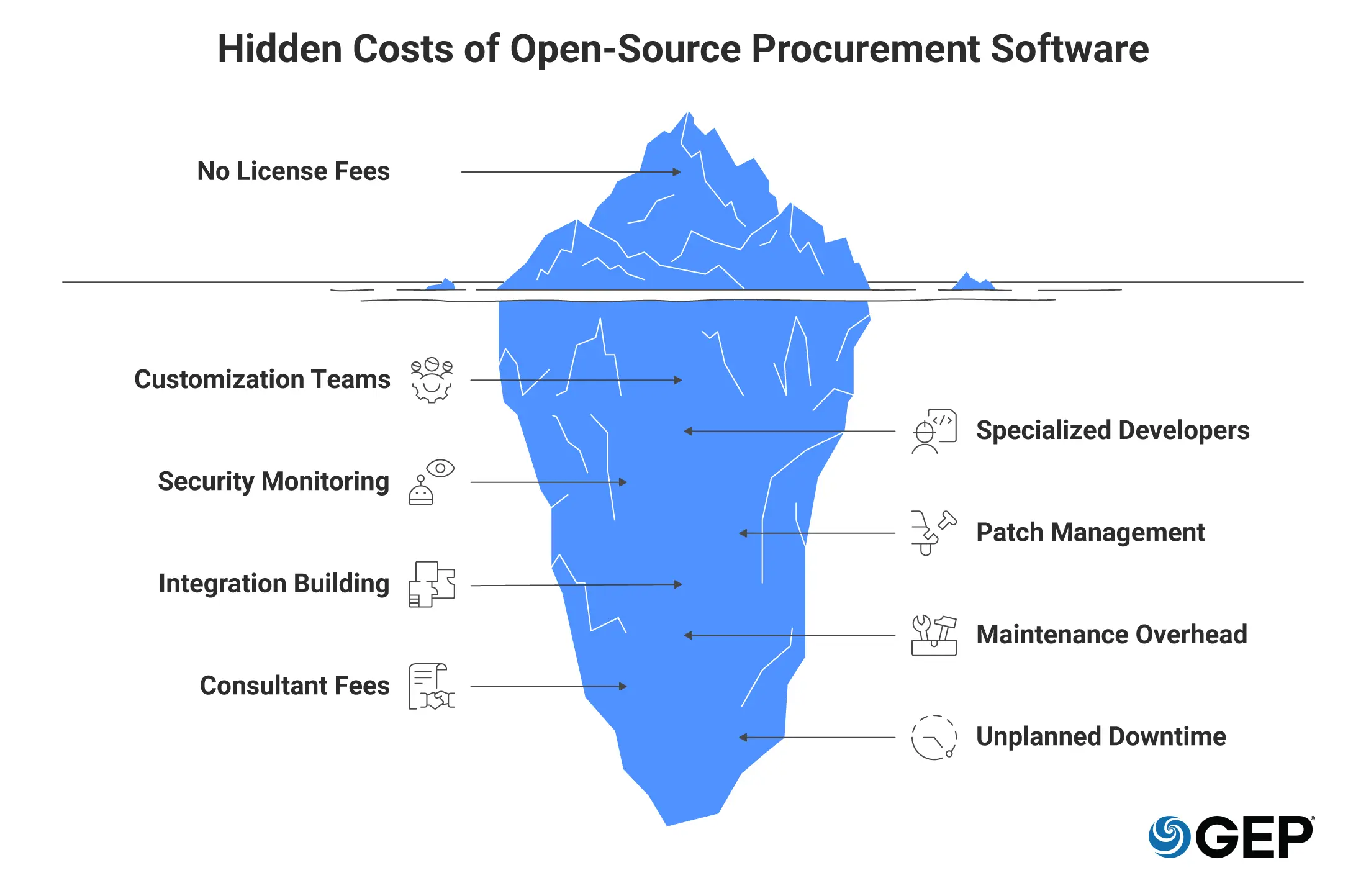
The benefits of licensed procurement solutions become clear when you calculate real TCO instead of just looking at the price tag. Yes, open-source looks free at first. That's misleading.
Big companies typically need heavy customization to match their workflows. Who does that? Your stretched-thin IT team or pricey consultants. You need developers who know procurement processes as well as your specific platform, which gets expensive, quick.
Then there's maintenance: security patches, integration updates when your ERP changes, performance fixes. Licensed solutions bundle this into one annual fee. The vendor handles updates, patches and compatibility.
Your CFO can budget accurately instead of getting surprise consultant bills. Over five years, licensed procurement software for large enterprises often costs less than "free" alternatives when you add everything up.
Why Is Security a Concern with Open-Source Procurement Software?
Procurement software security for large enterprises isn't optional. Your system holds sensitive supplier contracts, pricing data and sourcing strategy.
Open-source tools face real security problems. When someone finds a vulnerability in open-source code, everyone knows immediately. Hackers can exploit it before patches exist.
Who monitors security alerts, tests patches and deploys fixes? Your team. Miss something and you're exposed.
Open-source quality varies wildly too. That popular module might've been written by a genius or a hobbyist who quit years ago. There's no accountability, no insurance and no one to hold responsible if you get breached.
How Licensed Procurement Software Offers Robust Security Features
Licensed vendors pour millions into security because their survival depends on it. They hire dedicated security teams who watch for threats constantly, run penetration tests and maintain certifications like SOC 2 and ISO 27001.
When they find vulnerabilities, patches get developed, tested and deployed quickly, often automatically. The best procurement software for large enterprises includes encryption, multi-factor authentication, role-based access and detailed audit logs as standard features.
Licensed vendors also carry cyber insurance and accept contractual liability for breaches from platform flaws. That accountability matters. Risk management in procurement software is legal protection as well as technical controls.
Seamless Integration With Enterprise Systems in Licensed Procurement Software
Integration with enterprise systems gives licensed solutions another edge. Large companies run complex tech stacks that need to talk to your procurement software.
Licensed vendors build and maintain connectors for major platforms, and they test compatibility with new releases to support you when integration problems pop up. Procurement software customization stays manageable because vendors invest in flexible APIs and solid documentation.
Open-source requires custom work for every connection. That platform might not have an SAP connector at all. Your team builds it, maintains it through updates, and fixes it when it breaks. Each new system connection makes the burden worse.
Choose the Right Procurement Software
Critical Capabilities and Factors to Evaluate in AI-Powered Source-to-Pay Tools
Get the Essential Guide
Ensuring Compliance With Licensed Procurement Software
Compliance isn't optional for large enterprises. You need records showing who approved what and when. You must prove compliance with Sarbanes-Oxley, GDPR, and industry regulations.
Licensed procurement software has compliance built in: automated approvals, detailed logs, policy enforcement and regulatory reporting. Vendors get compliance because their customers demand it. They undergo audits and give you documentation for your auditors.
The Takeaway
For large enterprises, licensed procurement software is more cost-effective and reliable than open-source alternatives. The combination of guaranteed support, robust security, seamless integration and built-in compliance outweighs any up-front savings from open-source tools. When procurement impacts your bottom line, choose licensed solutions.



Frequently Asked Questions
Licensed solutions provide dedicated vendor support with guaranteed SLAs, regular security updates, and built-in compliance features, while open-source relies on community support and internal IT resources for customization and maintenance.
Hidden costs of open-source procurement software include customization, specialized developer hiring, maintenance, security patching and integration development, which often exceed commercial licensing fees long-term. Licensed procurement software often delivers better ROI when you factor in total cost of ownership.