



How Do Modern Procurement Platforms Support Multi-Site Organizations?
- A centralized procurement platform lets corporate maintain oversight while giving site managers the flexibility they need, naturally reducing unauthorized purchases.
- Real-time visibility into spending across locations makes it easier to negotiate volume discounts and manage vendors strategically.
- Automated approvals free your team from paperwork while keeping operations compliant and moving quickly.
January 12, 2026 | Procurement Software 5 minutes read
Imagine being the CFO of a growing logistics company. You have twenty warehouses spread across four time zones. At headquarters, your sourcing team has negotiated a contract for industrial packaging tape at $2.00 per roll.
Yet, when you audit the quarterly spend, you discover that the warehouse in Phoenix is buying the same tape from a local retailer for $4.50, and the Seattle branch is using a vendor that hasn't been vetted for compliance.
This is the invisible leak that plagues decentralized businesses.
Procurement platforms are designed to solve that fragmentation with a unified digital infrastructure that gives headquarters the controls they need to enforce pricing and compliance, while providing local site managers the tools they need to get their jobs done.
Defining a Procurement Platform for Multi-Entity Organizations
A multi-entity procurement platform is not just a standard inventory system with a few extra login accounts. It’s a sophisticated financial engine built with multi-entity logic.
In a standard system, data is often trapped in silos: Site A cannot see Site B’s inventory, and the corporate office has to wait for end-of-month spreadsheets to see what everyone spent. A true multi-entity platform acts as a central nervous system. It recognizes that while the organization is one legal body, it operates through distinct, semi-autonomous units.
Crucially, it handles the complex accounting that happens in the background of transactions. This allows a regional manager to approve a purchase for a specific branch and have the software automatically tag that cost to the correct local budget center, rather than a general corporate bucket. This granular visibility is the foundation of financial health for any multi-site organization.
Addressing Procurement Scaling Challenges for Multi-Site Businesses
As businesses scale, they typically run into three distinct growing pains that drain profitability:
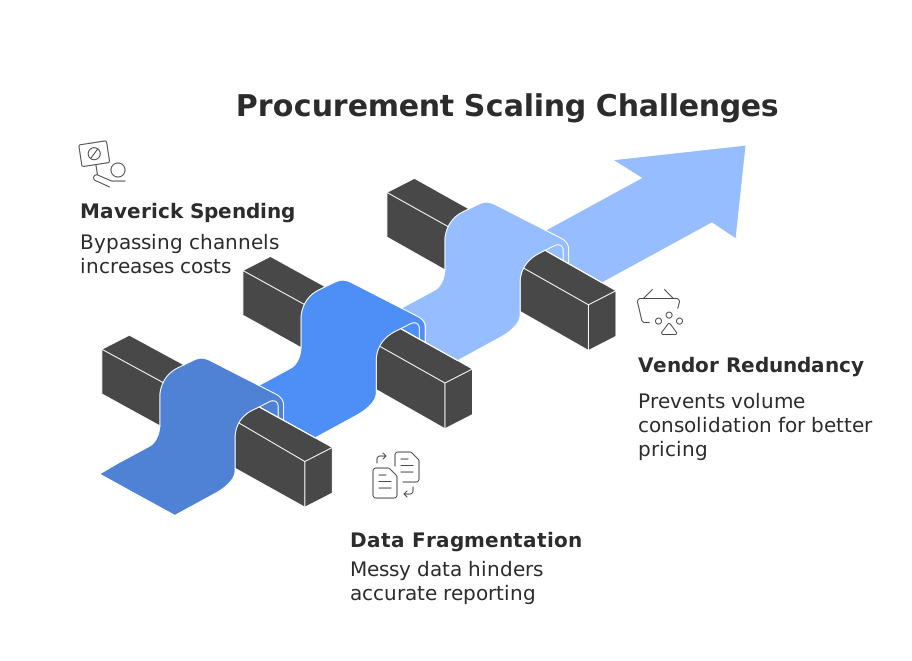
Data Fragmentation:
Without a centralized platform, spend data becomes messy and disjointed. You might have a single vendor listed under multiple names (e.g., "Acme Corp," "Acme Inc.," "Acme Supplies"), making it impossible to run accurate reports or leverage total spend during contract negotiations.
Maverick Spending:
This occurs when local employees bypass formal purchasing channels because the central process is perceived as too slow or cumbersome. This leads to buying off-contract at retail prices rather than negotiated rates; while individual purchases seem small, the aggregate loss is often massive.
Vendor Redundancy:
A lack of visibility often results in different sites (e.g., Texas vs. Oklahoma) using different vendors for the exact same service. This prevents the organization from consolidating volume to secure better pricing tiers or service levels.
Realizing the Key Benefits of Multi-Company Procurement Solutions
When an organization implements a unified solution, the most obvious benefit is cost reduction through volume aggregation. By funneling all demand through a single system, you can approach suppliers with the full weight of your organization’s purchasing power.
Beyond cost savings, a platform ensures that every site adheres to the same compliance standards. You no longer have to worry if the remote office is using a supplier with expired insurance; the system won't allow the order to proceed if the vendor isn't green-lit.
This is where technology plays a massive role. Modern AI-powered procurement software can actively scan your purchasing data to identify anomalies. It can flag if a specific site is consistently over-ordering relative to others or identify opportunities where switching suppliers could save money.
Operational speed also improves drastically by automating approval workflows. In manual systems, a purchase requisition might sit in an email inbox for days. In a digital platform, if a manager is out of the office, the system can auto-route the request to a delegate, ensuring the supply chain keeps moving.
Stop the Leak in Your Procurement
Don’t Let Your Hard-Won Savings Vanish. Here’s How to Plug the Gaps
Read Now
Core Support: How Procurement Platforms Empower Multi-Site Operations
The true power of these platforms lies in their ability to enforce complex rules without making them feel complex to the user.
For instance, a platform can be configured with dynamic approval trees. A site manager might have the autonomy to approve operational expenses up to $1,000. However, if they try to buy capital equipment worth $10,000, the system automatically routes that request to the Regional Director. If it’s above $50,000, it goes to the CFO. This happens instantly, with full audit trails.
This level of control is critical in regulated industries. In sectors like healthcare or food service, safety and traceability are as important to procurement as getting the lowest price. A centralized platform ensures that if a product recall happens, the organization knows exactly which sites received the affected batch within minutes, rather than days.
By centralizing multi-site operations, companies remove the administrative burden from local staff. A store manager should be focused on customers, not wrestling with purchase orders. A centralized platform gives them pre-approved catalogs, easy checkout and automated tracking so they can get back to business.
Turning Procurement From Gatekeeper to Strategic Partner
Local teams often fear centralization because they worry about losing agility. However, the right procurement platform empowers local sites by removing the friction of bureaucracy, turning procurement from a gatekeeper into a strategic partner.
As multi-site organizations expand, the complexity of their spend increases. Moving away from spreadsheets and disparate systems toward a unified, data-driven procurement platform ensures that as the business grows, profit margins don't shrink due to operational inefficiency.




FAQs
Without a central system, each location does its own thing, creating data silos and unauthorized spending. A unified platform lets headquarters see what's being purchased, negotiate better contracts and ensure every site follows the same budget guidelines.
These platforms build governance into the purchasing process. They block orders from unapproved vendors and route requests through proper approval chains, keeping spending across all sites audit-ready and compliant with corporate policy.
Yes, today's platforms handle different business units with their own budgets and workflows while feeding data up to corporate. A small office doesn't need the same complex procedures as a major production facility.
It cuts down on manual work. Automating requisition approvals, invoice matching and data entry lets local teams focus on their jobs instead of chasing paperwork.
Yes, most platforms allow for detailed permission levels where sites manage their own budgets and approvals for routine purchases, while corporate maintains oversight on larger expenditures.
The platform acts as a gatekeeper. Vendors must upload certifications, insurance and contracts to a central portal before any location can order from them, preventing sites from working with unvetted suppliers.